BETER Reports 27% Growth in ESportsBattle eFootball Players During 2026 World Cup
The 2026 FIFA World Cup period boosted BETER’s ESportsBattle eFootball vertical, with active players up by over a quarter and GGR rising 24% compared to the six weeks prior.
Key Takeaways
- Active players on BETER’s ESportsBattle eFootball rose 27% during the 2026 FIFA World Cup.
- Gross gaming revenue climbed 24% compared to the previous six-week period.
- The 2×4 format accounted for 70.6% of eFootball turnover and grew by 32% in the tournament window.
- Over half of new players acquired during the World Cup remained active after the event.
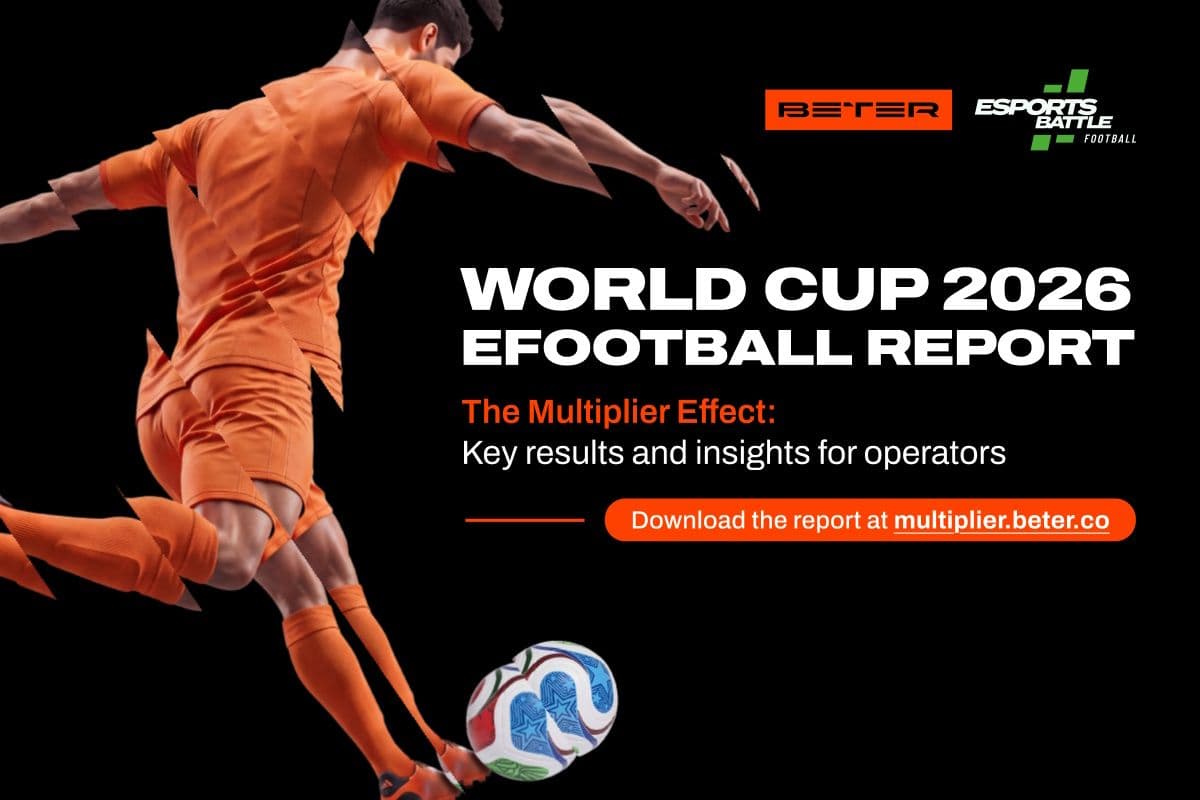
The 2026 FIFA World Cup prompted a marked increase in BETER’s ESportsBattle eFootball vertical, with active player counts up 27% and gross gaming revenue (GGR) rising 24% versus the previous six-week period. These figures, published in BETER’s new World Cup eFootball Report, point to a genuine impact from major football tournaments on esports betting engagement and operator metrics.
Examining BETER’s eFootball Performance During the 2026 FIFA World Cup
BETER tracked significant growth across multiple key performance indicators for ESportsBattle eFootball over the course of the 2026 World Cup. The report compares the six-week tournament to the preceding six weeks, highlighting:
- 27% increase in active players
- 20% rise in betting turnover
- 18% jump in bet volume
- 24% uplift in GGR
Margin performance also improved during the tournament, with average stake up 1.2% and eFootball margins 4.3% higher than BETER’s 2026 monthly average.
World Cup Audience Expansion Drives eFootball Engagement
BETER attributes these gains primarily to an expanded player audience, not oversized individual betting activity. According to the report, a wider demographic engaged with ESportsBattle’s eFootball matches as the tournament progressed. The company observed that while average stake only rose 1.2%, the broadened player base was the main force behind overall turnover and revenue increases.
“eFootball has unique relationship with major football events. It helps operators extend their value by driving engagement, retention and revenue before, during and after the tournament... Every major football event does more than create a temporary spike: it helps eFootball grow into an increasingly strong category,” said Adam Conway, General Manager of Esports Unit at BETER.
The 2×4 Format: Leading Contribution to eFootball Turnover
BETER’s World Cup report places emphasis on the '2×4 format' within ESportsBattle eFootball. During the tournament:
- The 2×4 format contributed 70.6% of total eFootball turnover
- The format posted a 32% increase in turnover during the World Cup period
Expanded 24/7 match coverage, enhanced broadcasts tailored to the tournament, and a dedicated World Cup competition schedule were cited as structural reasons behind the increased volume and engagement. In total, BETER delivered more than 48,000 eFootball matches across the tournament window.
Player Retention and Ongoing Value for Operators
A notable detail from BETER’s post-tournament analysis is that over half of new players acquired during the World Cup remained active with ESportsBattle eFootball after the event concluded. BETER suggests this is evidence that football’s marquee events act as a sustained customer acquisition funnel for esports betting, not just a short-term spike.
BETER maintains that these engagement metrics enable operators to build extended player lifecycle value, especially as eFootball continues to take a larger share of digital sports betting verticals. Retention is supported by ongoing content rollout, dedicated competitions, and persistent marketing throughout the year.
Implications for Operators and Platform Vendors
For platform vendors and operators, the report underlines eFootball’s growing role in player engagement strategies. With a clear link between major sporting tournaments and eFootball traffic, the vertical offers predictable spikes and long-tail activity: operator revenue and retention both benefit when the event-driven acquisition translates to ongoing engagement.
Vendors seeking to compete in this space may focus on:
- Flexible event-driven scheduling
- Broadcast and production enhancements
- Persistent marketing around major digital sports events
- Compelling formats that can scale match volume
With over 48,000 matches delivered within six weeks, format diversity and production flexibility are likely to remain key differentiators for suppliers in the esports betting arena.
BETER’s data signals that active management of event-driven acquisition and retention levers will be critical for those looking to maximise the revenue and engagement potential of the eFootball vertical in future international tournament cycles.
Frequently Asked Questions
What was the impact of the 2026 FIFA World Cup on eFootball betting?
The 2026 FIFA World Cup led to a 27% increase in active players and a 24% boost in gross gaming revenue on BETER’s ESportsBattle eFootball, compared with the previous six weeks.
How did BETER’s eFootball turnover change during the World Cup?
eFootball turnover on ESportsBattle rose by 20% during the World Cup, with the 2×4 format posting a 32% increase and making up over 70% of total turnover.
Did new players acquired during the World Cup continue to be active?
Yes, BETER reported that more than half of players acquired during the 2026 World Cup remained active on ESportsBattle eFootball after the tournament ended.
What drove the growth in eFootball metrics during the World Cup period?
Growth was primarily driven by a wider player audience engaging with eFootball content, rather than significantly higher individual stakes, with average stake up just 1.2%.
How many eFootball matches did BETER deliver during the tournament?
BETER delivered over 48,000 eFootball matches across the World Cup tournament window, supporting increased engagement and turnover.
Tags
About the author

Oliver Grant
Industry Technology Correspondent
Oliver Grant covers the technology and business machinery of iGaming — platform and data deals, AI and compliance tooling, affiliate and marketing shifts, and the quarterly numbers behind them. The reports lead with the announcement, name the vendors and figures exactly as published, and separate genuine capability from press-release promise. When a supplier ships a new engine or a regulator tightens ad rules, Oliver Grant explains what actually changes for the companies involved.
More from Oliver Grant