Betting ban in Brazil leaves 188 operators offline and 125 solely exposed to that market
Blask estimates R$1.2bn GGR lost in the first ten days; 125 brands depended only on Brazil
Key Takeaways
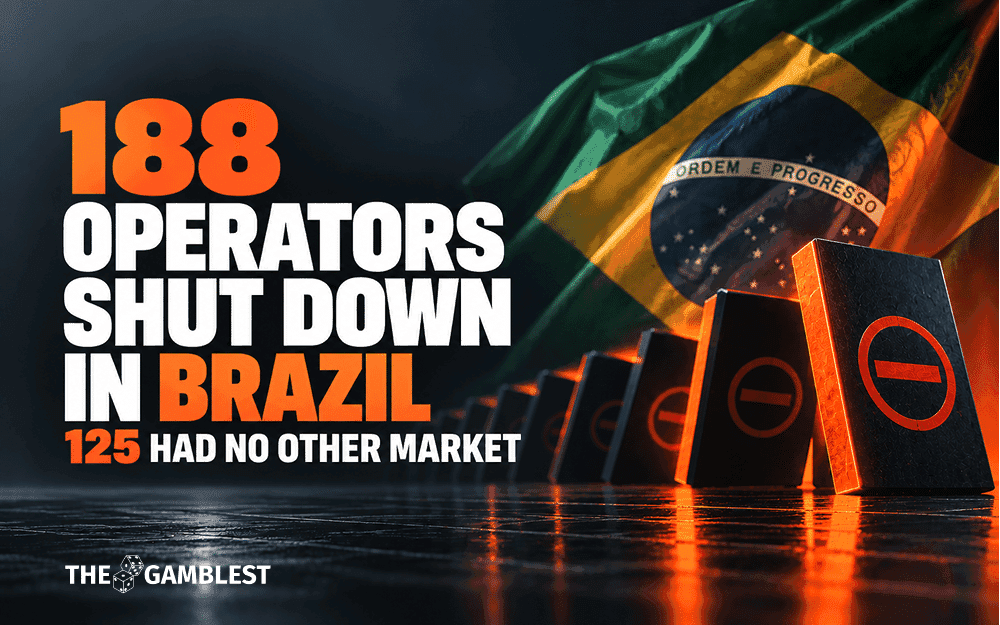
- The ban left 188 licensed operators offline and Blask estimates about R$1.2bn in GGR lost in the first ten days.
- Of 158 licensed brands analysed, 125 operated only in Brazil and contributed US$3.14bn of CEB, 41.8% of the licensed market's CEB.
- Major operators such as Entain and Flutter face proportionally smaller hits; Flutter cited a ~US$70m revenue impact in 2026 and US$20m reduced adjusted EBITDA.
- The Blask Index showed an 82% drop in search demand since 25 September while offshore traffic rose from 3.8% to 17.8%.
The temporary betting ban in Brazil left 188 licensed operators offline and, according to Blask's calculations, the first ten days cost approximately R$1.2 millardos in gross gaming revenue (GGR). Blask identified 158 licensed brands active before the measure and found that 125 of them had no other markets outside Brazil.
Immediate impact on GGR and search demand
Blask places regulated-market GGR for January–June 2026 at R$20.07bn. Its analysis estimates a loss of around R$1.2bn in the first ten days after the ban was introduced, equivalent to a decline of about R$111m per day based on prior activity estimates. Search demand tied to the regulated market plunged 82% since 25 September, according to the Blask Index.
At the same time, attention to offshore operators rose: the share of search traffic to unlicensed operators increased from 3.8% to 17.8%, although the regulated market’s absolute size contracted markedly.
Distribution of exposure: Brazil as the sole market for 125 brands
Blask analysed 158 licensed brands operating in Brazil before the measure. Of that set, 125 brands depended exclusively on Brazil, contributing a combined Competitive Earning Baseline (CEB) valued at US$3.14bn, which represents 41.8% of the licensed-market CEB.
Among the largest brands within the Brazil-dependent group are Esportes de Sorte, 7Games, Betnacional and Vaidebet. Adding five more brands, Blask says Brazil represented more than 60% of CEB for those firms; with 130 brands the figure rises to 51.7% of licensed CEB.
For those 125 brands the ban effectively removes virtually all of their revenue base while the measure remains in force. Blask summarises that loss as almost a third of the CEB generated by Brazil-only brands, which amounts to 12.9% of the total licensed market.
Major operators and differences in exposure to the Brazilian market
At the other end of the spectrum are operators with limited exposure to Brazil. Blask identifies 21 operators whose activity in Brazil represents less than 30% of their combined CEB; that group contributes only 16% of licensed CEB.
Concrete cases provide perspective. Sportingbet had Brazil as its dominant market, with 83.7% of its CEB coming from Brazil; its second market, Greece, was less than a tenth of the Brazilian size. Betano suffers the largest absolute loss: Blask records US$1.88bn of CEB in Brazil between January and September, equivalent to 51.6% of its global CEB. Betano has a broader international presence, but its second market, Chile, is roughly one-fifth the size of Brazil, preventing a quick revenue substitution.
For global operators such as Entain, Flutter and Bet365, the hit was proportionally smaller. Entain said its EBITDA guidance remains unchanged from before the measure, although it expects lower outlooks in future. Flutter estimated the ban could affect its 2026 revenues by about US$70m and reduce adjusted EBITDA by US$20m. Bet365 had Brazil at 15.8% of CEB across 79 evaluated sectors.
Employment and operational consequences
Blask estimates the licensed sector directly supported about 10,000 jobs and indirectly a further 5,000 positions. Up to 5 October there had been 36 redundancies recorded within the universe of 188 affected operators.
Market concentration before the ban was high: Betano, Bet365, Sportingbet and Superbet accounted for 50.9% of CEB. Blask also calculates that licensed operators represented 96.8% of the Competitive Earning Baseline for the January–September 2026 period.
Scenarios for brands after the intervention and the role of Congress
Blask divides the outcomes into two groups: 125 brands left without a market that depend on the resolution of the Congress for any reopening or legalisation, and larger operators that will absorb losses backed by other markets.
The distinction is material: 130 brands — with Brazil contributing more than 60% of their business — controlled 51.7% of licensed CEB, while 21 operators with low Brazil exposure accounted for only 16% of CEB. The final decision on keeping or reversing the ban rests with Congress.
What to monitor next
Evolution of the Blask Index and recovery of search demand.
Legislative decisions by the Congress that determine whether the ban will be permanent or temporary.
Corporate moves: licence relocations, permanent brand closures and consolidation in the regional market.
For the B2B industry and technology suppliers it will be relevant to watch changes in demand for solutions for alternative markets and in liquidity and payments management in jurisdictions where large operators can still operate.
Frequently Asked Questions
How many licensed operators stopped operating because of the ban in Brazil?
The ban put 188 licensed operators out of operation. Blask identified 158 actively licensed brands before the measure and records effects across 188 operators in total.
How much GGR was lost in the first ten days after the ban?
Blask estimates approximately R$1.2 billion in GGR lost during the first ten days. That figure is based on a pre-ban revenue pace estimated at R$111 million per day.
How many brands depended exclusively on Brazil and what weight did they have in the licensed market?
125 of the 158 licensed brands depended solely on Brazil and together generated US$3.14bn of CEB, equivalent to 41.8% of the licensed market's CEB.
What immediate impact did global operators such as Flutter and Entain report?
Flutter estimated the ban could reduce its 2026 revenue by about US$70m and cut adjusted EBITDA by US$20m; Entain said its EBITDA guidance remains unchanged for now, though it expects lower outlooks later.
Tags
About the author

Emilio Navarro
Industry Technology Correspondent
Emilio Navarro covers the cross-cutting technology and business of iGaming — platforms, data and AI, compliance tooling, affiliate marketing, financial results, and the stories that fit no single rubric. The reports open with the announcement, cite vendors and figures exactly as published, and keep a healthy distance from press-release language. When a supplier unveils a new engine or the advertising rulebook changes, Emilio Navarro reports what genuinely changes.
More from Emilio Navarro