Blask: ban on online betting in Brazil collapses local demand but keeps offshore market intact
Study shows an 82% week-on-week drop for domestic operators while international demand stayed stable.
Key Takeaways
- Blask recorded local demand falling from 5.41 million on 25 September to 959,000 on 2 October after the provisional measure.
- Demand towards international providers remained around 280,000–295,000 users across the three Fridays analysed.
- The total index fell from 5.71 million on 25 September to 1.01 million on 9 October, and the international share rose to 28.1%.
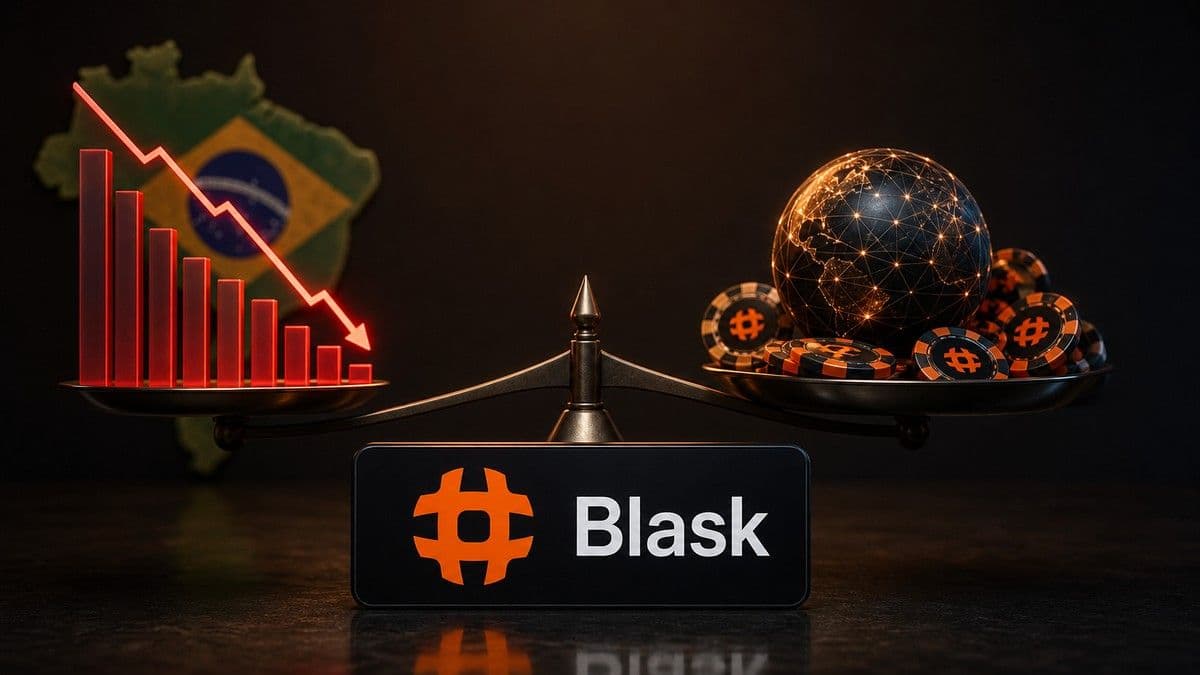
The provisional decree that restricted national online betting in Brazil caused an abrupt collapse in local demand between 25 September and 2 October 2026, according to consultancy Blask. The firm records domestic demand falling from 5.41 million on 25 September to 959,000 on 2 October, while demand directed at offshore providers remained around 280,000–295,000 users across the three weekly measurements.
I write as Emilio Navarro, technology correspondent for the sector. Blask analyses user behaviour on three consecutive Fridays from the entry into force of the provisional measure that ordered the closure of local operators, and warns the ban on national providers remains subject to approval by the National Congress and to appeals lodged before the Supreme Federal Court of Brazil.
## Ban on online betting in Brazil: the numbers for the first Friday
On 25 September, the day the measure was announced, the Blask Index for Brazil registered 5.71 million interactions: 5.41 million with local operators (94.83% of the market) and 294,900 with international providers (5.17%). Blask notes that that Friday was already 20% below an average pre-ban Friday, although —according to the consultancy— it still looked like a licensed market.
## Ban on online betting in Brazil: immediate shock and news-driven reaction
On 26 September there was a spike in searches and activity that pushed the index to 8.05 million, with local operators capturing 93.83% and international providers 6.17%. Blask attributes that increase to media coverage: users searched for the brands affected by the ban. In their words:
"The jump was news-driven: people searched for the brands that had just been banned," writes Blask.
The consultancy documents that this effect lasted less than 24 hours; the next day local demand retreated to 3.41 million and international demand rose to 405,200, which increased the international share at that moment by 10.63 percentage points of the restricted total.
## How market structure changed: offshore gains by disappearance of the rest
Blask describes the movement as a reduction of the universe of players rather than a real increase in international users. Between 25 September and 2 October the total Blask Index fell to 1.24 million: 959,000 for local operators and 282,000 for international providers. The consultancy summarises: total demand fell 78% from the day of the decree; local demand dropped 82% and international demand hardly moved, with a 4% reduction.
The result was an increase in market share for offshore operators. Blask quantifies that the international share rose from 5% to 28% because "the rest of the market disappeared", that is, due to the contraction of demand recorded for sites licensed in Brazil.
## Third-Friday data and assessment of international stability
The third Friday included in the sample was 9 October, after the disconnection of licensed sites on 6 October. The index stood at 1.01 million: 725,000 for local operators and 283,000 for international providers, virtually the same international figure as a week earlier. Blask notes: the total on 9 October was 19% lower than 2 October and 82% lower than the day of the decree, while the international share grew to 28.1%.
The consultancy offers a clear reading: demand directed at international providers did not increase significantly in absolute terms —"International [-provider] demand did not grow: it stayed at around 280,000 to 295,000 across all three Fridays,"— but its relative share rose because the volume of betting in the licensed market collapsed.
## Regulatory context and next judicial steps
The ban applied by the Executive is a provisional measure that requires ratification by the National Congress to become permanent law. In addition, industry associations have challenged the resolution before the Supreme Federal Court of Brazil. Blask warns the situation remains subject to legal and political changes that could alter the observed dynamics.
## Implications for operators and overseas suppliers
The pattern described by Blask suggests several practical points for operators and providers:
the international demand remains stable in absolute terms despite the increase in share;
most of the volume that disappears comes from the user base that used local operators;
any reopening of the domestic market will depend on decisions by the National Congress and the Judiciary.
For commercial and compliance teams the reading is straightforward: the relative opportunity for offshore platforms increases in a contracted market, but there is no evidence in Blask's data that that segment is capturing a large additional inflow of new users.
## What will matter in the coming weeks
The focus will be on two fronts: the progression of appeals before the Supreme Federal Court and the debates in the National Congress about the continuity or modification of the measure. Blask will continue measuring user behaviour in the following weeks to see whether the stability in the absolute number of international users holds or changes when the legal routes are resolved. Relevant coverage should be tracked in our [regulation](/regulation) and [news](/news) sections.
"It was already 20 percent below an average pre-ban Friday, but the market still looked like a licensed one," Blask adds when commenting on the 25 September scenario.
Blask's data provide an immediate snapshot of demand following the state intervention: the recorded activity confirms a pronounced contraction of the licensed market and stability in the use of platforms outside Brazilian control.
Frequently Asked Questions
What happened to demand for local operators after the provisional measure?
Demand for local operators fell from 5.41 million on 25 September to 959,000 on 2 October, a reduction of 82% in one week, according to Blask's report.
Did demand for offshore providers increase after the ban?
Not in absolute terms: Blask notes international demand stayed between 280,000 and 295,000 users across the three Fridays analysed; its share rose only because the domestic market contracted.
What impact did media coverage have on betting activity?
There was a spike on 26 September that raised the index to 8.05 million; Blask attributes that surge to searches for recently banned brands and documents that the effect disappeared in less than 24 hours.
Tags
About the author

Emilio Navarro
Industry Technology Correspondent
Emilio Navarro covers the cross-cutting technology and business of iGaming — platforms, data and AI, compliance tooling, affiliate marketing, financial results, and the stories that fit no single rubric. The reports open with the announcement, cite vendors and figures exactly as published, and keep a healthy distance from press-release language. When a supplier unveils a new engine or the advertising rulebook changes, Emilio Navarro reports what genuinely changes.
More from Emilio Navarro