South Korea casino stocks fall on China headwinds and exchange-rate pressure
Paradise down 55% from its yearly high; policy and FX squeeze investor appetite
Key Takeaways
- Paradise Co fell 55% from its recent annual high and Kangwon Land is down 27% from its peak this year.
- Macao casino revenue in September was MOP$18.1 billion, a 1.2% year-on-year decline.
- There is a proposal to raise operators’ contribution to the Tourism Promotion and Development Fund from 10% to 15% of GGR.
- Raising the departure tax from 7,000 won to 20,000 won could more than double fund receipts according to Hana Securities.
- Seasonality, a stronger won and Chinese capital controls are combining to weaken demand and investor appetite.
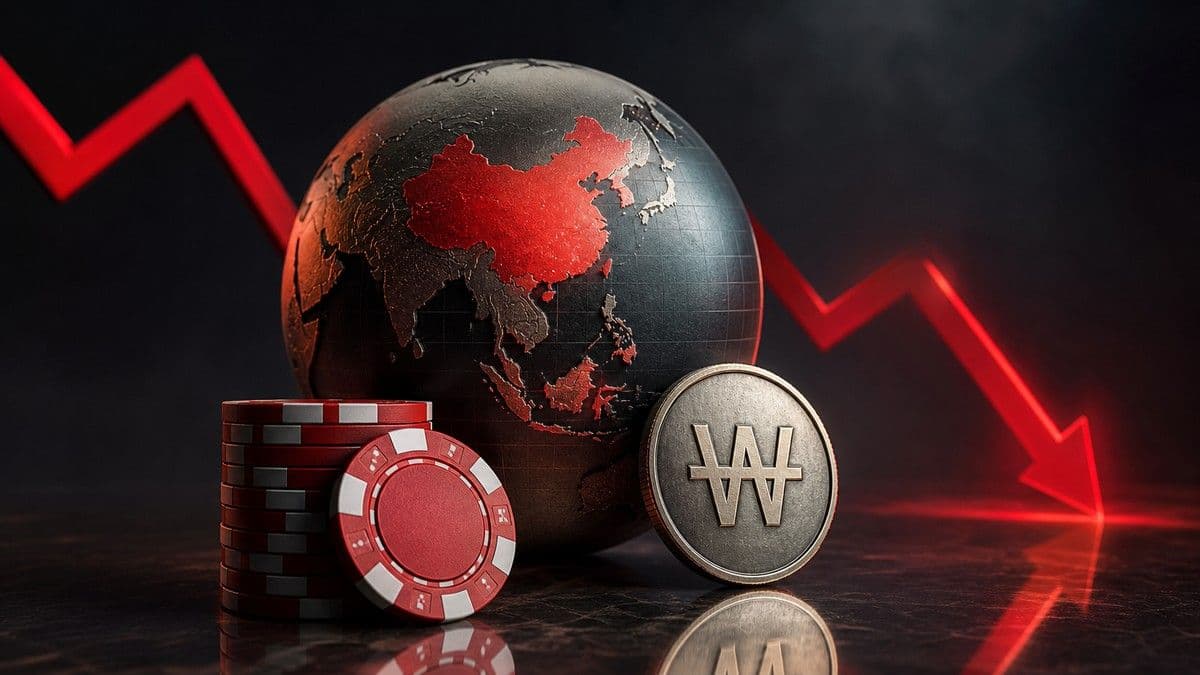
The four listed South Korean casino companies have seen sharp share declines in recent weeks due to a mix of factors: Chinese capital controls, a stronger won, concerns about a higher contribution to the Tourism Promotion and Development Fund, and seasonality. Paradise Co lost 55% from its recent annual high, while Kangwon Land fell 27% from its peak this year; Grand Korea Leisure hit a new 52-week low last week and Lotte Tour Development, operator of Jeju Dream Tower, also touched recent lows.
Stock drops and key figures on South Korea casino stocks
A Yonhap News Agency report was first to underline the scale of price deterioration. The declines are not limited to a single stock: all four listed issuers show significant losses versus their 2026 levels. Local analysts attribute part of the move to the transition from peak to off season: Daol Investment & Securities noted that in September “Lotte Tour Development, Paradise and GKL saw a fall in ‘drop amounts’ (total chip purchases) versus August, which was peak season,” and added they expect a “gradual shift into the low season.”
Seasonality explains part of the decline in gaming activity, but analysts point to structural factors that weigh on demand from foreign customers.
China and the demand impact: Yuanta Securities report and Macao figures
Lee Hwan-wook, an analyst at Yuanta Securities, highlighted the indirect effect Chinese measures have on betting behaviour among Chinese VIPs. In September, Macao casino revenue reached MOP$18.1 billion, a year-on-year decline of 1.2%. Lee said the downtrend has persisted after the June–July period, which was affected by the World Cup, and attributed it to tighter capital controls introduced by Chinese authorities, including tax and reporting requirements for overseas trusts implemented in July.
Lee added that, except for October — which was boosted by the National Day Golden Week — “it is unlikely that sentiment among VIPs and high-spending mass Chinese customers will recover in the short term.” That lack of recovery feeds directly into the demand South Korean gaming companies serve via tourists and foreign visitors.
Exchange rate, purchasing power and pressure on gaming revenue
Appreciation of the Korean won against other currencies reduces the local spending power of foreign visitors. Operators and analysts explain that when the local currency strengthens, tourists spend less inside casinos because their home currency buys fewer won. That dynamic acts as an additional brake on operating revenue and, by extension, on listed issuers’ market valuations.
Regulatory risk: the proposed rise in the levy on GGR
Another cloud over the industry is the proposal to raise the annual contribution operators pay to the Tourism Promotion and Development Fund, from the current 10% of GGR to 15%. The market interprets that possibility as a meaningful recurring cost that would reduce margins. Investors view the measure as a medium-to-long-term risk if the Government confirms it.
Hana Securities offers an alternative route that could ease pressure. Analyst Lee Ki-hoon wrote that the fund is financed by foreigner casino revenue and the departure tax. If an amendment to raise the departure tax from 7 000 won to 20 000 won from the second quarter of next year is approved, total receipts are projected to more than double. According to Lee, that increase in the departure tax could reduce the need for such a large rise in the operators’ contribution.
"If the amendment to raise the departure tax to 20 000 won is finalised, receipts are projected to more than double," wrote Lee Ki-hoon of Hana Securities.
Lee Ki-hoon qualified that legislative approval is required before assuming pressure on operators will be mitigated.
What this means for investors and operators in the Korean market
The confluence of weaker foreign demand, an exchange rate that favours local consumers and the threat of higher regulatory costs has reduced appetite for the sector on the South Korean exchange. For listed operators such as Paradise Co, Kangwon Land, Grand Korea Leisure and Lotte Tour Development, the immediate operational challenge is managing the drop in drop amounts during the seasonal transition while monitoring external developments in China and local fiscal decisions.
For analysts and managers, the practical question is whether future Macao data and any Government decision on the departure tax and the fund contribution will change risk perception. Legislative confirmation on the departure-tax increase and any official communication about the Tourism Promotion and Development Fund rate will be key reference points.
Implications for suppliers and stakeholders
Technology and service providers for casinos must prepare for an environment of slower volume growth and greater scrutiny on costs. Institutional investors will look for clear signs of stabilization in gaming revenue and public policy before increasing exposure to the sector. To follow regulatory developments and market reactions, this topic also intersects with sector news and tax policy decisions, so it is relevant to review changes in /regulation and in coverage of /news.
Frequently Asked Questions
Why have South Korea casino stocks fallen recently?
The drop is due to several simultaneous factors: Chinese capital controls that have cooled VIP demand, a stronger won that reduces foreign visitors’ purchasing power, concerns about a proposed rise in the Tourism Promotion and Development Fund contribution from 10% to 15% of GGR, and seasonal declines in drop amounts following peak season.
What effect did Chinese measures have on regional casino revenue?
Chinese measures coincided with weakness in Macao: September casino revenue was MOP$18.1 billion, a 1.2% year-on-year decline. Analysts link part of that weakness to capital controls and new tax and reporting requirements for overseas trusts implemented in July.
How would the proposed increase in the GGR levy affect the industry?
The proposed increase would raise operators’ recurrent costs by moving the contribution from 10% to 15% of GGR, compressing margins. Investors see this as a medium-to-long-term risk already impacting listed company valuations.
Are there alternatives to fund the Tourism Promotion and Development Fund without raising the GGR contribution?
Yes. Hana Securities suggests raising the departure tax from 7,000 won to 20,000 won, which could more than double fund receipts and reduce the need for a large increase in casino contributions; however, this requires legislative approval.
Tags
About the author

Emilio Navarro
Industry Technology Correspondent
Emilio Navarro covers the cross-cutting technology and business of iGaming — platforms, data and AI, compliance tooling, affiliate marketing, financial results, and the stories that fit no single rubric. The reports open with the announcement, cite vendors and figures exactly as published, and keep a healthy distance from press-release language. When a supplier unveils a new engine or the advertising rulebook changes, Emilio Navarro reports what genuinely changes.
More from Emilio Navarro