Approximately 400 Employees Begin Strike at Jeju Dream Tower on September 28, 2026
Strike over breaks and working conditions keeps the casino open but with fewer operational tables.
Key Takeaways
- Approximately 400 employees of the Jeju Dream Tower foreigner-only casino began the strike on September 28, 2026.
- The strike was scheduled until 07:00 on October 3, 2026, and the casino remained open with fewer tables.
- The Korean Service Workers' Union demands 60-minute shifts, a formal bonus system, and higher starting salaries.
- Jeju Dream Tower Casino had 1,175 employees as of April 2026, according to the Ministry of Culture, Sports and Tourism.
- Lotte Tour Development Co Ltd defended the 80-minute shifts as standard practice used in Macau and Singapore.
By Gonzalo Marín, Sector Operations Correspondent.
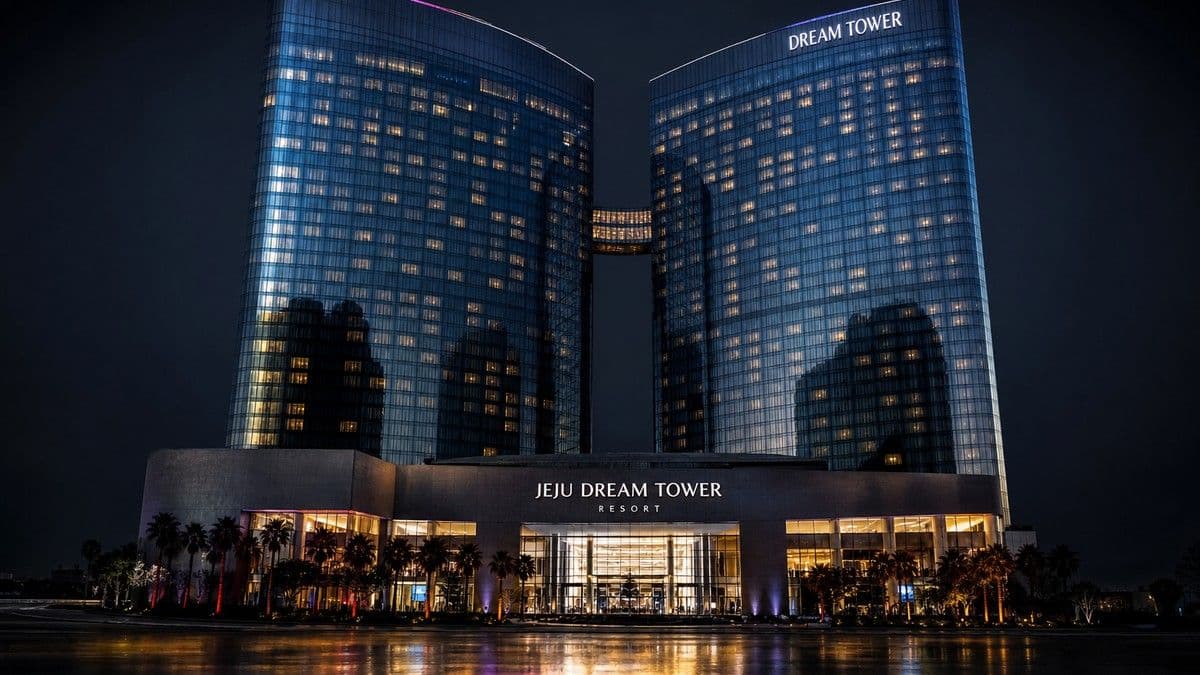
Approximately 400 employees of the foreigner-only Jeju Dream Tower Casino began a strike at 07:00 on Monday, September 28, 2026, reported the union representing part of the workforce. The Jeju Autonomous Government indicated to GGRAsia that the action was set to last until 07:00 on Saturday, October 3, 2026, and that the casino remained open with a reduced number of tables in operation.
Context and Timeline of the Strike at Jeju Dream Tower
The current strike follows a two-day partial stoppage on September 18 and 19, 2026, in which approximately 300 employees participated, according to the Korean Service Workers' Union. The union is part of the Korean Federation of Trade Unions. The casino's management confirmed to GGRAsia that the strike had begun among part of the staff but rejected the union's explanations regarding the reasons for the conflict.
According to data from the Ministry of Culture, Sports and Tourism of the Republic of Korea, Jeju Dream Tower Casino had a total of 1,175 employees as of April 2026. The union claims that around 400 workers joined the strike on September 28, while the management and local government reported that the establishment continued operating with fewer gaming tables.
Demands of the Korean Service Workers' Union and Points of Friction
The Korean Service Workers' Union, through its branch at Jeju Dream Tower Casino, demands concrete changes in working conditions and the remuneration system. The main demands they have raised in the conflict include:
reducing the duration of dealer shifts to 60 minutes, compared to the current regime;
implementing a formal performance bonus system;
higher starting salaries for new hires;
modifications to promotion and compensation criteria.
The union argues that dealers typically work shifts of 80 minutes with 20 minutes of break time, and that sometimes they end up working 120 minutes continuously. Additionally, they pointed out that it takes some dealers 10 minutes just to reach the break areas, which reduces effective rest time.
"Current schedules do not reflect the business's expansion or the actual workload that employees bear," said the union in a statement shared with the Jeju government.
The union's statement adds that the protest is not solely seeking salary increases but aims for an overall improvement in working conditions alongside the expansion of gaming tables and equipment.
Management Response: Lotte Tour Development Co Ltd
Jeju Dream Tower is operated by Lotte Tour Development Co Ltd. In a statement sent to GGRAsia the morning after the strike began, the company refuted the union's claims about the causes of the strike and asserted that operations continued normally despite the absence of part of the staff.
The company justified the 80-minute shift system with 20 minutes of breaks as a practice used in relevant foreign markets, explicitly citing the markets of Macau and Singapore. Lotte Tour Development rejected any notion that this scheme constitutes a violation of international standards in casino operations.
Operational Effects and Labour Risks in the Jeju Market
The Jeju Autonomous Government confirmed that the casino remained open during the strike period, but with a reduced number of gaming tables in operation. The operational reduction implies an immediate impact on customer service capacity and table revenues, although authorities and management did not provide daily activity figures during the strike days.
The union has also requested that the Jeju government consider the impact of casino expansion on staffing levels, workloads, and conditions related to the oversight of tables and equipment. In its public note, the union warned that expanding the gaming facility without changes in staffing deteriorates effective rest time and job security.
Operators and suppliers in the region are closely monitoring the conflict, which raises questions about labour governance in expanding casino markets. For the B2B sector, the dispute underscores the necessity for human resource evaluation when expanding gaming capabilities.
Precedents and Negotiation Pathways
The root of the conflict was the inability of the branch of the Korean Service Workers' Union at Jeju Dream Tower Casino and management to bridge differences in collective salary and condition negotiations, according to local government officials. No specific salary proposals have been disclosed to the public by either party.
The usual pathways for resolving these conflicts involve resuming collective negotiations, mediation by the Jeju Autonomous Government, or intervention by national labour authorities if parties fail to reach an agreement. The official strike timetable set by the government — from September 28 to October 3, 2026 — established a timeframe in which both parties could intensify dialogue.
Repercussions for the Market and Upcoming Dates
In the short term, the direct impact is operational: closed tables and pressure on personnel not called to strike. In the medium term, negotiations will determine concrete changes in shifts and compensation that could serve as a reference for other casinos in the region. The development of the conflict and any resulting agreement will be closely followed by operators, unions, and regulators.
For related coverage on regulation and institutional response, see our regulation section, and for operational updates in the local market, see news.
Frequently Asked Questions
How many employees participated in the Jeju Dream Tower strike and when did it start?
Approximately 400 employees participated in the strike, which began at 07:00 on Monday, September 28, 2026. The Jeju Autonomous Government indicated that the action was scheduled until 07:00 on Saturday, October 3, 2026.
What labor demands does the Korean Service Workers' Union raise at Jeju Dream Tower?
The union is demanding 60-minute shifts for dealers, the implementation of a formal performance bonus system, and higher starting salaries. They are also requesting changes to promotion and compensation criteria and improvements related to workload driven by casino expansion.
How many employees did Jeju Dream Tower Casino have before the strike?
Jeju Dream Tower Casino had **1,175 employees** as of April 2026, according to data from the Ministry of Culture, Sports and Tourism of the Republic of Korea.
How did Lotte Tour Development respond to the union's complaints?
Lotte Tour Development Co Ltd rejected the union's claims and stated that operations continued normally. The company defended the 80-minute shift policy with 20-minute breaks as a practice used in the markets of Macau and Singapore.
What operational effect did the strike have on the casino?
The casino remained open during the strike, but operated with a reduced number of gaming tables. Authorities did not provide daily activity figures during the strike days.
Tags
About the author

Gonzalo Marín
Industry Deals Correspondent
Gonzalo Marín covers the corporate deal flow of gambling — operator strategy, M&A, regulated-market entries, and product launches. The reports open with the transaction, cite companies, valuations, and jurisdictions exactly as released, and keep the announcement apart from its actual effect. When a Latin American operator raises capital or a European brand lands in the region, Gonzalo Marín reports who signs, for how much, and on what terms.
More from Gonzalo Marín