Six months on, Resorts World New York grows capacity but not revenue
Slots nearly doubled while weekly GGR stayed near $30M between May and November
Key Takeaways
- Resorts World New York averaged roughly $30,000,000 in weekly GGR between May and November 2026.
- The property expanded from ~2,500 to nearly 4,000 slots and from 240 to 350 tables in six months, with plans to reach 6,000 slots and 800 tables.
- Average slot win per unit fell from $1,505 to about $700 daily while weekly promotional credits rose above $1,700,000.
- Resorts World pays 56% on slots and 30% on tables; competing projects pledged lower rates and plan openings in 2030.
- The Gaming Facility Location Board warned the $5,500,000,000 expansion depends heavily on future cash flow and additional debt financing.
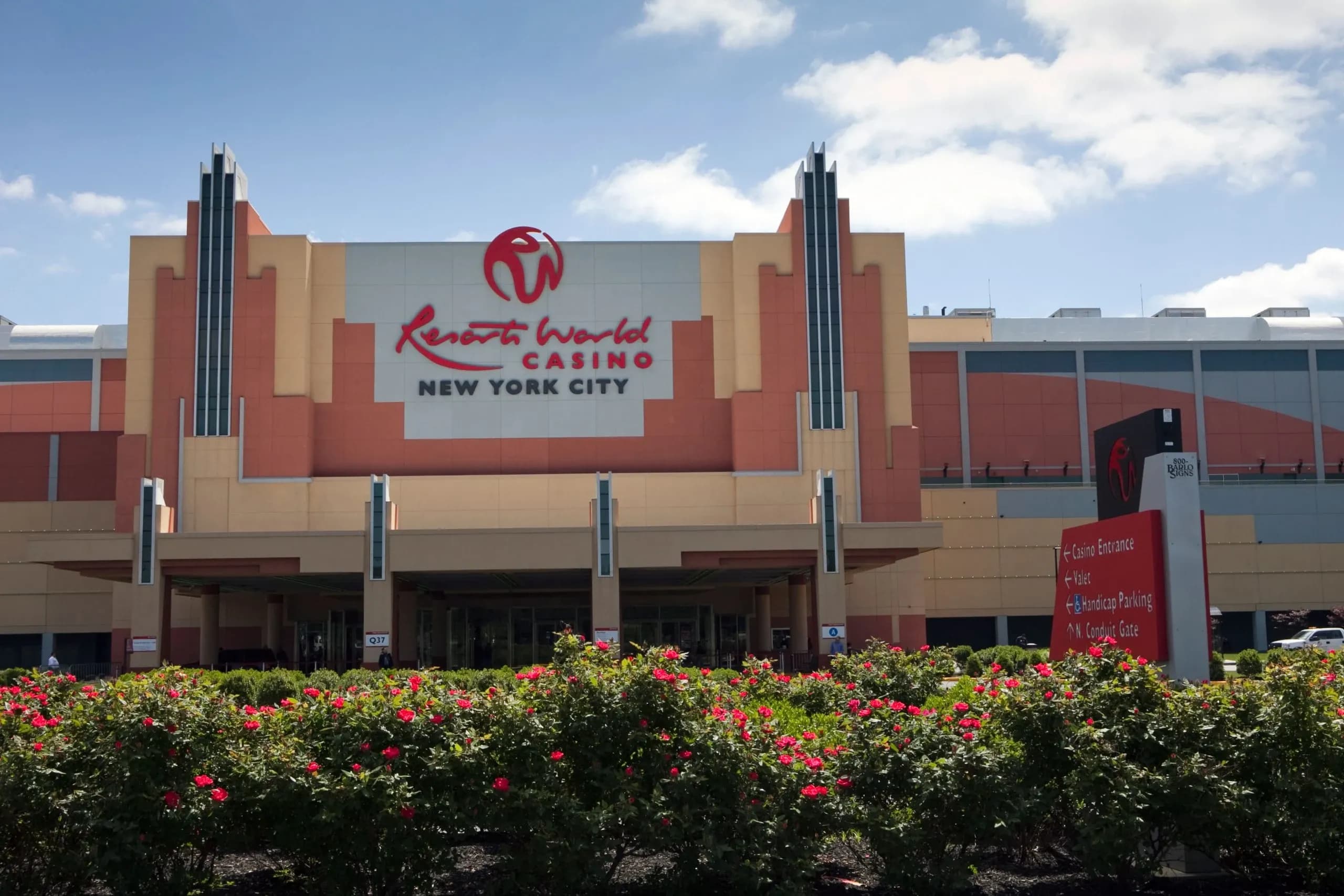
Resorts World New York has completed six months as a commercial casino and is averaging about $30,000,000 in gross gaming revenue (GGR) per week between early May and early November 2026, according to the [New York State Gaming Commission](/regulation). That weekly average moved in a range of roughly $27,000,000 to $32,000,000 despite a substantial increase in gaming inventory over the same period.
Expansion of capacity without a proportional revenue jump
The complex opened with about 2,500 slots and 240 tables; it currently reports nearly 4,000 slots and 350 tables. Project management has said it plans to raise those totals gradually to 6,000 slots and 800 tables. In its licensing selection report last year, the Gaming Facility Location Board (GFLB) stated that Resorts World only included configurations for 4,635 slots and 534 tables in its application. I note the site now markets significantly more slots and tables within the property than originally filed with regulators; for background on casino operations see [/casino].
On the slots side, average win per unit per day fell from $1,505 in the opening week to about $700 today. Promotional spend has increased: weekly promotional credits rose from an average of $700,000 in the first months to more than $1,700,000 per week now. Even so, slot GGR has held in a narrow band of $19,000,000 to $22,000,000 per week.
Table performance likewise has not matched unit growth. In the third week of October, Resorts World recorded $12,200,000 in table GGR with 242 tables; in the following two weeks, with 301 and 345 tables, table GGR was below $10,500,000 in both periods.
Projections, tax rates and financing risks
Resorts World submitted the most aggressive estimates during the licensing process. The company projected that in 2031, when the three downstate licensees are operational, its annual GGR would be $2,700,000,000 to $3,000,000,000. The Gaming Facility Location Board said those figures "significantly exceeded" the projections of other bidders and the state's internal analysis, "primarily due to assumptions related to tourism and high-end play." I contacted the GFLB through their public filings and statements; for regulatory context see [/b2b].
At the current approximate annual GGR run-rate of $1,500,000,000, reaching Resorts World’s projections would require nearly doubling revenue while two nearby competitors are in operation. Hard Rock Metropolitan Park and Bally's Bronx submitted more moderate forecasts and committed to lower tax rates. Resorts World currently pays 56% on slots and 30% on tables; Bally's committed to 30% and 10% respectively, and Metropolitan Park to 25% and 10%. Both competing projects are planned to open in 2030.
The GFLB warned that Resorts World’s $5,500,000,000 expansion and renovation "relies heavily on future operating cash flow and future debt financing" and that if performance "falls below projections or if additional debt cannot be secured," the project could face "funding shortfalls, potentially requiring further capital support to complete the project from its parent, an affiliate, or third parties." The board explicitly tied those risks to a potential need for additional owner or external financing.
Dispute over horse-racing levy
Resorts World and Governor Kathy Hochul’s administration are embroiled in a dispute over whether the 56% levy applied to slots includes obligations to racing purses. The state’s position is that the 56% tax is separate from racing support payments, which would amount to $150,000,000 or more per year if paid separately. Resorts World says its 56% rate already incorporates the racing burden and warned that adding it would push the effective rate above 70%, which it says would be unworkable for operations and credit leverage.
The State Legislature approved a bridge measure during the summer to ensure the racing industry receives payments while the matter is resolved, but the dispute remained unresolved into early September. Gordon Tepper, a spokesperson for the governor, said:
"By law, tax rates do not, and have never, included racing support payments."
Stefan Friedman, a Resorts World spokesperson, said the parties are "having constructive conversations" about how to "build on our successful partnership," without confirming whether the project would be scaled back or cancelled if the tax interpretation is not favorable to ownership.
Racing activity and the calendar toward Breeders' Cup 2027
Resorts World New York is located on the grounds of Aqueduct Racetrack, which closed in June during the venue conversion. The New York Racing Association depends on sponsors to sustain purses; in August the casino sponsored the Resorts World Ballerina Stakes at Saratoga Race Course. The Grade I, 7-furlong filly race was won by Ways and Means, a 5-year-old mare owned by Klaravich Stables.
Ways and Means also won the Fillies & Mare Sprint on 31 October at the Breeders' Cup World Championships. Belmont Park reopened after a temporary closure for its $550,000,000 redevelopment; before hosting the Breeders' Cup 2027, Belmont will stage an extensive autumn meeting. The 2026 meeting at Belmont features $17,700,000 in total purses, including the Jockey Club Gold Cup of $1,000,000.
Immediate outlook
The six-month data show growth in capacity and promotional spend but stagnation in total GGR. The outcome of the tax dispute with the state and the trajectory of demand at tables and slots will be decisive for the financial viability of Resorts World New York’s ambitious $5,500,000,000 plan.
Frequently Asked Questions
What has Resorts World New York’s weekly GGR averaged in the first six months?
The weekly average GGR from early May to early November 2026 was about $30,000,000, moving in a range of approximately $27,000,000 to $32,000,000, according to the New York State Gaming Commission.
How has Resorts World’s slots and table capacity changed in that period?
Resorts World opened with about 2,500 slots and 240 tables and has grown to nearly 4,000 slots and 350 tables, with announced plans to eventually reach 6,000 slots and 800 tables.
What is the tax dispute between Resorts World and the state about?
The dispute centers on whether the 56% levy applied to slots includes payments to racing purses; the state says the tax is separate and racing support would total about $150,000,000 or more annually, while Resorts World says the 56% already accounts for those payments.
What financing risk did the Gaming Facility Location Board identify?
The GFLB said Resorts World’s $5.5 billion expansion "relies heavily on future operating cash flow and future debt financing" and warned that if performance falls short or debt cannot be secured, the project could face funding shortfalls requiring additional capital support from the owner or external financiers.
Tags
About the author

Alejandro Vidal
Casino Correspondent
Alejandro Vidal covers the online casino business — slot and live-table debuts, game mechanics, certifications, and the distribution deals that carry each title into regulated lobbies. The reports open with the launch or the deal, name studios, titles, and markets precisely, and avoid promotional language. When a studio redefines a mechanic or an operator signs an exclusive, Alejandro Vidal explains what changes for the player and the market.
More from Alejandro Vidal