Justin Vaysman climbs from 19 big blinds to win his first PGT title at Poker Masters
Vaysman turned 20,000 chips into the trophy after a long seven-handed final on Monday.
Key Takeaways
- Justin Vaysman climbed from 19 big blinds to defeat Sean Winter and win Event #6 of the PokerGO Tour Poker Masters for his first PGT title.
- The final table began Monday with seven players; Winter was chip leader and Vaysman sat third.
- Vaysman turned 20,000 chips into 140K through a runout and successive doubles that fueled his comeback.
- Tony Gregg finished fifth and earned $48,000.
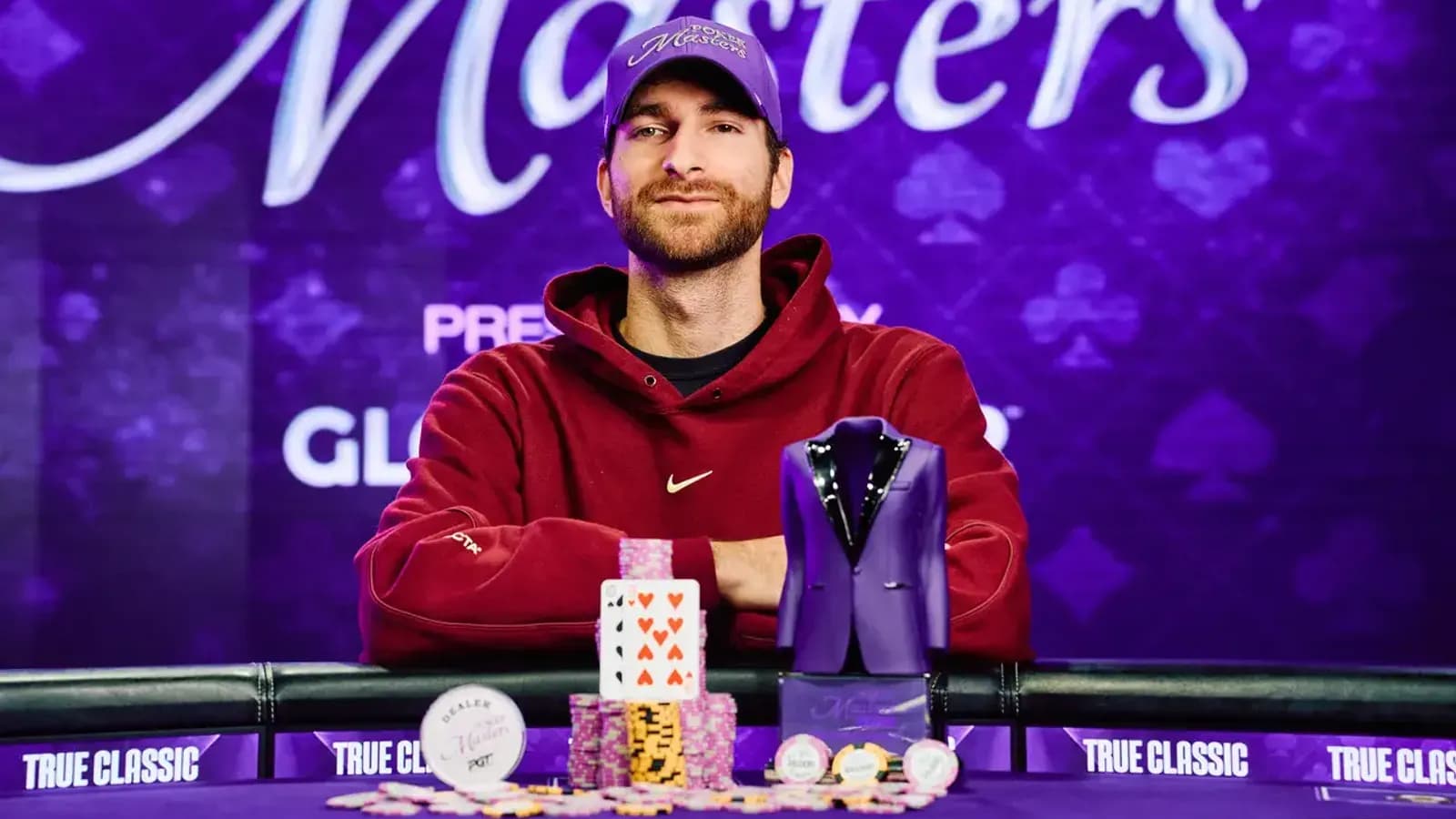
Justin Vaysman came back from a deficit of 19 big blinds against Sean Winter and won the Poker Masters trophy, claiming his first title on the PokerGO Tour (PGT). The decisive action took place during the heads-up phase, but his comeback began earlier: the final table started on Monday with seven players and Vaysman third in chips.
Seven-player final table
When the seven-handed final table of Event #6 of the PokerGO Tour Poker Masters began on Monday, Sean Winter held the chip lead, Victoria Livschitz sat second, and Justin Vaysman was close behind in third. Sam Laskowitz and Brandon Wilson occupied fourth and fifth place respectively. Veteran Tony Gregg and Joey Weissman, the Event #3 Poker Masters champion, were the short stacks but still in contention.
Sam Laskowitz was the first elimination in seventh place after committing most of his chips. Victoria Livschitz, from the small blind, called and connected to make a set on the flop; the remaining chips went in and Laskowitz was eliminated before the runout completed. Weissman fell shortly after in sixth place following a confrontation with Livschitz that the board resolved.
The turning point: from 20,000 chips to the comeback
During a long stretch with five players, Vaysman clashed with Winter in a blind-versus-blind confrontation that left him with 20,000 in chips, an amount the report described as "a fraction of a big blind." From that moment his comeback began.
The next hand forced Vaysman to risk it all by calling the small blind; Winter moved his chips from the button and Brandon Wilson folded the big blind. That runout turned Vaysman’s 20K into 140K, enough to survive several more hands. In the next big blind orbit Vaysman was all-in again and doubled through Tony Gregg, then doubled once more in another hand where his cards ran out ahead of Gregg.
Those three successive recoveries were decisive: Vaysman went from surviving on crumbs to having chips with which to apply pressure. The report records that Vaysman "was the fortunate recipient of a pay jump of nearly $20,000" after those initial doubles.
Multiway hand and Wilson elimination
After adding chips, Vaysman won more when his hand held against Winter in another clash; later, a three-way all-in between Vaysman, Wilson and Winter altered the table dynamics. Winter opened with an oversize raise from the button; Vaysman jammed from the small blind and Wilson called from the big blind. The runout saw Vaysman triple his stack with a straight. Wilson was left with dust and his last chips were immediately absorbed by Winter in subsequent hands.
Only two hands were dealt after Wilson’s elimination during three-handed play. In the second of those two hands, Livschitz went all-in from the small blind and ran into Winter’s hand; a king of the same suit appeared on the flop, leaving Livschitz drawing dead and confirming her elimination.
Heads-up: pressure and decisions
The heads-up started with Winter at a large advantage: 61 big blinds against Vaysman’s 19 big blinds. After an hour of heads-up without eliminations, Winter, from the small blind, applied maximum pressure in a play that put nearly all of Vaysman’s chips into the pot; Vaysman called and both reached showdown, where Winter won the pot with a pair on the river.
Winter opted to keep Vaysman short-stacked to increase pressure, a tactic the report describes as a decision he would later regret. The next hand ignited the definitive comeback: Vaysman was forced all-in by calling the small blind and, after a favorable runout, turned that survival into another double; he then doubled again and later hit the key hand that gave him the chip lead.
From the button in the decisive hand, Vaysman limped and called a raise from Winter. The board completed without connecting decisively to Winter’s hand, who had a range advantage and made small bets on the turn and river. Winter shoved all his chips on the river; Vaysman called and took the chip lead. Two hands later he closed out the victory and collected the Poker Masters trophy and his first PGT title.
Payouts and final places
Tony Gregg finished fifth and collected $48,000. The report highlights Vaysman’s progression through the final table and the sequence of doubles that allowed him to capitalise on Winter’s pressure and earlier eliminations.
Images and credit: Antonio Abrego/PokerGO Tour.
Frequently Asked Questions
How did Justin Vaysman’s comeback begin at the final table?
Vaysman’s comeback began after a blind-versus-blind clash left him with 20,000 chips; on the next hand he was forced to call the small blind and a runout converted those 20K into 140K, kick-starting his recovery.
What was the chip difference between Vaysman and Winter at the start of the heads-up?
At the start of heads-up Sean Winter held 61 big blinds while Justin Vaysman had 19 big blinds, according to the Event #6 PokerGO Tour Poker Masters report.
What place and prize did Tony Gregg finish with at the final table?
Tony Gregg finished in fifth place and was paid $48,000 in Event #6 of the PokerGO Tour Poker Masters.
Was there a three-way hand that changed the table dynamic?
Yes; a three-way all-in between Vaysman, Wilson and Winter ended with Vaysman making a straight and tripling his stack, leaving Wilson with dust and reducing Winter’s advantage.
Tags
About the author

Sofía Carrasco
Poker Correspondent
Sofía Carrasco covers live and online poker — tournament series from the WSOP and EPT to the daily room grind, promotions, and the industry moves behind them. The reports keep every score, pot, and player name exactly as the record shows, and follow the story past the final hand: who qualified, what the structure rewarded, and how the field is shifting. For player moves, software, and regulation across the poker economy, Sofía Carrasco is the first read.
More from Sofía Carrasco