Online Poker in Mexico 2026: Licensed Rooms, Tax Changes, and Rake Comparison
A comprehensive guide to online poker rooms approved by the Dirección General de Juegos y Sorteos in Mexico, including tax updates, rake structures, and practical advice for players.
Key Takeaways
- Legal online poker in Mexico requires a valid Dirección General de Juegos y Sorteos permit.
- The IEPS tax rate for operators increased from 30% to 50% on 1 January 2026.
- Players are subject to 1% ISR and approximately 6% additional state tax on winnings.
- Rake structures vary between operators and directly impact long-term profitability.
- Reliable withdrawals are fastest through SPEI, with verified accounts completing in under 24 hours.
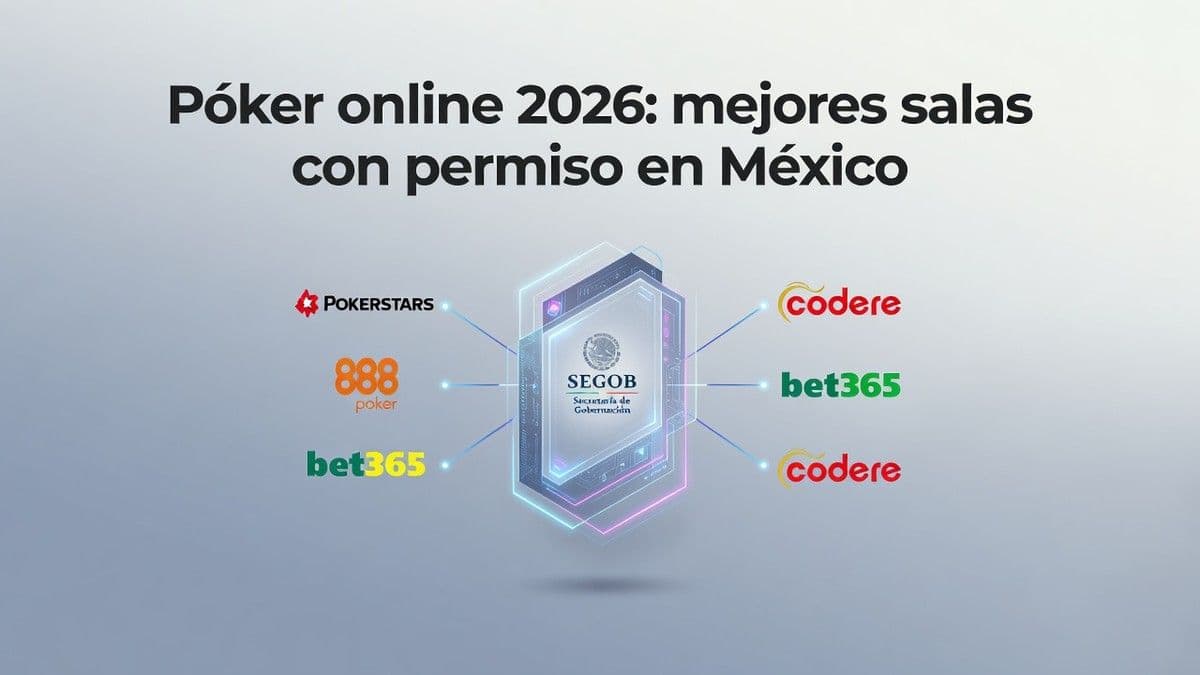
Online poker is legal and available in Mexico in 2026—but only when played at a room operating under a valid permit from the Dirección General de Juegos y Sorteos (DGJS), under the Secretaría de Gobernación. All rooms included in this analysis have verified licensing, and their withdrawal times, rake structures, and traffic have been tested by Poker.org. Recent changes, such as the 2026 IEPS tax increase and ongoing requirements for player verification and reporting, significantly shape the current landscape.
Focus on Licensed Online Poker Rooms in Mexico
Only operators listed in the official DGJS registry with a matching permit number are included. Each room is tested anonymously: Poker.org registers an account, deposits real funds, plays during multiple time windows, interacts with Spanish-language support, and executes at least one withdrawal. Any room failing permit verification is excluded.
Essential steps for verifying a licensed Mexican poker room:
- Locate the permit number (format: DGJS/DGAAD/DCRCA/P-XX/XXXX) in the site footer.
- Match both operator name and number with the DGJS official registry.
- Confirm a minimum age of 18 and the presence of responsible gaming tools.
- Ensure acceptance of pesos (MXN) and local payment methods, especially SPEI.
A mismatch at any stage signals a risk — no bonus can compensate for the uncertainty of an unlicensed site.
Key Criteria: Traffic, Rake, and Withdrawals
The foundation for these rankings: playing against other players, not the house, requires active tables. Traffic is checked during weekday afternoons, early evenings, and late nights to ensure low-stakes and tournament options are available when most people play. An excellent client is irrelevant if cash games never fill.
Rake and commissions are tracked in both cash games and tournaments. All providers list both a percentage and, for cash games, a capped maximum per pot. Tournament commissions are shown separately (e.g., $200 + $20 MXN, where $20 is the rake). A lower, well-capped rake has a greater impact over time than most sign-up bonuses.
Withdrawals and Verifications
Each withdrawal is tested on different days, with measured real-world processing times. Most local players use SPEI for both instant deposits and swift withdrawals (typically within 24 hours, assuming identity verification is completed). Deposits in cash at convenience stores like OXXO are common, but withdrawals always require a linked bank account in the player's name. The first withdrawal always takes longer due to KYC requirements; players are advised to submit official ID and proof of address right after opening their account.
New Tax Rules for Mexican Online Poker in 2026
The federal government enacted a tax change effective January 1, 2026: the IEPS (special tax on production and services) rate for gaming increased from 30% to 50%. Operators, not players, pay the IEPS. This impacts room margins, resulting in leaner promotions and potentially tighter rake structures.
For players, winnings are subject to ISR according to Article 138 (1% withholding at the source) and an additional local tax averaging 6%, depending on the player's state. Taxes are retained before disbursement, and operators issue corresponding documentation. For significant or multiple income sources, players may need to consult their accountant regarding annual returns.
Rake Structures: The True Cost of Play
Poker in Mexico does not feature an inherent house edge. Instead, rooms make their profit from the rake — a proportion of each cash game pot (up to a maximum), or a fixed fee added to tournament buy-ins. The most influential factor, especially for regulars, is the rake cap in cash games—higher percentages with lower caps can be less costly than the reverse, especially at high-stakes tables.
Example rake applications:
- Cash games: Percentage of pot up to a maximum per hand reaching showdown
- Tournaments: Fixed commission separate from the prize pool entry
- Sit and go's: Higher commission rates, especially at low buy-ins
- Fast-fold and new formats: More hands per hour, meaning greater rake volume per session
Rakeback (reward programs) are significant for high-volume players but less impactful for occasional users due to typically tiered payouts. Bonus offers should be assessed for release conditions, expiry, and eligible formats, as smaller, clearer bonuses often deliver better value than large ones with challenging requirements.
Game Types, Variants, and the Role of Traffic
The major formats are cash games, scheduled multi-table tournaments (MTTs), and sit and go's (SNGs). Texas hold’em dominates activity, with multiple tables and tournament schedules even outside peak hours. Omaha (pot-limit) attracts players seeking bigger pots and more strategic complexity, but is less frequent.
Hand rankings are consistent across platforms:
- Royal flush (10 to ace, same suit)
- Straight flush
- Four of a kind
- Full house
- Flush
- Straight
- Three of a kind
- Two pair
- One pair
- High card
Tie-breakers use the highest relevant card; suits have no rank. Learning this hierarchy is recommended before real-money play.
A regulated room with low traffic means slow tournament fill times and limited table options, especially in off-hours. Poker.org recommends checking the number of open tables at the times you actually want to play before committing to any room.
Payment Methods, App Quality, and Player Protection
SPEI remains the preferred payment channel, with instant deposits and next-day withdrawals. Bank transfers are suitable for higher amounts but take longer to clear. Convenience store deposits (like OXXO) work for funding accounts, but always require a bank account for eventual payouts.
A robust mobile app should offer stable connections during long tournaments, multi-tabling on tablets, integrated deposit/withdrawal, and support for biometric login. Quick access to session history and responsible gaming tools is important. For most players, app stability is more valuable than feature overload.
Practical Steps for New Players
- Choose a room with a valid DGJS permit; confirm both name and number match the registry.
- Complete real-name registration and supply documentation immediately.
- Set deposit limits from the outset.
- Use local payment methods (SPEI, debit card) for the smoothest process.
- Favour low-stakes tables and freerolls to start, especially in Texas hold’em.
- Check the traffic and tournament calendar fit your actual playing schedule.
- Prioritise lower rake and accessible support over large bonuses or advanced features.
Summary: Evaluating the Best Licensed Poker Rooms
No single room is best for everyone. Prioritise licensing verification, adequate traffic at your preferred times and levels, the lowest effective rake, reliable withdrawals, and application of responsible gaming limits. Check Poker.org for ongoing updates as regulations, operator practices, and tested results evolve.
"The proper order: first the license, then the traffic at your limits, then the rake, then everything else." — Poker.org evaluation methodology
For broader coverage of online gambling reforms, payment solutions, and compliance news in Mexico, see the regulation and payments sections.
Frequently Asked Questions
Is online poker legal in Mexico in 2026?
Yes, online poker is legal in Mexico when played on rooms licensed by the Dirección General de Juegos y Sorteos under the Secretaría de Gobernación. Only DGJS-approved operators are permitted to serve the Mexican public.
How do I verify a poker room is licensed in Mexico?
Check for a permit number with the format DGJS/DGAAD/DCRCA/P-XX/XXXX in the site footer and confirm that both the operator's name and number match the DGJS official registry.
What tax applies to poker winnings in Mexico?
Poker winnings are subject to a 1% federal ISR withholding and an additional local tax averaging 6%, with all deductions handled by the operator before net payments are made.
What is the IEPS change for online poker in 2026?
Effective January 1, 2026, the IEPS rate on online gaming and betting increased from 30% to 50%. Operators—not players—pay this tax, affecting promotions and margins.
How does rake work in Mexican online poker rooms?
Rake in Mexican online poker rooms is a commission taken from cash pots (percentage up to a cap) or as a portion of the tournament buy-in, with amounts differing by operator and format.
Tags
About the author

Daniel Reyes
Poker Correspondent
Daniel Reyes covers live and online poker — tournament series from the WSOP and EPT down to the daily online grind, room news, promotions, and the industry moves behind them. The reports keep every score, prize pool, and player name exactly as the record shows, and follow the story past the final hand: who qualified, what the payout structure rewarded, and how the field is shifting. For roster changes, software updates, and regulatory knocks on the poker economy, Daniel Reyes is the desk's first read.
More from Daniel Reyes