Texas proposals seek voter approval for casinos and sports betting in 2027
Resolutions filed 9 Nov propose up to 10 casino licenses and tribal compacts
Key Takeaways
- Texas legislators filed resolutions on 9 November 2026 to put a constitutional amendment to voters on 2 November 2027 to allow up to ten commercial casinos and in-person sports betting.
- HJR 52 and SJR 11 would permit a maximum of 10 casino licenses, each with an initial term of at least 40 years, and tax revenue capped at no more than 15%.
- Both measures require the legislature to negotiate tribal-state compacts with the Alabama-Coushatta Tribe, Kickapoo Traditional Tribe of Texas and Ysleta del Sur Pueblo to allow Class III gaming on their lands under IGRA.
- SJR 11 would create a regulatory commission funded by state lottery revenues, tax receipts and license fees, with investigatory and enforcement powers.
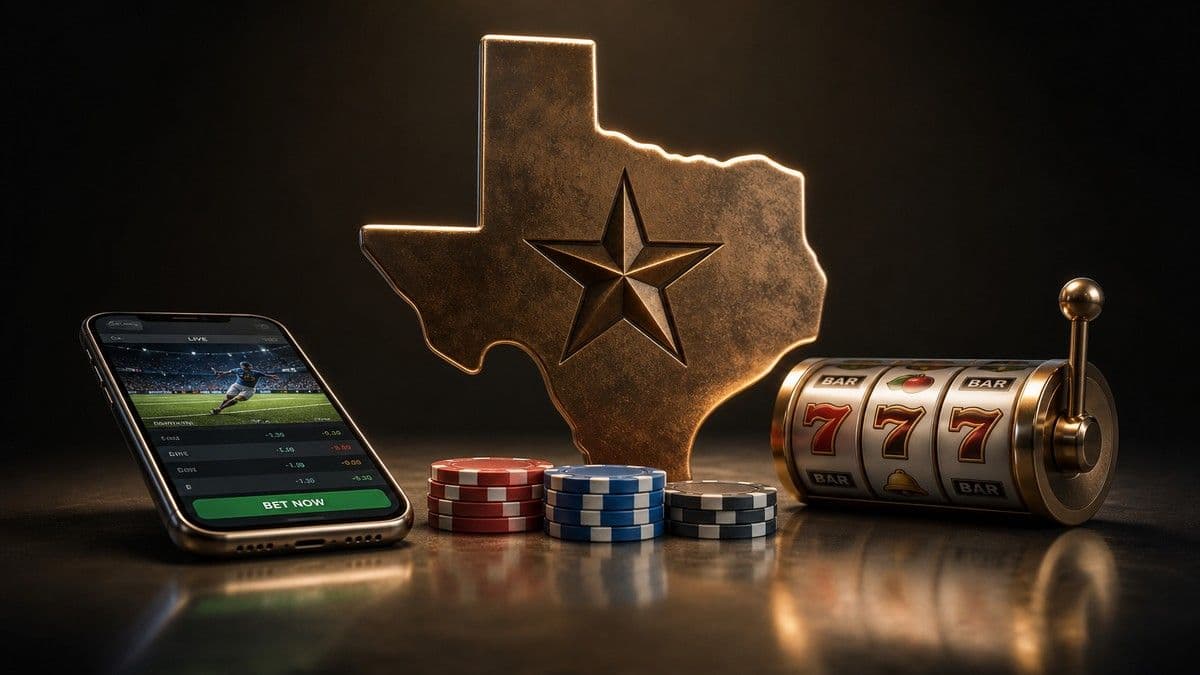
Texas legislators filed resolutions on 9 November 2026 that would put to voters on 2 November 2027 the question of allowing up to ten commercial casinos and in-person sports betting in the state. The measures also require the state legislature to negotiate tribal-state compacts with federally recognised Texas tribes to allow them to offer full-scale casino gaming.
What the resolutions propose
On the first day bills could be filed for the legislative session beginning 12 January 2027, the Texas House and Senate introduced joint resolutions that share the objective of submitting a constitutional amendment to authorise and regulate casinos and sports betting in Texas.
The lead measures are House Joint Resolution 52 (HJR 52), filed by Representative Charlie Geren (R), and Senate Joint Resolution 11 (SJR 11), filed by Senator Carol Alvarado (D). Both texts call for placing a question before voters on 2 November 2027 to decide the constitutional amendment.
The provisions common to HJR 52 and SJR 11 are these:
Casino gaming would be limited to physical facilities at authorised licensee locations.
The state could issue a maximum of 10 casino licenses, each with an initial term of at least 40 years.
State law would define which activities constitute “casino gaming” and “sports wagering” and would set the locations where casinos and sports betting are permitted.
Casino licensees and sports betting operators would pay an unspecified licensing fee and a tax of no more than 15%.
SJR 11 adds a difference: it includes creation of a regulatory commission to oversee authorised gaming in Texas. That commission would be funded by state lottery revenues as well as tax receipts and license fees from casino and sports betting, and would have law-enforcement powers, including investigatory and enforcement capabilities.
Tribal compacts and the tribes involved
Both resolutions require the legislature to negotiate and execute a tribal-state gaming compact with any of the three federally recognised tribes with lands in Texas to permit them to conduct Class III gaming on their existing lands under the Indian Gaming Regulatory Act (IGRA). The three named nations are:
Alabama-Coushatta Tribe in east Texas
Kickapoo Traditional Tribe of Texas in Maverick County
Ysleta del Sur Pueblo
Those tribes currently operate Class II facilities in Texas; the measures would create the framework for them to expand to Class III casino-style offerings if they choose. IGRA requires that, if a state authorises a particular form of commercial gaming, the tribes have the same opportunity if they negotiate a compact.
In addition, Senator Roland Gutierrez (D) filed SJR 12 on 9 November; its synopsis proposes a constitutional amendment to authorise the Kickapoo Traditional Tribe of Texas to execute a compact with the state. The full text of SJR 12 was not available at the time of publication.
Political context and changes after the 2026 elections
Political dynamics in Texas shifted in the 3 November 2026 midterm elections: Democratic candidates won the governorship, the lieutenant governorship and the state attorney generalship. The office of lieutenant governor, which presides over the state Senate, will cease to be held by Republican Dan Patrick —a declared opponent of gambling expansion— when his term ends.
The voters’ chosen successor for lieutenant governor is Vicki Goodwin (D). Goodwin told local media the previous year that she believed voters should be able to decide on issues such as gaming.
Charlie Geren and Carol Alvarado had proposed gaming expansions in 2025 that did not advance; that session also saw measures to permit sports betting that died in committee.
Industry and public responses
Among public proponents of sports betting is Jerry Jones, owner of the Dallas Cowboys, who said on 6 November that legalising sports betting would be beneficial for the state:
"It is a plus in my mind with the best place in the world for sports, Texas, for us to have the gaming and hopefully the new turnover, you might say, in the politics will see it that way," Jones said on a radio program on 6 November.
PENN Entertainment, which operates two racetracks classified as Class 1 in Texas, said it will step up its lobbying efforts in hopes of offering a physical casino or sports betting in future. Texas billionaire Mark Cuban told SBC Americas the Wednesday after the election:
"It certainly changes the calculus," Cuban said. "But I have no knowledge of anything that may or may not happen."
Alternative markets while prohibition remains
Although in-person commercial gaming and sports betting remain illegal in Texas, residents have access to prediction markets and unregulated betting platforms via mobile devices inside the state. platforms cited in public discussion include DraftKings, FanDuel, Kalshi and Polymarket. Legislators in other states have pointed to competition from untaxed prediction markets as a reason to support gaming expansion in 2026.
How the amendment would reach the ballot
For a joint resolution to advance to a public vote it requires approval by two-thirds of the members of each Texas legislative chamber. In prior sessions lawmakers filed similar measures without securing a floor vote in the Senate; in 2023 Dan Patrick used his position as Senate president to block a constitutional amendment on sports betting that had passed the House by 101–42.
The legislative session beginning 12 January 2027 will set the schedule and procedures to approve or reject the resolutions which, if they obtain the necessary votes, would place the matter on the 2 November 2027 ballot.
Miguel Sandoval, Regulatory Correspondent.
Frequently Asked Questions
What will Texans vote on if HJR 52 and SJR 11 pass?
Voters would decide on 2 November 2027 whether the state constitution should allow the legislature to authorise and tax commercial casinos and in-person sports betting. The texts authorise up to 10 casino licenses and specify that casino gaming be offered at physical facilities.
How many casino licenses do the resolutions propose?
The resolutions propose a maximum of 10 casino licenses, each with an initial term of at least 40 years; that figure appears explicitly in HJR 52 and SJR 11.
What role would tribes have under these proposals?
The resolutions require the legislature to negotiate and execute tribal-state compacts with the Alabama-Coushatta Tribe, the Kickapoo Traditional Tribe of Texas and the Ysleta del Sur Pueblo to permit Class III gaming on their existing lands under the Indian Gaming Regulatory Act.
How would the regulatory commission in SJR 11 be funded?
SJR 11 proposes that the commission be funded by state lottery revenues, as well as tax receipts and license fees from casino and sports betting, and grants it investigatory and enforcement powers.
Tags
About the author

Miguel Sandoval
Regulatory Affairs Correspondent
Miguel Sandoval tracks gambling legislation, licensing, and regulator enforcement — from Spain's DGOJ and the Latin American authorities to the UKGC, the MGA, and the state-by-state map in North America. The reports answer three questions precisely — what changed, where, and who it affects — with jurisdictions, dates, and penalties cited exactly as published. Operators and compliance officers read Miguel Sandoval to know which rulebook moved before their next meeting.
More from Miguel Sandoval