Lithuanian coalition backs progressive tax on gambling licences
Agreement could raise up to €36m a year; rates and bands still to be set
Key Takeaways
- The Lithuanian coalition provisionally agreed on 9 November 2026 to introduce a progressive tax on gambling licences.
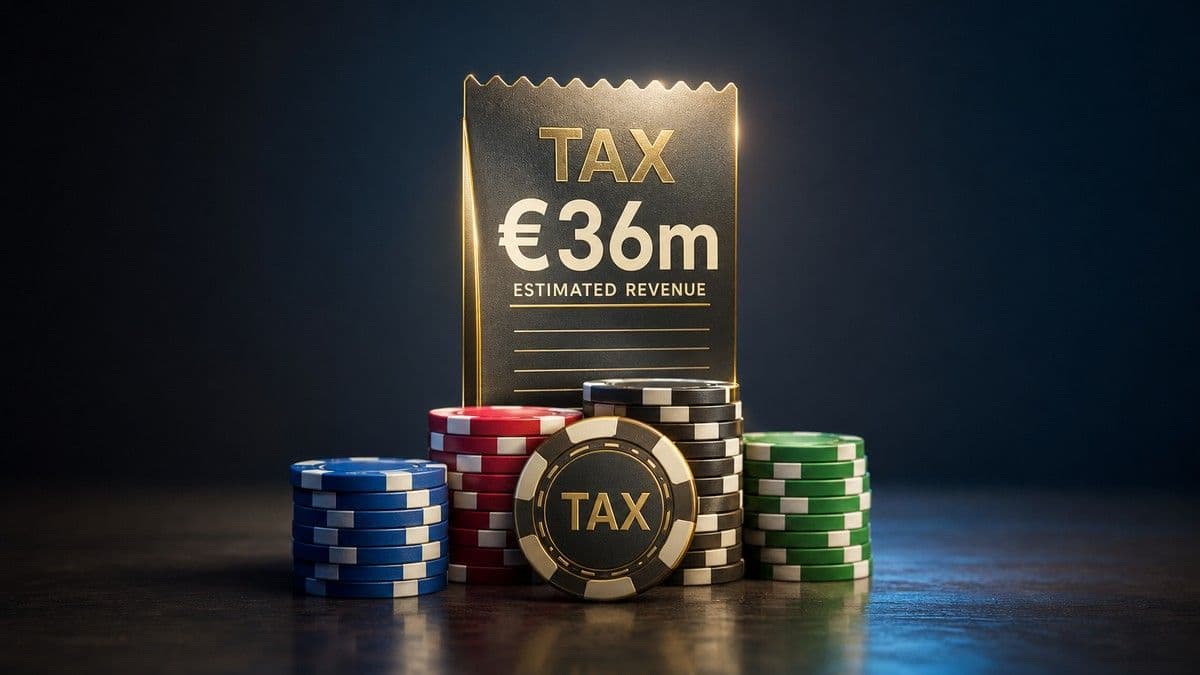
- Legislators estimate the measure could generate up to €36m of additional annual revenue for the State budget.
- Specific tax rates, bands and the implementation timetable have not yet been determined.
- Complementary regulatory reforms are set to come fully into force in 2028, including a national advertising ban from 1 January.
- The Gaming Control Authority will gain powers to impose fines up to €700,000 and banks must block payments to blacklisted sites within 24 hours.
The Lithuanian governing coalition on 9 November 2026 provisionally agreed to introduce a progressive taxation system for gambling licences that, according to supporting legislators, could generate up to €36m of additional annual revenue for the State budget. The Executive has not yet set the rates, bands or implementation timetable; the measure is part of negotiations over the 2027 state budget.
Who is covered and who supports the proposal
The initiative arose during a cabinet renegotiation led by Mindaugas Sinkevičius of the Social Democratic Party (LSDP), who has been Prime Minister since July. The agreement was reached within the “For Lithuania” coalition, with backing from the parliamentary group representing the Farmers Party, Greens and Christian Families.
The Democratic Union, led by Virginijus Sinkevičius (not related to Mindaugas Sinkevičius), includes in its team Minister Tomas Tomilinas, one of the principal promoters of the progressive tax. According to BNS, Tomilinas said after the meeting that the revenue package could provide €36m in additional budget receipts, although he did not specify the bands or tax rates.
“Finally, we have decided specifically on progressive taxation, specifically for gambling,” Tomas Tomilinas said after the meeting, according to BNS.
Relation to wider gambling reforms
The tax proposal will form part of the programme of reforms Lithuania is continuing to roll out across the gambling sector, covering advertising restrictions, compliance obligations and player-protection measures that are expected to come fully into force in 2028.
Measures already agreed or scheduled include:
a nationwide advertising ban scheduled to enter into force on 1 January under the current transitional timetable,
immediate restrictions on promotions in broadcast media and a prohibition on pop-ups and direct links to betting sites,
expanded powers for the Gaming Control Authority, including fines of up to €700,000 for serious breaches,
an obligation for banks to block payments to gambling sites placed on blacklists within 24 hours of receiving an instruction,
additional player-protection measures: technological monitoring of behaviour, deposit controls and staff training.
The introduction of mandatory player cards for most gambling activity will be implemented gradually between 2027 and 2028, with full rollout scheduled for 1 January 2029.
Next steps
Coalition partners must now specify the concrete bands and tax rates and agree their inclusion in the 2027 budget. The Government will continue to oversee the implementation of the other regulatory reforms while the fiscal framework is defined.
See also: related coverage in [regulation](/regulation) and sector updates in [news](/news).
Frequently Asked Questions
How much could the new gambling tax proposal raise in Lithuania?
Legislators supporting the proposal say the package could generate up to €36m of additional annual revenue for the State budget, though exact bands and rates have not been specified.
When will the complementary regulatory reforms take effect?
The wider set of reforms covering advertising, compliance and player protection is expected to come fully into force in 2028, according to the framework agreed by the coalition.
What new sanctions and obligations does the regulatory framework introduce?
The Gaming Control Authority will be able to impose fines of up to €700,000 for serious breaches, and banks must block payments to gambling sites placed on blacklists within 24 hours of an instruction.
What is the timetable for mandatory player cards in Lithuania?
Mandatory player cards for the majority of gambling activity will be rolled out gradually in 2027 and 2028, with full implementation scheduled for 1 January 2029.
Tags
About the author

Miguel Sandoval
Regulatory Affairs Correspondent
Miguel Sandoval tracks gambling legislation, licensing, and regulator enforcement — from Spain's DGOJ and the Latin American authorities to the UKGC, the MGA, and the state-by-state map in North America. The reports answer three questions precisely — what changed, where, and who it affects — with jurisdictions, dates, and penalties cited exactly as published. Operators and compliance officers read Miguel Sandoval to know which rulebook moved before their next meeting.
More from Miguel Sandoval