Gespa finds retail age‑check failures despite effective online safeguards in 2025 review
Mystery shopping showed almost half of 200 underage tests could bet in person; online protections performed better.
Key Takeaways
- Gespa's 2025 evaluation found online player‑protection measures work better than land‑based safeguards.
- Mystery shopping showed almost half of 200 underage test customers were able to place sports bets at retail outlets.
- Sports betting generated the highest average losses and the largest share of players losing more than CHF2,000 per month.
- Swisslos and Loterie Romande reported combined net profit of CHF814m in 2025, down 4.7% year‑on‑year.
Gespa concluded in its 2025 evaluation that player‑protection measures used by Swiss lottery operators Swisslos and Loterie Romande are generally effective online but show weaknesses at retail betting locations. Mystery‑shopping exercises found that almost half of 200 underage test customers were able to place sports bets at physical outlets, and self‑service terminals were less restrictive than staff‑assisted transactions.
Regulatory scope and purpose of the review
The Intercantonal Gambling Supervisory Authority (Gespa) carried out the review under Article 84 of the Federal Act on Money Gaming (BGS), which requires operators to submit annual reports describing their player‑protection measures and assessing their effectiveness. The assessment covers Swisslos, which operates lotteries in German‑speaking Switzerland, and Loterie Romande, which serves French‑speaking regions. Gespa's analysis of the 2025 reports was published with the consent of both organisations.
Gespa said online channels allow lottery operators to implement and evaluate responsible gambling safeguards more effectively than land‑based sales networks. While online gambling represented 24% of combined gross gaming revenue in 2025, land‑based channels accounted for the remaining 76%.
Underage controls and mystery shopping
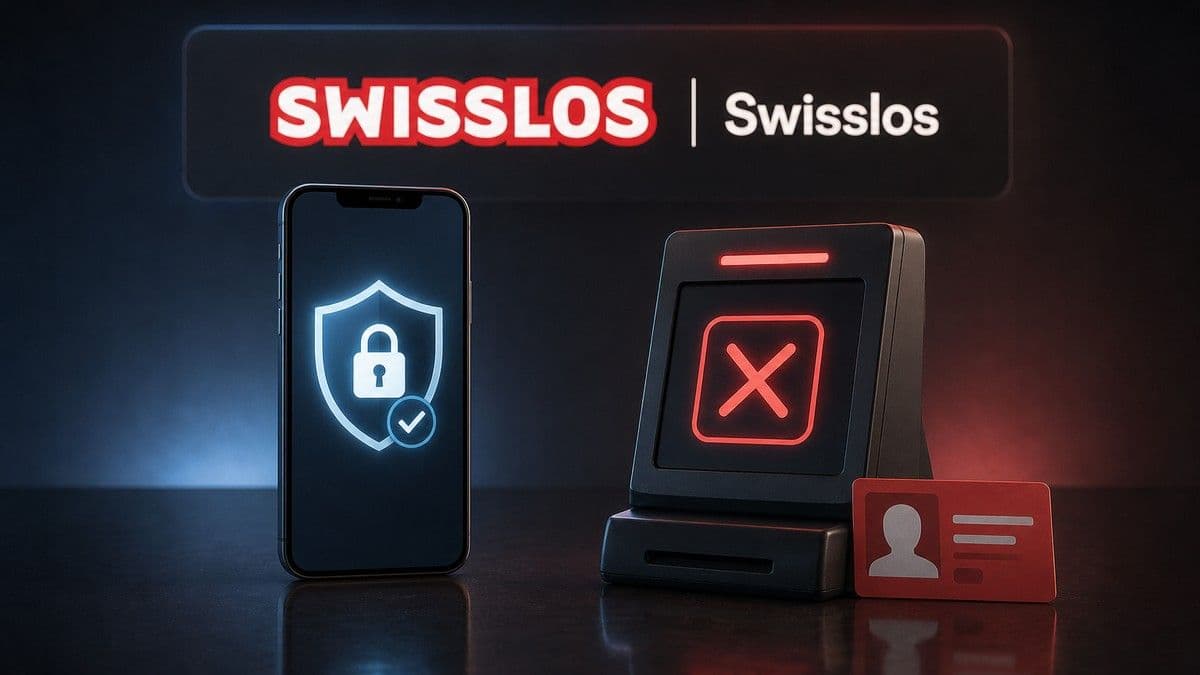
The regulator commissioned mystery‑shopping exercises that tested age‑verification at retail outlets. The exercises showed that almost half of 200 underage test customers could place sports bets in person. Gespa reported that self‑service betting terminals were generally less restrictive than transactions handled by staff, exposing "significant weaknesses at physical points of sale." The regulator and the operators are assessing technical solutions, including identity‑scanning technology for self‑service terminals.
Operators and Gespa have introduced additional staff training, further mystery‑shopping exercises and enhanced age‑verification tools following the findings.
Product risk, player losses and limits
Gespa identified sports betting as the highest‑risk product category in 2025. Under Swisslos’s Sporttip brand, sports betting generated the highest average player losses and the largest proportion of customers losing more than CHF2,000 (€2,170) per month. The regulator noted sports bettors tend to be younger and predominantly male.
Gespa warned that certain product features, including cash‑out options, may encourage impulsive behaviour or create an inflated perception of player control, and therefore warrant continued scrutiny.
Both operators maintain mandatory monthly loss limits across product ranges and a cap on monthly deposits. The stated limits include monthly loss caps of CHF2,000 and CHF900 for specific games, and a deposit ceiling of CHF10,000 across product categories. Only a small proportion of players reached those thresholds during 2025:
Swisslos reported 82 customers reached the CHF2,000 monthly cap at least once, representing 0.23% of those subject to that limit.
Loterie Romande recorded 160 such cases, equivalent to 1% of affected players.
Temporary self‑exclusion was used by 0.57% of active online Swisslos customers and 0.6% of active Loterie Romande users during 2025. Automated monitoring systems flagged 3,048 Swisslos players, or 0.47% of active users, and 220 Loterie Romande customers, representing 0.12% of their active player base.
Swisslos imposed 76 gambling bans under Article 80 of the Federal Act on Gambling during 2025, up from 39 in 2024. Loterie Romande issued 65 bans in 2025, compared with 56 the previous year. Gespa noted a significant number of exclusions followed voluntary requests from players.
Changes to monitoring and player tools
Loterie Romande replaced its Playscan tool during 2025 with a monitoring solution supplied by Sustainable Interaction. The new system combines recent gambling activity with self‑assessment results to generate a seven‑tier risk rating displayed to customers. Swisslos introduced new warnings for customers attempting a fifth deposit within a week and expanded the information and blocking tools available to players, including recommendations for blocking software such as Gamban and Net Nanny.
The regulator welcomed a Swisslos measure introduced in March 2026 that reduced the maximum monthly loss limit for Sporttip customers aged 18 to 21 to CHF1,000.
Financials and forward work
The two lottery operators reported combined net profit of CHF814m in 2025, down 4.7% from CHF854m a year earlier. Swisslos recorded a 5.7% decline in net profit to CHF562m, while Loterie Romande’s net profit fell 2.3% to CHF252m. Under Swiss federal rules, profits generated by the lottery operators are distributed by cantonal authorities to support public‑interest sectors including sport, culture and social services.
Swisslos intends to participate in a research project during 2026 and 2027 with cantonal and industry partners to examine the behaviour of excluded players and assess the effectiveness of gambling bans. Separately, the Federal Office of Statistics is conducting a nationwide study of gambling behaviour during 2026, with findings expected in 2027.
Regulatory context and areas for follow‑up
Gespa’s 2025 review stems directly from Article 84 of the Federal Act on Money Gaming and forms part of the authority’s ongoing oversight of the monopoly lottery operators. The report highlights a divergence between online and land‑based effectiveness of safeguards and sets out concrete areas where operators and the regulator will pursue technical fixes, enhanced staff training and further compliance testing.
For coverage of product developments and market implications, see Gespa’s references to Sporttip and the regulator’s commentary in sports and regulation reporting.
Frequently Asked Questions
What did Gespa find about underage gambling at retail outlets?
Gespa found that almost half of 200 underage mystery‑shop tests could place sports bets at retail outlets. The regulator reported self‑service betting terminals were less restrictive than staff‑assisted transactions, exposing weaknesses at physical points of sale.
Why does Gespa consider sports betting higher risk?
Gespa identified sports betting as the highest‑risk product because it produced the highest average player losses and the largest proportion of customers losing more than CHF2,000 per month. The regulator also noted sports bettors are generally younger and predominantly male.
What mandatory limits do Swiss lottery operators apply?
Operators apply monthly loss caps of CHF2,000 and CHF900 on certain games and a monthly deposit ceiling of CHF10,000 across product categories. Swisslos reported 82 customers reached the CHF2,000 cap at least once in 2025, while Loterie Romande recorded 160 such cases.
How did Swisslos and Loterie Romande perform financially in 2025?
The two operators reported combined net profit of CHF814m in 2025, down 4.7% from CHF854m the prior year; Swisslos net profit fell 5.7% to CHF562m and Loterie Romande’s net profit declined 2.3% to CHF252m.
Tags
About the author

Eleanor Whitfield
Regulatory Affairs Correspondent
Eleanor Whitfield tracks gambling legislation, licensing decisions, and regulator enforcement across key markets — from the UKGC, MGA, and Germany's GGL to Spain's DGOJ and the state-by-state map in the Americas. The reporting answers three questions precisely: what changed, where, and who it affects, with jurisdictions, effective dates, and penalty figures named exactly as published. Compliance officers and operators read Eleanor Whitfield to know which rulebook moved before their next board meeting.
More from Eleanor Whitfield