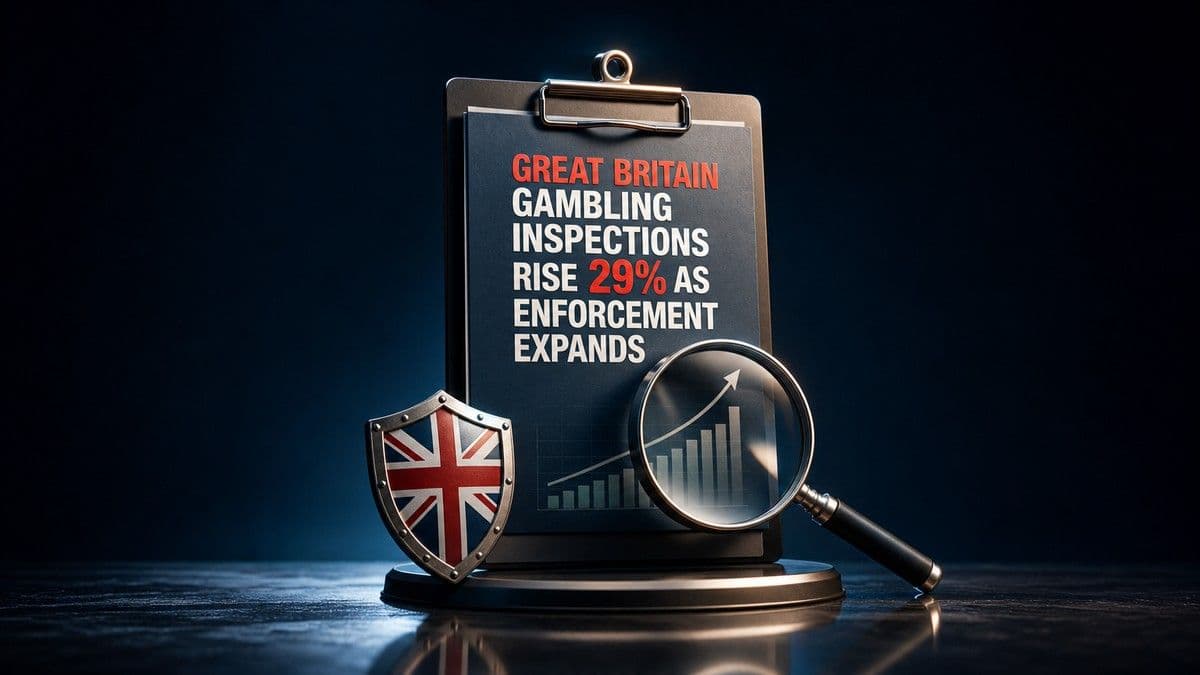
Great Britain gambling inspections rise 29% as enforcement expands
New machine rules and a five-year strategy are due to take effect in 2027.
Key Takeaways
- Local authority gambling premises inspections in Great Britain increased 29% in 2025/26.
- The government allocated £26m over three years to tackle illegal gambling, with £7m already being deployed.
- The Gambling Commission's next five-year strategy takes effect in April 2027 and includes preventing crime among five priorities.
- New Category B gaming machines face additional requirements from 30 June 2027, while existing machines are exempt.
- Licensed gambling premises fell 2% to 8,081 in 2025/26, including 5,617 betting shops.
Local authority gambling premises inspections in Great Britain rose 29% in 2025/26, according to the Gambling Commission. The regulator is expanding enforcement against illegal gambling with government funding and preparing a five-year strategy that will prioritise crime prevention and anti-money laundering supervision.
Gambling Commission director of policy Ian Angus disclosed the inspection figures in a speech to the Institute of Licensing National Training Conference. He credited local authorities for strengthening compliance efforts amid changes across the sector.
Angus described the inspection increase as “unprecedented” and said: “Good intelligence is a vital part of tackling illegal gambling.”
Enforcement operations and funding
Angus highlighted investigations into illegal venues in Manchester, Doncaster, Birmingham, Bristol and Sheffield. The cases involved offences ranging from unlicensed gambling and illegal gaming machines to money laundering and immigration offences.
An August operation in Sheffield and Doncaster brought together the Gambling Commission, South Yorkshire Police, the Yorkshire and Humber Regional Organised Crime Unit, local authorities and Immigration Enforcement. Authorities found 16 illegal betting terminals, cash and gold. Three people were arrested.
In July, an operation in Bristol disrupted an illegal casino and led to two arrests. The regulator has also reported a growing number of incidents involving illegal gambling in pubs. Angus cited card-based games including Chase the Joker, Play Your Cards Right and Higher or Lower-style games.
The government allocated £26m over three years in the 2025 Budget to strengthen the regulator's work against illegal gambling. The first £7m is already being deployed. Angus said the money was enabling the Commission to expand activity against illegal operations both online and on land.
The regulator has also dealt with more than 150 gambling compliance enquiries from councils during the current financial year, according to Angus.
Strategy and licensing changes
The Gambling Commission's next Corporate Strategy is due to take effect in April 2027. Its five broad priorities are regulating in the public interest, preventing crime, becoming a smarter regulator, supporting a successful National Lottery and strengthening organisational foundations.
“Work to tackle illegal gambling will be at the forefront,” Angus said. On the strategy's digital emphasis, he told delegates: “We think there are real opportunities to improve how our digital and data capabilities can improve outcomes for consumers and you as licensees.”
Anti-money laundering supervision will also be a major focus as the UK prepares for an upcoming Financial Action Task Force (FATF) evaluation. The strategy will give greater emphasis to data, digital capabilities and regulatory research.
The conference also covered changes to gambling regulation affecting councils and operators. Gambling Impact Assessments came into force in November 2026, giving councils powers to consider evidence of crime, deprivation, anti-social behaviour, public health and the concentration of existing gambling venues when assessing licence applications.
The Commission is preparing for a government consultation on the Gambling Act's “Aim to Permit” principle. The principle currently instructs licensing authorities to permit gambling where it is reasonably consistent with licensing objectives. Angus said the regulator is working with the Department for Culture, Media and Sport ahead of the consultation; no timetable has been announced.
New requirements for gaming machines
From 30 June 2027, new Category B gaming machines will have to provide enhanced gambling management tools and display session information showing how long customers have played and how much they have won or lost. Category B includes the highest-stakes and highest-prize machines available in Great Britain.
The reforms will prohibit the celebration of wins below the amount staked and prevent features designed to accelerate game outcomes. Existing machines will be exempt. Angus said the Commission changed several proposals after operators raised concerns about implementation costs and technical complexity, deciding against applying the measures retrospectively.
Angus said existing machines would be exempt because the complex technical changes and costs to business would not necessarily deliver proportionate consumer benefits.
Revenue and participation
The number of licensed gambling premises fell 2% to 8,081 during 2025/26. Betting shops declined 3.6% to 5,617. Angus cautioned that headline industry figures often concealed differences between sectors.
Overall gross gambling yield (GGY) rose 4.4% to £17.5bn in 2025/26, with online casino activity effectively responsible for all sector growth. Angus said online casino GGY was driving the headline growth figure across the gambling sector.
Land-based gambling revenue increased 1.1%. Adult gaming centres recorded 11% growth and non-remote bingo rose 8%, while betting shop revenue declined. Machine gaming revenue remained around £100m below pre-pandemic levels before the introduction of stake reductions on B2 machines, Angus said.
As announced in the government's Autumn Budget, operators face an increase in Machine Games Duty from April 2027. In the latest survey, in-person gambling participation stood at 28%, falling to 17% when lottery draw participants were removed.
Frequently Asked Questions
What did the Sheffield and Doncaster gambling operation uncover?
Authorities found 16 illegal betting terminals, cash and gold during the August operation. Three people were arrested in an operation involving the Gambling Commission, police, local authorities and Immigration Enforcement.
What can councils consider under Gambling Impact Assessments?
Councils can consider evidence relating to crime, deprivation, anti-social behaviour, public health and the concentration of existing gambling venues when assessing licence applications. Gambling Impact Assessments came into force in November 2026.
What information must new Category B machines display?
New Category B machines must display how long customers have played and how much they have won or lost. From 30 June 2027, they must also provide enhanced gambling management tools.
Which gambling sectors grew in Great Britain in 2025/26?
Online casino activity accounted for effectively all overall sector growth, according to Ian Angus. Adult gaming centre revenue grew 11% and non-remote bingo rose 8%, while betting shop revenue declined.
Tags
About the author

Eleanor Whitfield
Regulatory Affairs Correspondent
Eleanor Whitfield tracks gambling legislation, licensing decisions, and regulator enforcement across key markets — from the UKGC, MGA, and Germany's GGL to Spain's DGOJ and the state-by-state map in the Americas. The reporting answers three questions precisely: what changed, where, and who it affects, with jurisdictions, effective dates, and penalty figures named exactly as published. Compliance officers and operators read Eleanor Whitfield to know which rulebook moved before their next board meeting.
More from Eleanor Whitfield