Advanced Compliance Technology Unveils 'Fraud Rings' Real-Time Intelligence for Operators
Advanced Compliance Technology introduces its Fraud Rings feature, providing betting and gaming operators with real-time connected fraud detection via cluster analysis and visual risk scoring.
Key Takeaways
- Advanced Compliance Technology has launched Fraud Rings for detecting connected fraud and syndicate risks in regulated betting and gaming.
- Fraud Rings analyses real-time patterns across devices, accounts, locations, behaviours, and transactions.
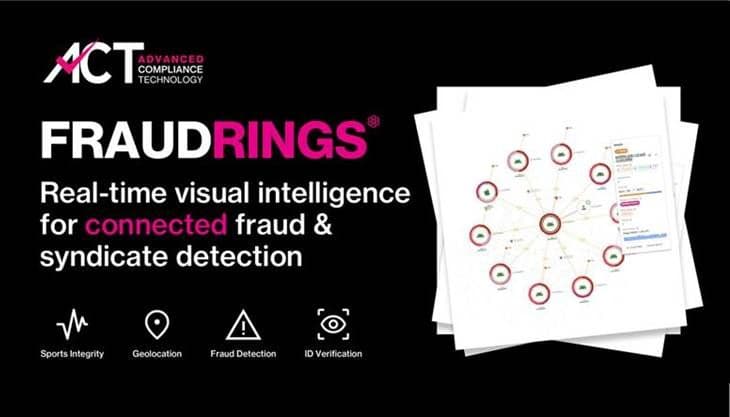
- The feature provides a visual bubble map with risk scoring to help compliance teams prioritise and investigate threats.
- ACT positions the tool as supporting both operators and regulators in identifying organised activity earlier.
- Market adoption and operator integration will determine the real-world impact of ACT's Fraud Rings feature.
Advanced Compliance Technology (ACT) has introduced Fraud Rings — a real-time intelligence solution aimed at surfacing connected fraud and syndicate activity across the regulated betting and gaming sector. The system consolidates multiple behavioural and transactional signals, letting compliance teams identify interlinked risks that may not be obvious from isolated alerts. This marks ACT's bid to position itself at the intersection of operational compliance, risk prioritisation, and actionable intelligence for operators and regulators facing increasingly complex fraud scenarios.
How Fraud Rings Works: Moving Beyond Individual Alerts
Fraud Rings is built to address the fragmentation in fraud detection, where isolated signals rarely paint a full picture. ACT states the technology analyses data points including:
- Devices: device overlap and manipulation across accounts
- Accounts: linked registration and usage patterns
- Locations: geolocation similarities and unusual access points
- Behaviours: account usage and betting activity anomalies
- Transactions: patterns indicative of bonus abuse or syndicate activity
These streams are correlated in real time, with the platform surfacing connections as a risk-scored "bubble map" interface. Visual indicators highlight clusters, shared devices, and unusual behaviour, offering a consolidated view for investigative teams. For operators, this means the difference between chasing separate alerts and understanding the structural links that point to organised fraud rings.
“Fraud rarely exists in isolation. The strongest indicators of risk can sit across different accounts or behavioural patterns, making it increasingly difficult to understand the full picture through individual alerts alone,” said Mike Venner, Director at Advanced Compliance Technology.
According to ACT, the visualisation component is designed to accelerate investigations, allowing teams to focus on priority connections and act sooner where syndicate risk is highest.
Key Compliance Use Cases for Operators
ACT frames Fraud Rings as a multi-use tool for compliance within regulated gambling. The main use cases emphasised include:
- Fraud ring detection: Rapidly uncover interlinked accounts and device usage typical of criminal syndicates.
- Betting syndicates: Surface coordinated betting activity and manipulation.
- Multi-accounting and account sharing: Identify users exploiting identity or access overlaps.
- Device manipulation and VPN usage: Detect circumvention attempts by linking suspect devices, geolocations, or connection methods.
- Bonus abuse and suspicious betting: Find recurring exploitative patterns across the operator's customer base.
While the concept of aggregating these signals is widely discussed in compliance circles, ACT positions its solution as giving operators and regulators a connected—rather than isolated—response framework. The technology is promoted not only as a tool for initial detection but also for supporting decision-making during regulatory reviews or internal audits.
Where Fraud Rings Fits in Compliance Technology
Fraud prevention technology has typically focused on single-account or single-event detection. ACT's Fraud Rings feature asserts itself as a step toward mapping the networked structure of contemporary fraud. The claimed improvements:
- Faster prioritisation: Visual clustering lets teams triage emerging threats.
- Enhanced context: Real-time links clarify the scale and type of risk.
- Streamlined investigation: By reducing informational siloes, compliance teams work from a unified risk map rather than managing a backlog of unrelated alerts.
The company does not disclose client numbers, integration specifics, or market distribution. No claims are made about statistical false positive rates or comparative efficacy, in line with ACT’s usual policy of publishing product outlines rather than performance guarantees.
"Fraud Rings gives compliance teams a visual and connected view of those links in real time. By bringing previously fragmented signals together, we can help operators and regulators identify organised activity earlier and respond with greater confidence," Mike Venner (ACT).
The Sector Context: Compliance Pressure and Vendor Expansion
As betting and gaming operators face mounting pressure to maintain compliance and protect against syndicated threats, vendor propositions like Fraud Rings reflect a shift toward more interconnected tooling. Regulatory scrutiny from territorial authorities—seeking clear audit trails and network-level risk management—has driven interest in such technology across regulated markets.
Competitively, suppliers are racing to offer features that move away from manual review and isolated alerts to more automated, contextual responses. ACT’s release joins other industry moves towards leveraging real-time intelligence and visualisation, though claims around effectiveness should be judged against live operator results as deployments mature.
What Compliance Teams Should Watch
For compliance professionals considering network analysis tools, the focus will remain on evidence of impact, integration friction, and how well such features fit current regulatory reporting standards. ACT’s launch signals further momentum in B2B compliance product development, but market adoption and regulatory validation will remain the ultimate barometers.
Fraud Rings will be relevant to operators competing in mature and emerging jurisdictions alike, assuming integration meets evolving legislative and technical standards. Direct market feedback and case studies will determine its standing against incumbent solutions as usage grows.
Frequently Asked Questions
What is Advanced Compliance Technology's Fraud Rings feature?
Fraud Rings is a real-time intelligence tool developed by Advanced Compliance Technology to detect connected fraud and syndicate behaviour across multiple data points for regulated betting and gaming operators.
How does the Fraud Rings system visualise risk?
Fraud Rings delivers its analysis via a bubble map showing clusters, device overlaps, and behavioural anomalies, alongside real-time risk scores for faster compliance decision-making.
Which use cases does the ACT Fraud Rings feature target?
The tool is designed for compliance use cases like fraud ring detection, betting syndicates, multi-accounting, device manipulation, bonus abuse, and VPN use, consolidating signals for a networked view.
Who is the main audience for Fraud Rings within the iGaming sector?
The primary users are compliance teams in regulated betting and gaming operators, as well as regulators seeking improved risk linkage and investigative context.
What sets Fraud Rings apart from traditional fraud detection tools?
Fraud Rings focuses on mapping connections and clustering across accounts and devices, rather than issuing isolated alerts, enabling operators to prioritise complex threats more efficiently.
Tags
About the author

Oliver Grant
Industry Technology Correspondent
Oliver Grant covers the technology and business machinery of iGaming — platform and data deals, AI and compliance tooling, affiliate and marketing shifts, and the quarterly numbers behind them. The reports lead with the announcement, name the vendors and figures exactly as published, and separate genuine capability from press-release promise. When a supplier ships a new engine or a regulator tightens ad rules, Oliver Grant explains what actually changes for the companies involved.
More from Oliver Grant