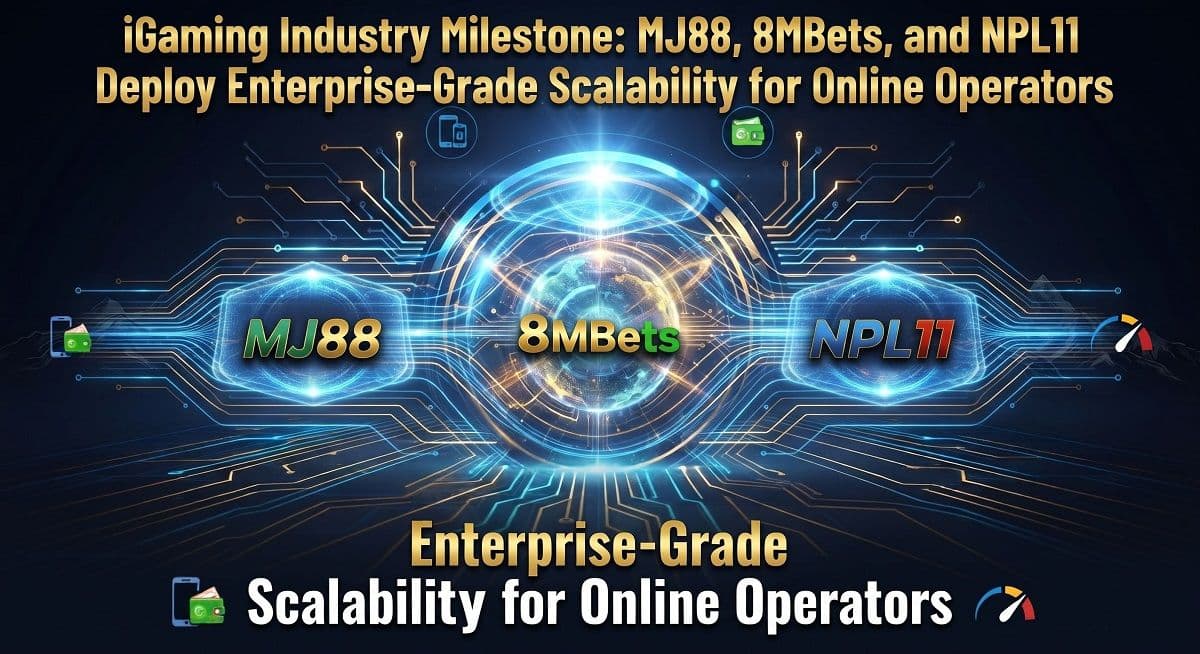
MJ88, 8MBets, and NPL11 Launch Enterprise-Scale Microservices Infrastructure
South Asian iGaming brands MJ88, 8MBets, and NPL11 introduce a scalable microservices system, supporting over 10,000 concurrent users, advanced payments, and regional regulatory compliance.
Key Takeaways
- MJ88, 8MBets, and NPL11 are the first South Asian MSB operators to roll out an enterprise-grade microservices infrastructure.
- The newly deployed system supports over 10,000 concurrent users and delivers wallet-write latency under 50ms.
- Himalayan Harmony Group implemented and manages security and compliance across the three brands.
- NPL11 has unified multiple gaming verticals, including sports betting and live casino, under a single account system.
- Demand for certified RNG, fair gaming solutions and local payments is accelerating in Nepal's Curacao-licensed market.
MJ88, 8MBets, and NPL11—three South Asian iGaming operators—have jointly introduced an enterprise-grade microservices platform constructed for high-volume online casino operations. According to company statements, the system supports more than 10,000 simultaneous users during peak traffic, with latency and throughput benchmarks tailored for high-frequency bettors and special event surges. This unified deployment makes them the first South Asian multi-state betting (MSB) operators to leverage such architecture at this scale, aiming to address growing demand for reliability and localised service in Curacao-licensed Nepal iGaming.
Focus Keyword: Enterprise-Grade Scalability in iGaming
The platform, engineered across MJ88, 8MBets, and the new Kathmandu-based NPL11, is built on a bare-metal server infrastructure with NVMe storage optimised for ultra-low latency. A standout figure in the release is wallet-write latency below 50 milliseconds, which underpins real-time payments and player interactions. The design permits independent scaling of specific modules—wallets, sports odds feeds, and others—enabling targeted resource allocation as user groups grow or shift. The intent is practical more than promotional, targeting genuine gaps in system flexibility as betting patterns regionalise and diversify.
“Our microservices infrastructure lets us isolate and scale critical services like wallets during major events, from FIFA Club World Cup to IPL, keeping experience steady for high-value users,” said a spokesperson at Himalayan Harmony Group, the infrastructure partner responsible for rollout across all three brands.
Compliance, Security, and Regulatory Alignment
Each system element is described as compliant with current regional requirements for Nepal-facing platforms holding Curacao licenses. Security protocols leverage 256-bit SSL encryption, with specifications set for handling increased data loads during international sports events. Himalayan Harmony Group not only led implementation, but also maintains the overall infrastructure, reportedly tailoring practices to prevailing certification and fairness requirements. Architecture decisions were made with provably fair RNG and fast settlement as explicit milestones—both demanded by South Asian bettors and required for regulatory sign-off in certain regions.
Technology Details and Performance Claims
Performance improvements highlighted by the operators include:
- Over 10,000 concurrent-user capacity during peak tournament windows
- Bare-metal and NVMe deployment supporting rapid scaling
- Wallet-write latency under 50ms, enabling immediate payment flows
- 256-bit SSL encrypting all sensitive data
- Independent scaling for wallet, odds, and gaming service modules
This architecture equips operators to support special-event workloads and VIP traffic without degradation, according to the official announcement. The goal is to minimize the risk of lag or downtime at moments of high business value, a chronic issue in emerging Asian markets.
NPL11: Unified Platform Approach for New Entrants
NPL11, though a newer brand in the sector based in Kathmandu, has moved to converge major verticals—sports betting, live casino, slots, esports, and lottery—under a single player account system. The platform integrates OCR-driven verification and deploys a proprietary Game Control Unit for live tables, reporting a glass-to-glass latency of 100-200 milliseconds. Bringing these capabilities together is intended to improve international broadcast suitability and increase engagement for live bettors.
Market Context: Growing Demand, Localised Payments, and Regulatory Pressure
The latest infrastructure deployment reflects increased pressure for iGaming platforms operating in the Nepal region, where certified RNG, fair gaming, and local payment integrations are now considered baseline requirements. As market competition intensifies, differentiation comes from reducing latency, flexibly meeting traffic peaks, and demonstrating regulatory alignment. Platforms built around modular microservices are positioned to respond iteratively, scaling in response to both player influxes and changing compliance landscapes. Stakeholders should track the measurable impact on player retention and payment success rates through the next FIFA or IPL cycle.
Frequently Asked Questions
What scalability does the new MJ88, 8MBets, and NPL11 platform support?
The upgraded microservices infrastructure supports more than 10,000 concurrent users during peak events, matching high-traffic requirements of international tournaments and major sports seasons.
How does the system improve real-time payments?
Wallet-write latency is kept below 50 milliseconds, enabling instant user transactions and processing, which is critical for both high rollers and everyday players.
Which company manages the new infrastructure for these iGaming brands?
Himalayan Harmony Group led the deployment and continues to oversee security and compliance measures for MJ88, 8MBets, and NPL11.
Why is regulatory compliance highlighted in this launch?
The system complies with regional rules for Nepal-facing, Curacao-licensed operators, leveraging 256-bit SSL encryption and fulfilling certification needs for RNG and fair gaming demanded in the market.
What unique tech does NPL11 bring to iGaming operations?
NPL11 uses OCR technology and a Game Control Unit to reduce live table glass-to-glass delay to just 100-200 ms, enhancing international broadcast interactivity.
Tags
About the author

Oliver Grant
Industry Technology Correspondent
Oliver Grant covers the technology and business machinery of iGaming — platform and data deals, AI and compliance tooling, affiliate and marketing shifts, and the quarterly numbers behind them. The reports lead with the announcement, name the vendors and figures exactly as published, and separate genuine capability from press-release promise. When a supplier ships a new engine or a regulator tightens ad rules, Oliver Grant explains what actually changes for the companies involved.
More from Oliver Grant