ANESAR values the gaming sector’s annual contribution to the State at €320 million
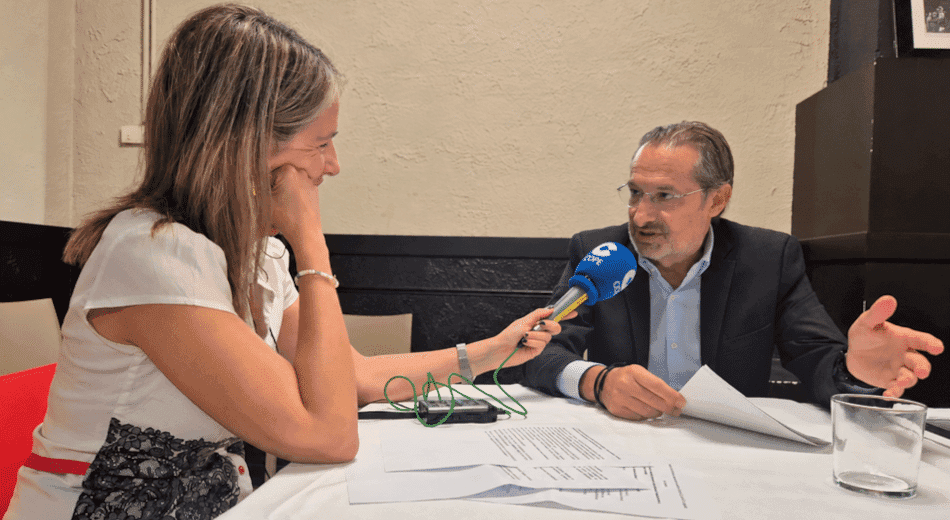
Vall gave the figure during a COPE Aragón interview amid ANESAR’s board meeting in Zaragoza
Key Takeaways
- ANESAR, through president José Vall, states land-based gaming contributes more than €320 million a year to the State.
- The association reports a 99.7% proper-use rate and says the remaining 0.3% receives specific attention and preventive measures.
- ANESAR has surpassed 20,000 enrolments in its training programmes focused on responsible gaming and risk detection.
- Vall defended the commercial nature of gaming halls and said technology supports but does not replace floor professionals.
José Vall, president of the Asociación Española de Empresarios de Salones de Juego y Recreativos (ANESAR), said on 13 October 2026 that the land-based gaming sector contributes more than €320 million a year to public coffers. He made the statement in an interview broadcast by COPE Aragón on the occasion of ANESAR’s Board of Directors meeting in Zaragoza.
Contribution to the State of the gaming sector: the figure and the comparison
Vall quantified the sector’s annual contribution as “more than €320 million” and offered a comparison to illustrate its scale: that amount would allow the renewal of every emergency ambulance in Spain each year. The analogy aimed to place the figure in tangible terms for audiences outside the industry.
The president defended land-based gaming as an activity carried out in a regulated environment and stressed that the debate should focus on user behaviour. In the interview Vall said that “we are not part of the problem, but part of the solution” when referring both to the fiscal contribution and to the preventive measures applied by the sector.
Data on usage and prevention in land-based gaming
ANESAR presented a proper-use rate among customers of 99.7%, according to the figures Vall gave. The remainder, 0.3%, receives specific attention from the association and the companies in the sector.
Vall said that the organisation and companies maintain detection programmes and preventive measures for that 0.3%. He added that technology is being developed and deployed to identify potential problematic behaviours, but warned that technology cannot replace the human work of floor professionals.
“We take the remaining 0.3% very seriously,” José Vall said in the COPE Aragón interview.
Reference to human intervention reflects ANESAR’s orientation toward staff training as a key prevention tool. In the interview Vall specified that the sector’s objective is to equip workers with tools to identify situations that require attention and to act appropriately.
Training and responsible gaming: figures and training structure
ANESAR has exceeded 20,000 enrollments in its training programmes, Vall explained. The organisation proposes a phased training structure that places special emphasis on responsible gaming, prevention and detection of risky behaviour.
The training is aimed at employees of gaming halls and amusement venues and seeks to combine regulatory knowledge with practical skills to identify and assist customers. Vall stressed that the leisure experience offered by these venues must be linked to customer welfare: “We want customers who come to have fun, not to suffer.”
Commercial positioning of the sector and public message
Vall asserted the commercial and leisure nature of gaming halls and argued that their activity should be understood as a business offering entertainment to customers. He reinforced the point with the phrase “what we always claim is that we are just another retailer.”
The argument combines three threads: the direct fiscal contribution to the State, internal prevention policies and professional training. That package serves as the core of ANESAR’s public discourse toward administrations, media and public opinion.
Institutional context and upcoming instalments in the information series
José Vall’s interview is the first of a three-part series broadcast by COPE Aragón on the occasion of ANESAR’s Board of Directors meeting in Zaragoza. The next instalments will include statements from Juan Lacarra, technical general secretary of the association, and José Antonio Rubio, president of AESA Aragón.
The call for measured action and public communication is part of ANESAR’s strategy to situate the debate on land-based gaming within recognisable regulatory and social frameworks. When the association refers to a regulated environment it points to the rules and controls that affect premises; the public message emphasises the combination of control, taxation and training.
What this implies for regulators and operators
The figure of more than €320 million a year is a direct argument in conversations with authorities and the public sector. For operators and service providers, publicising that contribution strengthens the association’s negotiating position in debates on regulation, taxation and prevention policies.
For regulators, information on proper-use rates and training programmes are operational data that can be cross-checked with inspections and consumption statistics. In his remarks, ANESAR combines economic relevance with commitments on training and early detection, a mix institutional interlocutors typically request.
Next interlocutors and follow-up
The forthcoming instalments on COPE Aragón will present the positions of Juan Lacarra and José Antonio Rubio, which will expand detail on training, coordination with regional authorities and operational priorities in Aragón and nationally. To follow the regulation and sector policy debate, the subsequent pieces will contribute new data and positions.
Frequently Asked Questions
Who said the sector contributes more than €320 million a year?
José Vall, president of the Asociación Española de Empresarios de Salones de Juego y Recreativos (ANESAR), stated the contribution exceeds €320 million in a COPE Aragón interview on 13 October 2026.
What percentage of customers, according to ANESAR, require specific attention for potential risk?
ANESAR reported that 0.3% of customers require specific attention for possible risky behaviour, while 99.7% make appropriate use of the offering.
How many enrolments has ANESAR achieved in its training programmes?
The association has exceeded 20,000 enrolments in its training programmes aimed at professional training with emphasis on responsible gaming and the detection of risky behaviour.
Tags
About the author

Gonzalo Marín
Industry Deals Correspondent
Gonzalo Marín covers the corporate deal flow of gambling — operator strategy, M&A, regulated-market entries, and product launches. The reports open with the transaction, cite companies, valuations, and jurisdictions exactly as released, and keep the announcement apart from its actual effect. When a Latin American operator raises capital or a European brand lands in the region, Gonzalo Marín reports who signs, for how much, and on what terms.
More from Gonzalo Marín