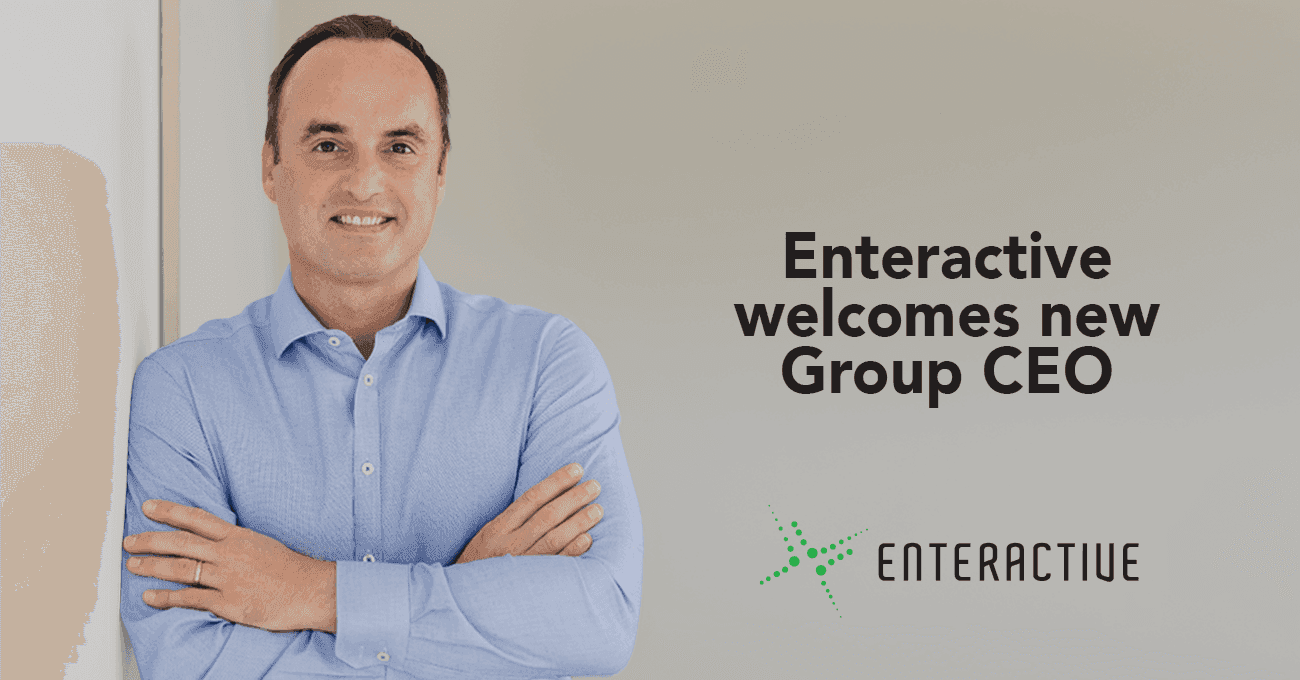
Enteractive appoints Stephen Parry as Group CEO to drive international scale
Parry starts 1 October 2026 as co‑founder Mikael Hansson becomes Executive Chairman.
Key Takeaways
- Stephen Parry was appointed Group Chief Executive Officer of Enteractive effective 1 October 2026.
- Co‑founder Mikael Hansson shifts into the role of Executive Chairman as part of the transition.
- Enteractive was founded in Malta in 2008, employs around 250 staff and supports more than 100 brands across 50 markets.
- The company combines human‑to‑human player engagement with proprietary technology to deliver activation and reactivation services.
Enteractive has appointed Stephen Parry as Group Chief Executive Officer, effective 1 October 2026, as the Malta‑founded player engagement firm prepares the next phase of international growth. Co‑founder Mikael Hansson moves into the newly assumed role of Executive Chairman as the company looks to expand its reach across existing and new markets.
Stephen Parry to lead Enteractive's international scale
Stephen Parry joins Enteractive with senior experience across betting and gaming, telecoms and technology. His prior roles include positions at Flutter Entertainment, William Hill, Superbet, FDJ/Kindred and Vodafone. The appointment is presented as a leadership step designed to capitalise on Enteractive's existing footprint and commercial relationships.
Parry said:
"Enteractive has built a genuinely distinctive proposition, combining deep operational expertise and technology with the power of real human interaction to deliver measurable value for operators around the world. I’m excited to build on those strengths alongside our people, customers and partners, drawing on my long-standing relationships across the industry to help more operators strengthen player retention and to unlock the significant opportunities ahead."
The statement frames Parry's brief: scale the company's human‑led activation and reactivation services and use his industry contacts to expand operator partnerships and market coverage.
Enteractive's size, scope and business model
Founded in Malta in 2008, Enteractive employs around 250 staff and supports more than 100 brands across 50 markets. The company offers player activation and reactivation services based on human‑to‑human conversations that are supported by proprietary technology. That combination of people and platform is central to Enteractive's value proposition for operators seeking to recover or retain customers through personal contact.
Enteractive describes its work as one‑to‑one conversations backed by technology that enables operational scale and measurement. The firm sells that capability to operators that want an externally supplied team to carry out outreach at volume while retaining a measureable conversion and retention metric set.
Leadership transition: Mikael Hansson to Executive Chairman
Co‑founder Mikael Hansson will assume the Executive Chairman role as part of the transition. Hansson commented on the move and the company’s strategic direction:
"Enteractive is entering an exciting new chapter, building on the human‑first approach that has always defined us while expanding into new markets, products and technologies. Stephen brings the industry experience, international perspective and leadership to help us realise that ambition, and I’m incredibly excited to welcome him to lead Enteractive through its next phase of growth."
Hansson framed the change as a succession that preserves the company's human‑first culture while adding a leader with a track record in larger, cross‑border businesses.
Why the appointment matters to operators and vendors
Operators buy player activation and reactivation services to recover dormant accounts, improve lifetime value and reduce churn. Enteractive's pitch is that human contact, scaled by technology, produces higher quality engagement outcomes than fully automated channels for certain segments of players. Parry's hire signals that Enteractive intends to push that model into more jurisdictions and product verticals.
For platform vendors and B2B suppliers, the move may accelerate demand for integrations that support human‑led workflows: documented handoffs between operator CRM, voice and messaging channels, and Enteractive's proprietary systems. Vendors that can demonstrate secure, trackable integrations with operator platforms and a clear compliance audit trail are most likely to be sought by operators working with external engagement partners.
Regulatory and market footprint considerations
Enteractive currently operates across 50 markets. The appointment of a Group CEO with extensive operator and telecom experience implies an emphasis on jurisdictions where large regulated operators are consolidating retention strategies. The company sells services into markets that require clear records of contact, consent and outcome measurement; those compliance requirements shape both operations and technology.
Companies providing player‑facing outreach must also manage data protection and communication consent across different regulatory regimes. Enteractive’s model relies on maintaining an auditable record of one‑to‑one interactions, which operators typically require as part of vendor due diligence and licence compliance.
Commercial implications and next steps
The leadership change does not include disclosed financial terms or ownership shifts. The public details are limited to the appointment effective date, the role change for the co‑founder, and the company’s stated scale metrics: around 250 staff, 100+ brands, 50 markets. Expect Enteractive to prioritise market expansion, product evolution and partnerships that leverage Parry’s network.
Operators evaluating retention suppliers should test proof of outcomes, regulatory controls and integration options. Enteractive’s blend of human agents and proprietary systems is a specific offer; buyers will match it against in‑house programmes, other B2B suppliers and platform capabilities. For coverage of related supplier deals and vendor strategies see the b2b section and recent news on activation models.
What this means for the sector
Enteractive's appointment of an experienced industry executive is consistent with a broader trend of specialist B2B suppliers positioning for scale rather than niche operation. The company retains its founding leadership in an executive chair role while handing day‑to‑day growth execution to Parry. That split is common where founders want to preserve strategic direction while adding commercial leadership with networks across operators and adjacent industries.
Stakeholders—operators, vendors and investors—will watch how quickly Enteractive translates Parry’s industry relationships into new customer contracts and whether the firm extends its proposition into additional products and technologies, as Hansson indicated in his statement.
Frequently Asked Questions
When does Stephen Parry start as Enteractive Group CEO?
Stephen Parry's appointment as Group Chief Executive Officer takes effect on 1 October 2026. The company announced the effective date alongside the leadership transition that moves co‑founder Mikael Hansson to Executive Chairman.
What experience does Stephen Parry bring to Enteractive?
Stephen Parry has held senior roles at Flutter Entertainment, William Hill, Superbet, FDJ/Kindred and Vodafone. The appointment emphasises his background across betting and gaming, telecoms and technology as relevant to scaling Enteractive's international business.
How large is Enteractive and where does it operate?
Enteractive was founded in Malta in 2008, employs around 250 staff and supports more than 100 brands across 50 markets. The company provides human‑to‑human player engagement services backed by proprietary technology.
Tags
About the author

Marcus Webb
Industry Deals Correspondent
Marcus Webb covers the deal flow of the gambling industry — operator strategy, M&A, market entries, and product launches from sportsbook rebrands to full platform migrations. The reports name the companies, valuations, and jurisdictions exactly as disclosed and separate the announcement from its market impact. When a group consolidates a brand or a challenger launches into a new state, Marcus Webb explains who gains, who pays, and what closes next quarter.
More from Marcus Webb