Smarkets seeks CFTC-designated DCM status for US prediction market launch
UK exchange readies a US entry with a brand refresh as Novig gains CFTC DCM recognition.
Key Takeaways
- Smarkets plans to apply for Commodity Futures Trading Commission Designated Contract Market registration to operate in the US.
- The company will retain its exchange-based model and is launching a brand refresh for the US market.
- Novig has been recognised as a CFTC DCM and can operate as a regulated exchange for event contracts.
- Ohio and Tennessee state-court rulings removed Kalshi's federal preemption shield, complicating nationwide access.
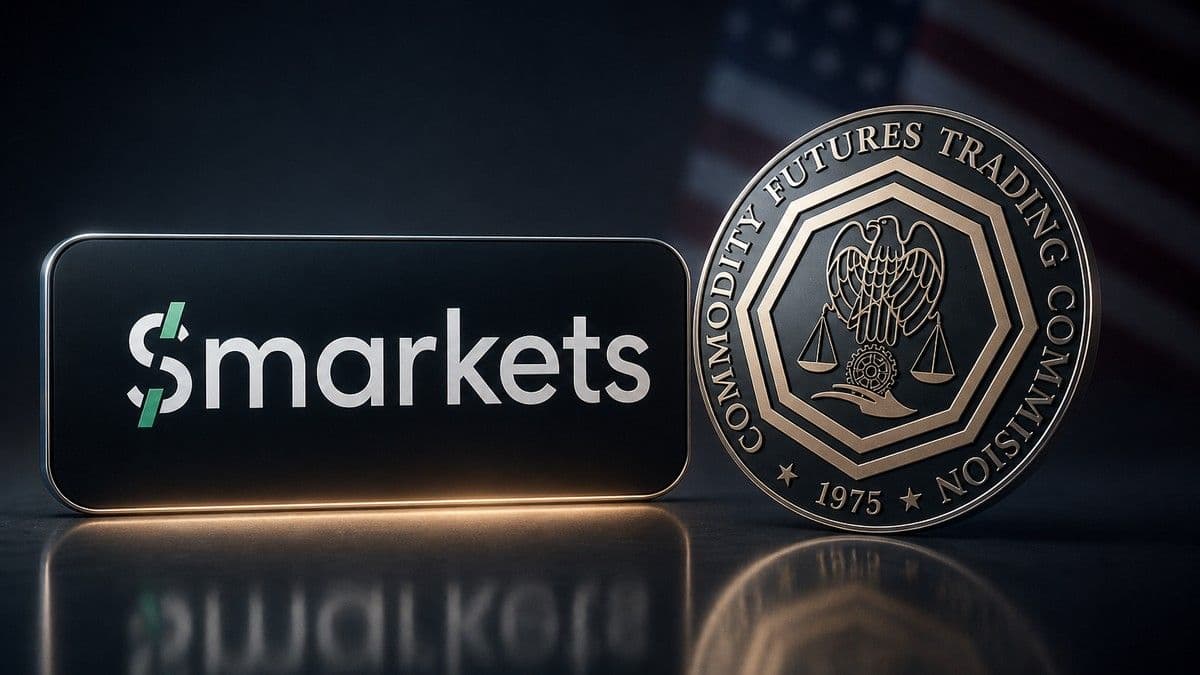
Smarkets is preparing to enter the US prediction market as a Commodity Futures Trading Commission-regulated Designated Contract Market, the company confirmed through CEO Trost. The UK-based betting exchange plans to bring its exchange model to the US under CFTC oversight and has initiated a brand refresh while keeping its core exchange architecture.
Smarkets US prediction market: application, model and brand
Smarkets intends to pursue registration as a CFTC Designated Contract Market (DCM) to host event contracts in the United States. The move would place Smarkets under the CFTC's regulatory framework for derivatives-like event products rather than state gambling regulators. CEO Trost made the company's intent public, describing the submission of a DCM application and a parallel effort to refresh the firm's consumer-facing identity for the US market.
The company will keep its exchange-based approach: users trade against each other on a continuous limit-order book rather than against a sportsbook-style counterparty. That architecture contrasts with several domestic entrants that have adapted sportsbook or betting-operator systems to offer event contracts.
Smarkets' brand update is intended to give the platform consumer recognition in the US distinct from its UK identity. The company has signalled that the refreshed branding will sit on top of the same exchange mechanics used in its home market.
Why CFTC DCM status matters for Smarkets' entry
A DCM registration with the Commodity Futures Trading Commission is the federal pathway for running a regulated exchange for event contracts. Federal registration can provide a single regulatory venue for nationwide operation, but legal developments at state level have complicated the picture for event-contract platforms.
The timing of Smarkets' application matters for whether it launches into a single federal market or faces a fractured landscape of state-level restrictions. Two federal rulemakings for event contracts remain under active review by the CFTC; their outcomes will shape permitted product designs and registration obligations. At the same time, recent state-court decisions in Ohio and Tennessee removed the federal preemption shield that had protected some platforms from state gambling law challenges, creating potential pockets where federal registration does not guarantee market access.
State rulings, Kalshi and the legal landscape
State courts in Ohio and Tennessee have ruled against the federal preemption asserted by Kalshi, stripping that platform's shield in those jurisdictions. Those decisions have introduced uncertainty for any operator that hopes to rely solely on CFTC registration to override state gambling statutes. The rulings mean a DCM-registered exchange might still need to consider state-by-state geofencing or legal compliance where courts treat event contracts as subject to state gambling law.
How an entrant navigates both the federal registration process and state-level restrictions will define its market footprint. Operators planning US activity now face a two-front process: satisfy the CFTC's DCM registration and, where necessary, design geofences or other operational controls to comply with states that retain gambling prohibitions or have unfavourable court interpretations.
Novig's recognition as a CFTC DCM and competitive context
Separately, sports prediction market Novig has been recognised as a Designated Contract Market by the Commodity Futures Trading Commission, clearing it to operate as a regulated exchange for event contracts. Novig's DCM recognition puts another CFTC-regulated platform in the US market queue and establishes a precedent for exchange-form entrants.
Smarkets' announced intention to apply for DCM status arrives as the CFTC weighs two rulemakings for event contracts and as at least one exchange-style entrant — Novig — has already won recognition. The presence of multiple DCM applicants highlights that different architectures are competing for the US opportunity: exchange-led models and sportsbook-derived designs each offer alternative operational and risk models for the same product category.
Market mechanics: exchange model versus sportsbook-derived designs
Smarkets' exchange model uses peer-to-peer order matching and a limit-order book to set prices. That contrasts with sportsbook-derived offerings where the platform sets prices and takes the counterparty risk. The distinction matters because it affects liquidity provision, risk management, margining and surveillance — all aspects the CFTC and states will evaluate.
For example, exchange models typically require formal market surveillance and order-book transparency, while sportsbook models focus on internal risk limits and customer pricing. How the CFTC's forthcoming rule decisions treat market structure, margining requirements and surveillance obligations will influence which model carries lower regulatory friction.
What operators and investors should watch next
Three near-term factors will determine the operational environment Smarkets will face:
The outcome of the two event-contract rulemakings currently under CFTC review, which will clarify product definitions, registration and compliance requirements.
Any additional state-court rulings or legislative moves that further define whether federal DCM status preempts state gambling laws, following the Ohio and Tennessee decisions affecting Kalshi.
How incumbents and new entrants, including Novig and Smarkets, implement geofencing, consumer protections and surveillance systems in practice.
Operators contemplating US entry should evaluate both federal registration timelines and state-level legal exposure. Platform vendors will need to supply order books, matching engines, surveillance and geofencing solutions adaptable to a patchwork market if the legal landscape remains fragmented.
What the Smarkets news means for cross-border strategies
Smarkets' DCM application and brand refresh indicate the company expects the regulatory and commercial challenges of a US entry to require a distinct approach from its UK operations. If Smarkets can secure DCM recognition and operationally manage state-level constraints, it will demonstrate a template for other cross-border exchanges seeking US access.
Success will depend on reconciling the CFTC's federal registration demands with the operational realities of states that may reject federal preemption. The platform that proves it can satisfy both federal and state tests will set a practical model for exchange-based entrants into the US prediction market.
For ongoing coverage of regulatory developments and platform launches in the sector see related reporting in our regulation and b2b sections.
Frequently Asked Questions
What regulatory route is Smarkets pursuing for its US launch?
Smarkets is pursuing registration as a Designated Contract Market with the Commodity Futures Trading Commission. CEO Trost confirmed the intent to bring the firm's exchange model to the US under CFTC oversight and to submit a DCM application.
How does Smarkets' exchange model differ from sportsbook-derived designs?
Smarkets uses peer-to-peer order matching on a continuous limit-order book rather than taking the opposite side of customer bets. That structure changes liquidity, margining and surveillance needs compared with sportsbook-derived platforms where the operator sets prices and holds counterparty risk.
What impact do the Ohio and Tennessee rulings have on DCM-registered platforms?
State-court decisions in Ohio and Tennessee stripped Kalshi's federal preemption shield, meaning a DCM registration may not guarantee compliance with state gambling laws in those jurisdictions. Operators may therefore need geofencing or state-specific compliance approaches even with CFTC registration.
Tags
About the author

Tessa Coleman
Betting Markets Correspondent
Tessa Coleman covers betting products and markets — sportsbook launches, odds and trading technology, and the fast-growing prediction-market space from regulated exchanges to event contracts. The stories lead with the product or the ruling, name the operators and platforms precisely, and translate trading jargon into what bettors can actually do. When a book reworks its pricing or a prediction market wins a license fight, Tessa Coleman explains the mechanics and the stakes.
More from Tessa Coleman