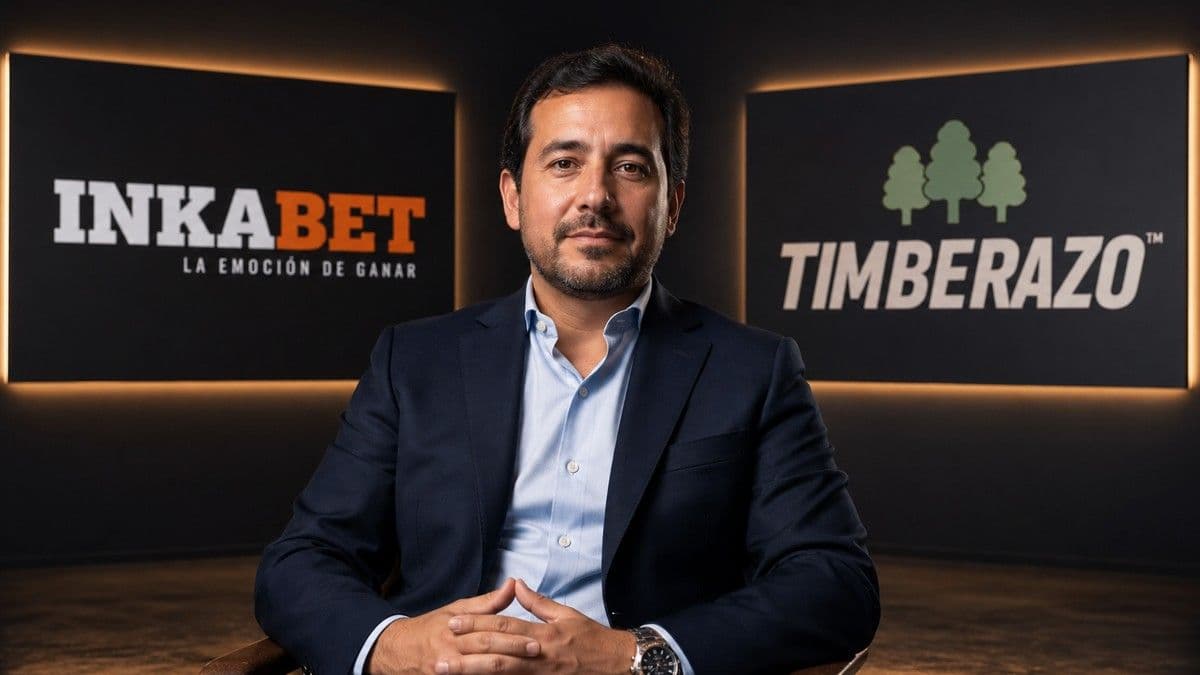
Jeremy Castillo Willis reviews Inkabet, Timberazo, and the future of the Peruvian betting market
The founder of Inkabet and Timberazo examines milestones, challenges, and acquisitions, and assesses the current Peruvian regulation following the sale to international operators.
Key Takeaways
- Jeremy Castillo Willis founded Inkabet and Timberazo, both key players in the Peruvian betting sector.
- Inkabet was acquired by Betsson in 2021 and Timberazo by BOYLE Sports in 2023.
- The Peruvian market has had its own regulation since 2024, regarded as favorable by operators.
- The tax system includes a 12% on GGR and a 1% on the betting volume.
- Peru is consolidating as a safe and attractive destination for iGaming in Latin America.
The trajectory of Jeremy Castillo Willis illustrates the evolution of the sports betting sector in Peru: from the launch of Inkabet in 2010 to its sale to Betsson and the subsequent creation of Timberazo, acquired by BOYLE Sports in 2023. These movements reflect both the dynamism of the local market and its growing relevance to foreign operators and investors, especially in light of the new regulation implemented in 2024.
Inkabet: Origin and consolidation in the Peruvian betting market
Castillo Willis, an engineer with experience in technology, founded Inkabet in 2010 when the local market was just starting and Betsson users could only operate with credit cards in dollars. The initial challenge was to educate customers and financial providers about online betting, adapting all processes: customer service, payments, and withdrawals. Inkabet became a pioneer by accepting deposits in local currency, thus laying a foundation for the industry in Peru. Despite inherent mistakes in innovation, the operator consolidated until Castillo Willis left the company in 2016 to pursue new projects.
From Inkabet to Timberazo: Entrepreneurship and exclusive digital focus
Castillo Willis launched Timberazo aiming to capitalize on his experience and face a new business cycle. Unlike competitors like Apuesta Total, with a physical presence, both Inkabet and Timberazo opted for a 100% digital strategy. This bet on technological agility allowed Timberazo to respond quickly to user trends and adopt tools like WhatsApp and influencers long before they became industry standards. "I believe we created a lot of value. That’s why several times groups approached us for a possible acquisition," recalls Castillo Willis.
The company came to rank among the seven main operators in the country and was one of the first to obtain a license under the regulatory framework implemented in 2024.
Acquisition by BOYLE Sports and international integration
In 2023, BOYLE Sports, an omnichannel operator focused on the UK and Ireland, acquired a majority stake in Timberazo after competing with European investment groups and even one Colombian. After the operation, Timberazo's team grew from twenty to fifty people and diversified geographically, adding staff in Peru, Ireland, the UK, and other countries. The technological backing improved, but decision-making became less agile. Castillo Willis described the transition from founder to being part of a new structure as an adaptation process.
Closure of Timberazo in 2025 and lessons from the full cycle
Even though Timberazo had obtained its license under the new regulation and prepared for the 2024 framework, BOYLE Sports' shareholders' decision to reduce international exposure led to the brand's closure in 2025. "It was sad, but I understood the logic. It’s like watching a child leave," explained Castillo Willis. The process provided valuable experiences regarding both building and closing operations in the sector, consolidating his reputation as a local reference.
The present: consulting and new projects in the Peruvian sector
Since the closure, Castillo Willis has dedicated months to advising groups interested in entering the Peruvian market and considering executive proposals both in Peru and other Latin American markets. After 16 years in operations, he now faces the challenge of contributing his experience from consulting or senior management roles, hoping to find a project aligned with his journey and vision.
"Peruvian betting market": potential, regulation, and taxes
With a population of 34 million and a GGR of PEN 7.300 million (approximately GBP 1.600 million) in 2025, Peru is today one of the fastest-growing markets in the region. H2 Gambling Capital forecasts that this figure could rise to PEN 12.300 million by 2031. The sector is regulated by the Ministry of Foreign Trade and Tourism (Mincetur), which Castillo Willis describes as a "collaborative" authority, positioning the country as a "safe place" for development, especially in the face of tightening regulations in other Latin American countries.
Regarding the framework announced in 2024, Castillo Willis highlights that the regulation is "friendly" and that there is open dialogue with the regulator. He also notes the government's willingness to support the sector's growth. "We are on the right path," he assures.
Taxation: the debate over the volume tax
The tax system for online gaming in Peru includes a 12% tax on GGR and an additional levy of 1% on the volume of bets (excise tax), which has raised concerns in the industry. Castillo Willis acknowledges the authorities' aim to discourage excessive gambling, although he considers the mechanics to be less than optimal, as the tax falls on the operator and the end user is unaware of its existence. "I don’t think it achieves the expected effect. We are in an early stage and dialogue with the government and regulators is still open," he concludes.
Future expectations and Latin American context
In contrast to other markets in the region where the industry faces severe restrictions, gambling stakeholders in Peru anticipate steady growth under clear and stable rules. Regulations’ forecasts and tone support this vision, but both operators and investors remain vigilant to the evolution of fiscal legislation and responsible gaming. The stories of Inkabet and Timberazo are a testament to local appeal and international interest, as the country solidifies its position as an emerging destination for the iGaming sector in Latin America.
Frequently Asked Questions
When were Inkabet and Timberazo sold to international operators?
Inkabet was acquired by Betsson in 2021 and Timberazo by BOYLE Sports in 2023. Both transactions reflect European groups' interest in the Peruvian market.
What significance did the regulation approved in 2024 have in Peru?
The regulation effective since 2024 created a favorable and transparent environment. According to Jeremy Castillo Willis, it facilitates dialogue and growth in the sector.
Why did Timberazo close in 2025 after obtaining the new license?
The closure occurred after the shareholders' decision to reduce BOYLE Sports' international exposure. Although they were regulatorily prepared, that business strategy was prioritized.
What criticism does Castillo Willis make about the 1% tax on bets in Peru?
Castillo Willis believes the tax does not achieve its goal of moderating gambling, as it falls on the operator and the user is unaware of its direct impact.
What growth projections exist for the Peruvian betting market?
According to H2 Gambling Capital, GGR is projected to increase from PEN 7.300 million in 2025 to PEN 12.300 million by 2031, strengthening Peru as one of the region's fastest-growing markets.
Tags
About the author

Gonzalo Marín
Industry Deals Correspondent
Gonzalo Marín covers the corporate deal flow of gambling — operator strategy, M&A, regulated-market entries, and product launches. The reports open with the transaction, cite companies, valuations, and jurisdictions exactly as released, and keep the announcement apart from its actual effect. When a Latin American operator raises capital or a European brand lands in the region, Gonzalo Marín reports who signs, for how much, and on what terms.
More from Gonzalo Marín