Real cost of entering the African iGaming market, according to SOFTSWISS
SOFTSWISS says localization, certification and local rules drive upfront spend
Key Takeaways
- SOFTSWISS held a LinkedIn Live panel on 9 October 2026 to analyse real costs of entering Africa, with South Africa as the central case.
- Africa comprises 54 distinct markets; payment methods vary by country and require local solutions.
- In South Africa licence applications are provincial (nine authorities) with approval times of three, six or twelve months and require lab certification, SABS approval and 21 regulatory reports.
- Most initial spend comes from localization, certification, local entity and staff, BEE requirements, technology, payments and marketing, not the licence itself.
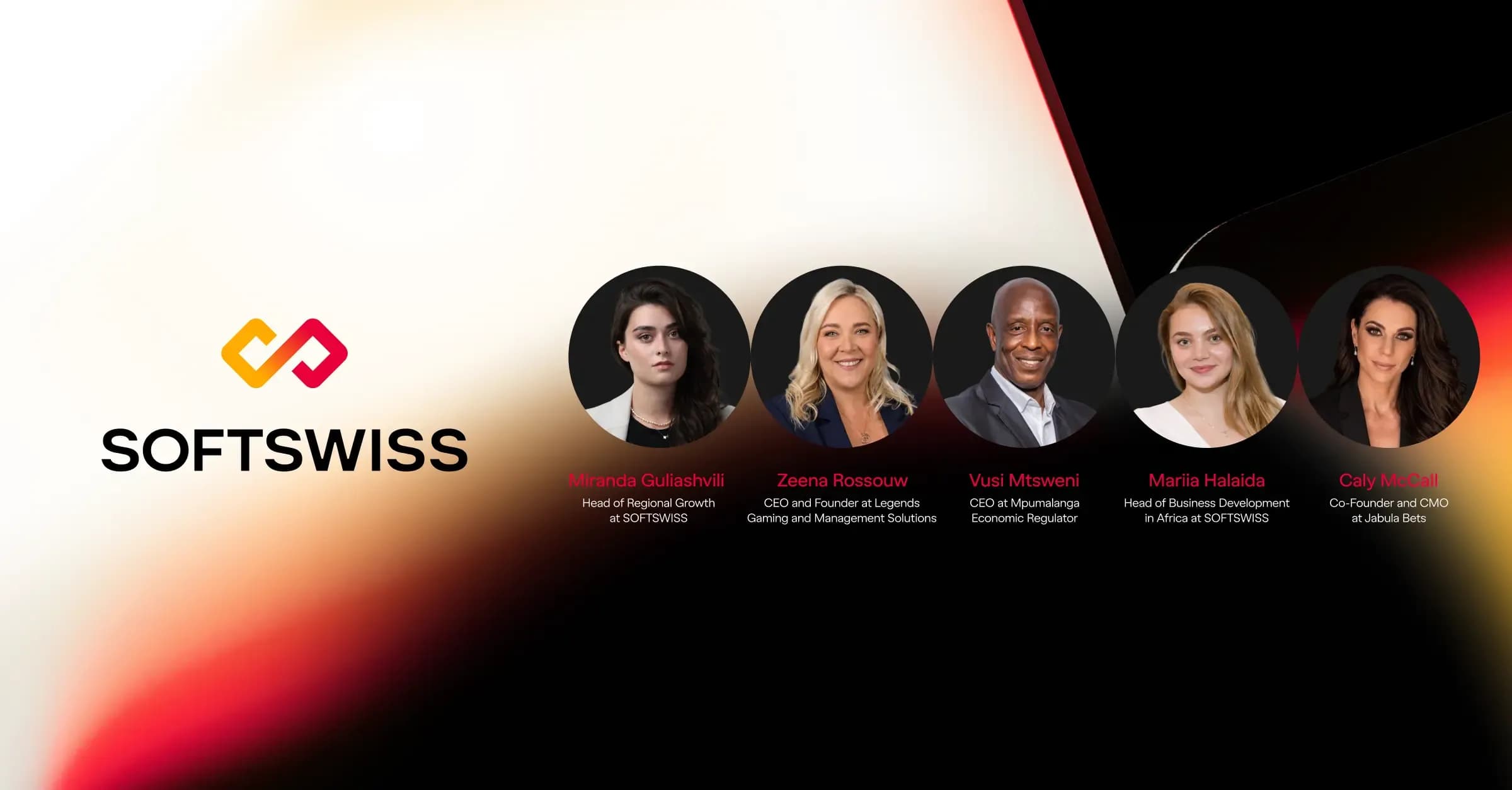
SOFTSWISS hosted the LinkedIn Live panel “Not a Cheap Bet: The Economics of Launch in the African iGaming Market” on 9 October 2026, bringing together the Mpumalanga Economic Regulator, operator Jabula Bets, consultancy Legends Gaming and Management Solutions and SOFTSWISS to set out the practical cost of entering Africa with South Africa as the primary case. Panelists agreed the licence is often one of the smaller expenses and that most spend comes from localization, certification, local requirements and marketing.
The African iGaming market requires country-by-country solutions
Africa is a continent of 54 countries with varying licence rules, anti-money‑laundering requirements and player habits. Panelists stressed that while an operator can use a single technical platform across several markets, it needs a distinct compliance strategy for each. Differences in payment methods illustrate the fragmentation: mobile money dominates in Kenya; in South Africa players use vouchers, electronic transfers and cards; in other markets USSD and agent networks prevail. These contrasts force adaptation of both payment integrations and user experience.
Payments and local integration are an operational priority and directly affect product design and conversion. Companies must work with local gateways and solutions to reduce deposit failures and friction in the customer journey, and operators should consider early engagement with [payments](/payments) partners.
South Africa: the licence is just the beginning (provincial licences and requirements)
South Africa was the panel’s most detailed practical example. Regulation operates at provincial level: operators apply province by province to the nine provincial authorities. Approval times can vary widely — three, six or twelve months — depending on province and application complexity. Beyond the administrative licence, products require technical certification by a testing laboratory and by the South African Bureau of Standards (SABS). Licensed platforms must produce 21 market‑specific regulatory reports.
Vusi Mtsweni, CEO of the Mpumalanga Economic Regulator, summarised the local stance:
"For international operators, don’t come to South Africa just because the market is growing. Come because you understand the market, the regulatory environment, the consumer and are prepared to invest for the long term." — Vusi Mtsweni, CEO of the Mpumalanga Economic Regulator
The panel highlighted practical cases: some operators that obtained licences more than a year ago still have not launched because their software required additional development to meet certifications and local requirements.
Real launch costs: beyond the licence
Participants identified the main cost items when entering the African iGaming market:
Product and content localization: adapting games and suppliers to local audiences.
Technical certification and audits by testing laboratories and national bodies such as the SABS.
Establishing a local company and hiring in‑country staff.
Compliance with local inclusion policies, for example Broad‑Based Black Economic Empowerment (BEE) in South Africa.
Technology and scalability: the difference between a platform that can only launch and one that supports real volumes.
Integration of payments and local deposit and withdrawal networks.
Ongoing marketing to compete with established local brands.
Panelists noted that many operators underestimate platform capacity requirements. It is common to budget for a platform that “can launch” but not for one that performs under real user volumes. A deposit failure, a slow platform or poor customer support can consume acquisition spend because the player is lost at first contact.
Content and aggregation: a market‑by‑market offering
Mariia Halaida, Head of Business Development in Africa at SOFTSWISS, explained the need for a localised catalogue:
"If you want to operate in Kenya, you will have a set of game providers different from West Africa or South Africa. For us as a platform provider and aggregator it is crucial to offer clients the content that fits their markets; we do not have a single offer for all." — Mariia Halaida, SOFTSWISS
The message was clear: supplier selection and content localization are operational investments, not luxuries. For many operators this requires agreements with local aggregators and suppliers.
Practical recommendations for operators and suppliers
Speakers offered concrete steps to reduce avoidable risks and costs:
Start with a defined business strategy and a market‑by‑market feasibility study.
Engage with local stakeholders and perform due diligence on all partners.
Work early with a local partner and a testing laboratory to identify technical requirements.
Consider an experienced supplier rather than building an in‑house platform: internal development can become a multi‑year, multi‑million project.
Budget for sustained marketing to compete with local brands and retain players.
For technology and platform suppliers, the practical conclusion was that clients seek solutions including localization, certification and compliance support, not just core software. Experienced regional providers tend to be the preferred option for operators on tight timelines and are often engaged through [b2b](/b2b) partnerships.
What investors and regulators should assess
Speakers insisted entry decisions must be based on a rigorous economic analysis of total cost of ownership per market, not only on growth opportunity. The mix of certifications, provincial requirements (in South Africa), obligations such as BEE, payment integrations and ongoing marketing composes the initial operating spend that determines project viability.
To coordinate regulatory and commercial efforts, the panel recommended early coordination with authorities and testers and prioritising markets where cost‑to‑return aligns with company strategy, and to document that strategy clearly for regulators and investors in [regulation](/regulation) filings.
Frequently Asked Questions
What is the main cost when launching in the African iGaming market?
The primary cost is localization, certification and local compliance, not the licence. The SOFTSWISS panel concluded the highest outlays are adapting content, certifying products with testing labs and bodies like the SABS, creating a local entity and meeting obligations such as BEE.
How long does it take to obtain permissions in South Africa?
Approval time varies by province and can be three, six or twelve months. Applications are processed by the nine provincial authorities and the complexity of the application determines the timeframe.
Do I need different content for each African country?
Yes, provider selection and content must be tailored per market. Mariia Halaida of SOFTSWISS explained Kenya, West Africa and South Africa require different catalogues and offers should be market‑specific.
Should I build the platform in‑house or hire a supplier?
Hiring an experienced supplier is often preferred because in‑house development can take several years and cost several million. The panel recommended assessing whether the company can bear that timeline and cost before choosing internal development.
Tags
About the author

Gonzalo Marín
Industry Deals Correspondent
Gonzalo Marín covers the corporate deal flow of gambling — operator strategy, M&A, regulated-market entries, and product launches. The reports open with the transaction, cite companies, valuations, and jurisdictions exactly as released, and keep the announcement apart from its actual effect. When a Latin American operator raises capital or a European brand lands in the region, Gonzalo Marín reports who signs, for how much, and on what terms.
More from Gonzalo Marín