Service is the reason operators stay with a platform
Baranova lists checks operators should run on support, SLAs and onboarding.
Key Takeaways
- A McKinsey survey of nearly 4,000 B2B decision-makers in 13 countries (28 May 2026) found inconsistent information between teams is the top reason firms switch suppliers.
- Mariia Baranova, COO of NuxGame, says rapid responses, deep customer understanding and a single owner per task are the three pillars of service that build trust.
- NuxGame offers access to more than 18,500 titles from 140+ providers and declares technical support operating 24/7.
- Operators rated NuxGame's account management service an average 4.8 out of 5 over the past six months.
A McKinsey survey of nearly 4,000 B2B decision-makers in 13 countries, published on 28 May 2026, identified inconsistent information between teams as the main reason companies switch suppliers; following that, Mariia Baranova, chief operating officer (COO) of NuxGame, explains which service elements keep operators with a platform and how to verify them before choosing a provider. Baranova details that three elements — rapid responses, deep customer understanding and a single owner per task — are what consolidate trust.
Why service matters as much as technology
Operators compare platforms by features, but decide to stay because of the treatment they receive. Baranova recalls that before becoming COO she led account management and saw how trust is built day by day. Features attract attention in the sales phase; service constitutes the ongoing operational experience, especially in critical moments such as a weekend with an active campaign and in /b2b scenarios.
The technical offering and support form a single experience for both player and operator. At NuxGame, technical support operates 24/7, which Baranova says is as important to an operator as page load speed. Consistency in responses and access to experts come from well-defined processes that an operator can audit before signing.
Practical signals to check a platform's service
Baranova proposes concrete questions and checks an operator should make before choosing:
Ask who will lead the project: a sales representative or a dedicated account manager? The difference in commitment is decisive.
Verify support operation: response windows, commitment to night-time coverage and SLA metrics.
Review onboarding: what the provider assumes and what remains the operator's responsibility.
Understand how they manage product requests and whether the roadmap incorporates customer feedback.
Request a call with the real team assigned to the client before closing the contract.
Baranova recommends asking to speak directly with the people who will handle the account to assess dialogue quality and business understanding.
What an operator looks for in the supplier relationship
The market has matured: large catalogs and third-party integrations are the standard. NuxGame provides access to 18,500+ titles from more than 140+ providers, and for that reason today choices lean toward partners that enable growth and scaling. An operator needs different support at launch, when expanding into new markets and when moving from start-up to scale.
The operator interacts daily with payments, CRM and KYC providers. To reduce operational burden, Baranova explains that NuxGame built an ecosystem in which those partners are already integrated and aligned with the platform, so the operator spends less time managing providers and more time on its product. This approach connects the platform with areas like payments and reduces operational friction.
Three traits that make service endure
Baranova lists three traits that indicate whether a provider will maintain good service over time:
Honesty versus easy promises: a reliable provider sets realistic expectations in sales rather than closing deals with impossible commitments.
Flexibility and ability to deliver: for both large and small clients, the provider must prioritise realistic solutions that fit the operator's business.
Care for reputation: when a firm values its brand, all teams work to maintain consistent quality.
These traits manifest in clear sales policies, internal processes that avoid loss of context and a culture that preserves brand authority.
Internal organisation: experts vs. ticket handlers
Baranova insists the operational difference is made by experts who take responsibility through to resolution, not handlers who reassign tickets. At NuxGame each client has a dedicated account manager who coordinates with product, technical and operations. According to Baranova, an account owner beats multiple fragmented interlocutors because it prevents loss of context and resolution delays.
In the last six months, operators have rated that service with an average score of 4.8 out of 5, Baranova says. She adds that training managers to listen for the business behind the incident is part of the work: an inquiry about bonus configuration on a Friday often hides the need for the weekend campaign to perform.
How to act as an operator during a procurement process
Baranova suggests concrete steps for any operator evaluating a platform:
Demand transparency about who will execute your project.
Check SLAs and service hours, including night-time coverage.
Review the scope of onboarding and deliverables.
Request evidence of integration with key partners (payments, KYC, CRM).
Request a meeting with the team assigned before signing.
Baranova's final advice is to select the people with the same care you choose the technology: features will improve across platforms, but daily support — that person who learns the business month after month — is the feature that truly retains an operator.
"Choose the people as carefully as the platform," Baranova writes in her reflection; the phrase sums up that operational trust does not depend solely on the product.
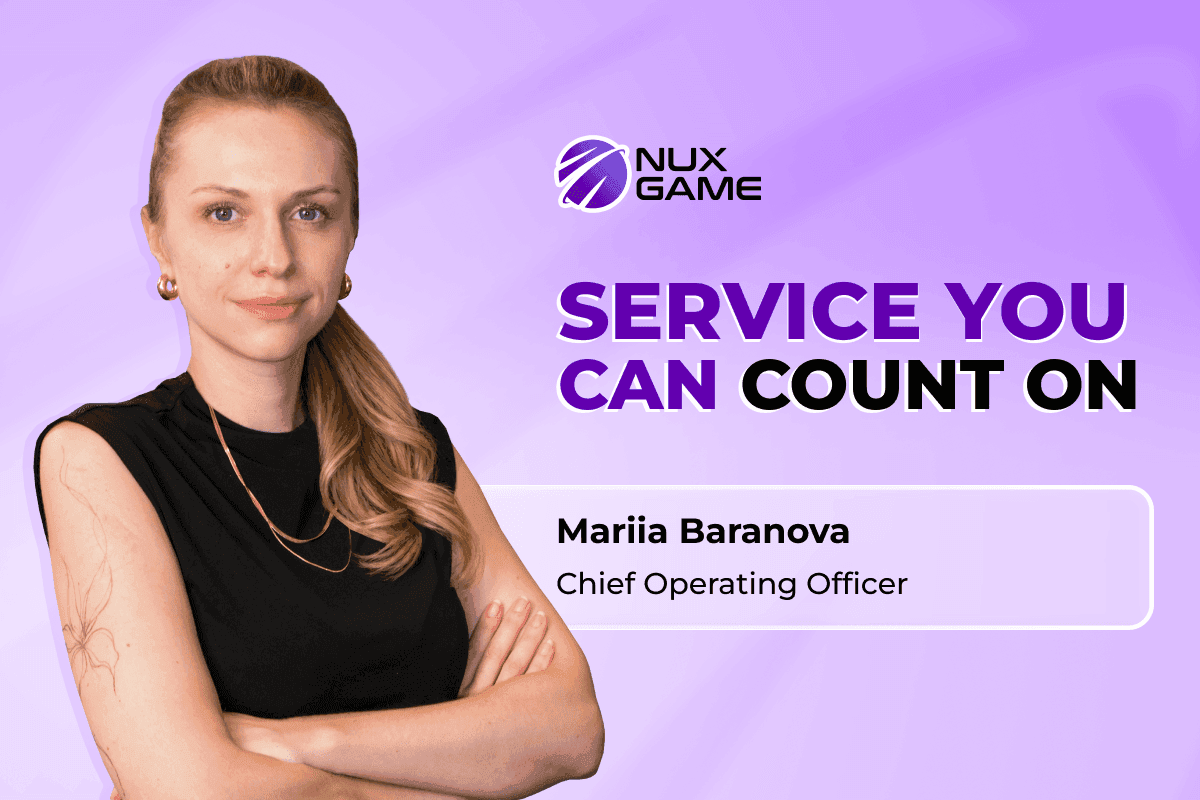
Mariia Baranova is chief operating officer (COO) of NuxGame and oversees processes, teams and client reporting delivery. Before her appointment she led account management at NuxGame and worked directly with operators.
Frequently Asked Questions
What did the McKinsey survey find about why companies change suppliers?
The McKinsey survey of nearly 4,000 B2B decision-makers in 13 countries, published on 28 May 2026, found that inconsistent information between teams was the primary reason for switching suppliers; the second reason was the inability to contact knowledgeable people, according to the report cited by Mariia Baranova.
What three elements does NuxGame cite to retain an operator?
The three levers are rapid responses, a deep understanding of the customer's needs, and a single owner who manages each task through to closure. Baranova states these elements consolidate trust and that at NuxGame each client has a dedicated account manager.
How can an operator check support before choosing a platform?
An operator should ask who will lead the project, verify support hours and response times including night coverage, review onboarding scope, and request a call with the real team assigned. Baranova also recommends checking how product requests are handled and whether customer feedback feeds the roadmap.
What catalogue reach and public rating does NuxGame declare?
NuxGame offers access to more than 18,500 titles from over 140 providers, and Baranova indicates that in the last six months operators rated the account management service an average 4.8 out of 5.
Tags
About the author

Gonzalo Marín
Industry Deals Correspondent
Gonzalo Marín covers the corporate deal flow of gambling — operator strategy, M&A, regulated-market entries, and product launches. The reports open with the transaction, cite companies, valuations, and jurisdictions exactly as released, and keep the announcement apart from its actual effect. When a Latin American operator raises capital or a European brand lands in the region, Gonzalo Marín reports who signs, for how much, and on what terms.
More from Gonzalo Marín