CRASHBUS: The Crash Game That Turned a National Anxiety Into a Betting Mechanic
What happens when localization stops using flags and starts using folklore
Key Takeaways
- CRASHBUS by BYGAME uses 'busification' to engage players.
- The game uses dark comedy to connect with Ukrainian audiences.
- CRASHBUS employs local cultural references as core mechanics.
- Its unique approach to localization enhances player experience.
Most crash games look the same with a different skin. A plane climbs, a rocket climbs, a curve climbs — cash out before it crashes, lose everything if you don't. The genre's biggest problem has never been the math. It's that after the fifth reskin, nobody remembers which app they're even playing.
CRASHBUS solves that problem by refusing to be generic in the first place.
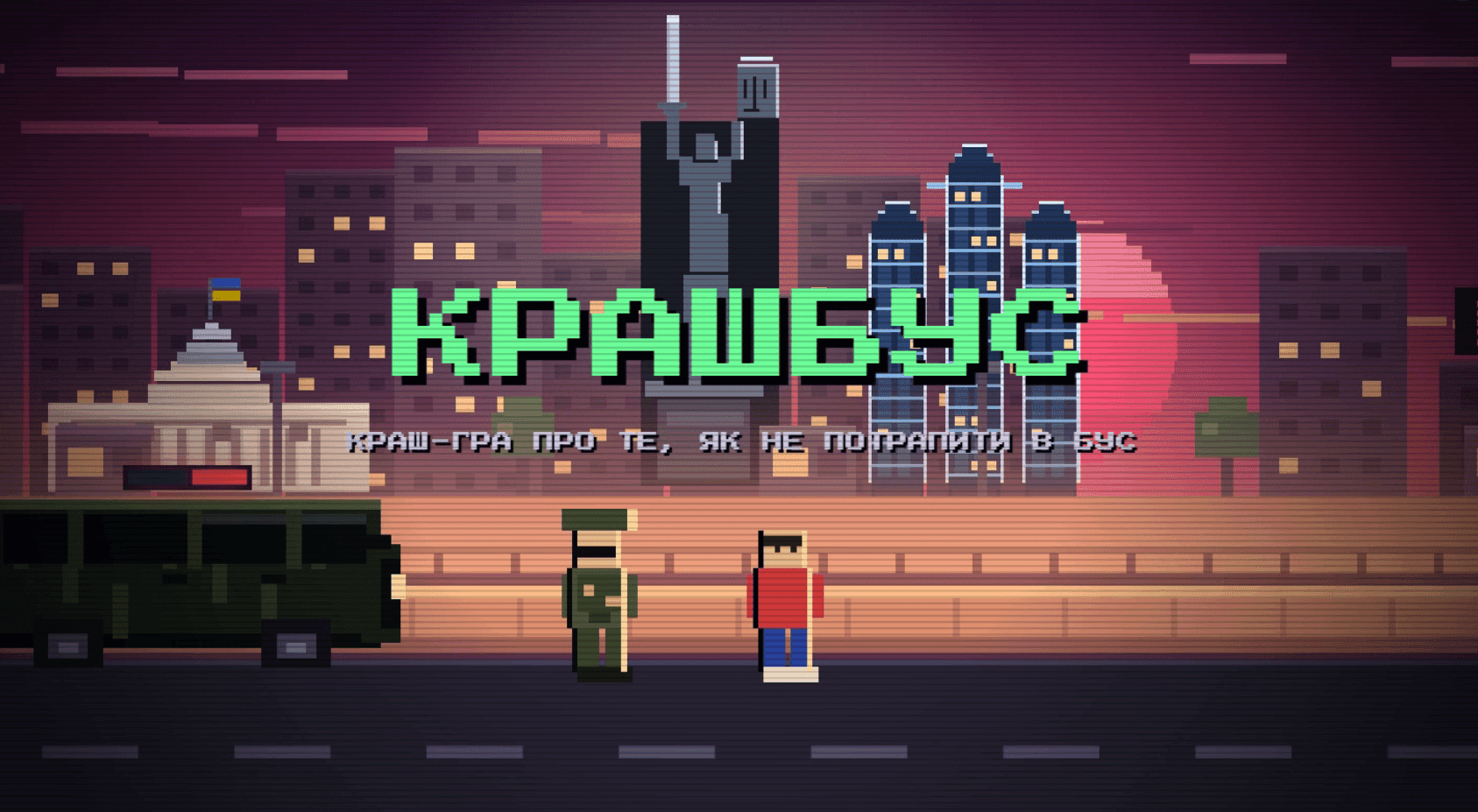
Built by game provider BYGAME, the title takes the crash format and wraps it around a piece of contemporary Ukrainian reality that every local player will recognize instantly: "busification," the informal term for military recruitment officers pulling men off the street and into a van for conscription. It's a phrase that has been part of everyday conversation in Ukraine for the past two years, equal parts dark joke and genuine anxiety. CRASHBUS takes that specific, loaded piece of local shorthand and turns it into game mechanics.
How it plays
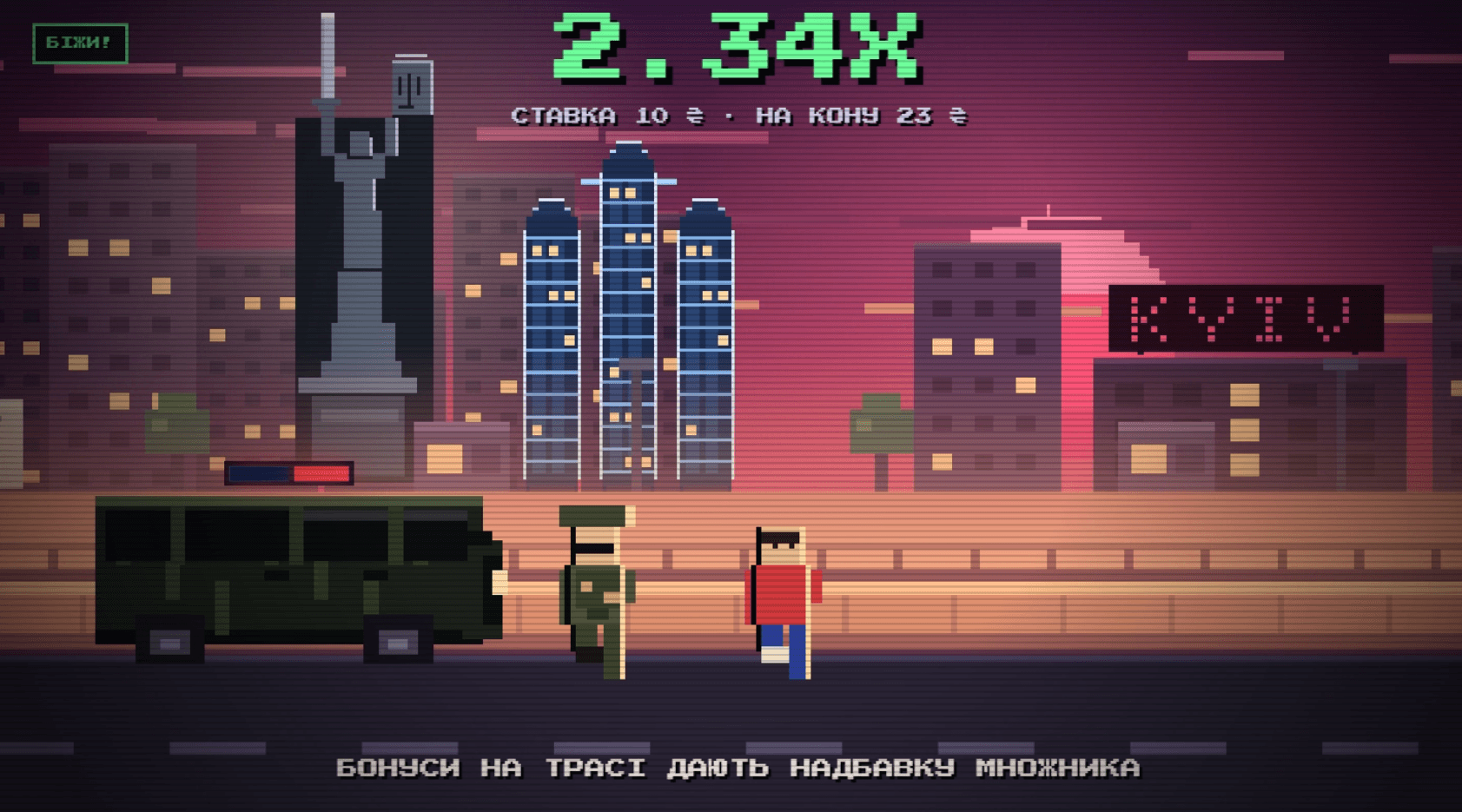
The premise is simple to state and immediately legible to anyone who has lived it: a character runs, a multiplier climbs, and a bus is somewhere behind them. Cash out before the bus catches up, and the multiplier is kept. Wait too long, and the run ends there — bet gone, character caught.
Three boosts complicate the round. Coffee, picked up along the route, adds a temporary bump to the multiplier that lasts only a couple of seconds before fading. A boost called "bronia" — the Ukrainian term for a formal military service deferment, and arguably the sharpest joke in the whole game — lets the first bus that reaches the player pass by instead of catching them, granting a few seconds of immunity before it can catch up again.
Then there is the mechanic doing most of the cultural work. A bribe option appears at random during the round. Taking it doesn't buy unlimited time — it costs the player half of their current potential payout, deducted on the spot, in exchange for staying in the run instead of being forced to cash out or get caught. It is presented in the interface as just another power-up. It is, transparently, a satirical nod to something every player in the target market already knows happens in real life: paying to make a problem go away costs you, but costs less than losing everything.
Why the reference lands
Crash games live or die on one thing: whether the player feels the tension of the curve. Most titles manufacture that tension out of nothing — an abstract plane, an abstract multiplier, no stakes beyond the number on screen. CRASHBUS doesn't have to manufacture anything. It borrows tension that already exists in its audience's daily life and repurposes it as game feel. The tension isn't invented. It's referenced.
That is a different kind of localization than swapping a flag icon in a lobby. It is closer to how a stand-up comedian works a room: pick the one topic everyone in the building has personal history with, and the reaction is already loaded before the punchline lands. A generic rocket-crash game asks players to invent their own reason to care about the multiplier. CRASHBUS starts with a reason its players already have.
Whether that is a mechanic worth replicating outside its home market is a fair question, and probably not. The joke is specific to a particular country's particular moment. A generalized version, reskinned for a different region without an equivalent shared reference, would just be a rocket with extra steps. The bribe mechanic in particular is not portable: it works here because the phrase behind it is one every Ukrainian player has either used or heard used, not because bribery as a power-up is inherently funny.
The part worth being direct about
It is worth naming plainly what the game is joking about. Draft evasion and corruption around military mobilization are not abstract topics in Ukraine at present. They sit next to a live, ongoing war, and the conduct of recruitment officers has been the subject of real public anger and real investigative reporting, not just memes. CRASHBUS is dark comedy pulled directly from that anxiety, not from a safe distance. That is precisely why it lands as hard as it does with its audience, and it is also the reason a studio outside Ukraine should think twice before assuming the format travels.
The takeaway for operators and studios
Strip away the specific joke and there is a transferable lesson here about localization in gambling-adjacent products. The standard playbook — translate the copy, swap the currency, add a local payment method — treats localization as a checklist. CRASHBUS treats it as content strategy. It picked the one reference its entire target audience shares without needing it explained, and built the core loop around that reference rather than bolting it on as flavor text.
The ceiling on that approach is real. It is a joke with an expiration date, tied to a specific moment in a specific country's news cycle, and it will not translate to a different market without an equivalent shared reference to replace it with. But as a demonstration of what local relevance can mean when it is taken seriously instead of treated as a lobby banner, it is a sharper case study than most of what gets called localization in this industry.
Frequently Asked Questions
What is CRASHBUS?
CRASHBUS is a crash game by BYGAME that uses Ukrainian 'busification' as game mechanics, turning local tension into gameplay.
How does CRASHBUS differ from other crash games?
Unlike typical crash games, CRASHBUS integrates a local Ukrainian reality, using it as a core game mechanic rather than relying on generic themes.
What are some unique features of CRASHBUS?
CRASHBUS includes mechanics like 'bronia' and bribes, which are culturally specific to Ukrainian experiences and humor.
Why might CRASHBUS not be suitable for other markets?
CRASHBUS relies on specific Ukrainian cultural references that may not translate well without a similar shared context in other markets.
What lesson does CRASHBUS provide on localization?
CRASHBUS demonstrates that deep cultural integration in game mechanics can enhance engagement far beyond typical localization methods like translation.
Tags
About the author

Yurii Sokolov
Managing Partner
Yurii Sokolov is a seasoned editor with extensive experience in the iGaming industry. As Managing Partner & Product Advisor in BYCODE Group, he leverages his in-depth knowledge of market trends and regulatory changes to provide insightful analysis and thought leadership. Yurii's background in managing multiple brands and venture building equips him with a unique perspective, making him a respected voice in the industry.
More from Yurii Sokolov