Georgia Launches International iGaming License with 5% GGR Tax
Georgia officially launches an international licensing regime: operators serving only foreign players pay 5% of GGR, with no requirement for a local office and five-year permits.
Key Takeaways
- Georgia launches the international iGaming license with a 5% GGR tax.
- The new license exempts operators from having a physical presence in Georgia and allows 100% remote operations.
- Only operators serving foreign players can benefit from the regime.
- The domestic environment is regulated separately, with specific exclusions and restrictions.
- Random Systems Georgia oversees the international regime on behalf of the government.
Georgia's new international iGaming license is now fully in effect, allowing operators serving exclusively foreign players to pay only 5% on gross gaming revenue (GGR), without a physical office requirement or residency in the country. Random Systems Georgia (RSG), the company designated by the government as an advisor and supervisor of the regime, confirmed this week the launch following a pilot phase that began in July 2026. The first licensed operators are expected to start operating soon.
A Licensing System Focused on the International Market
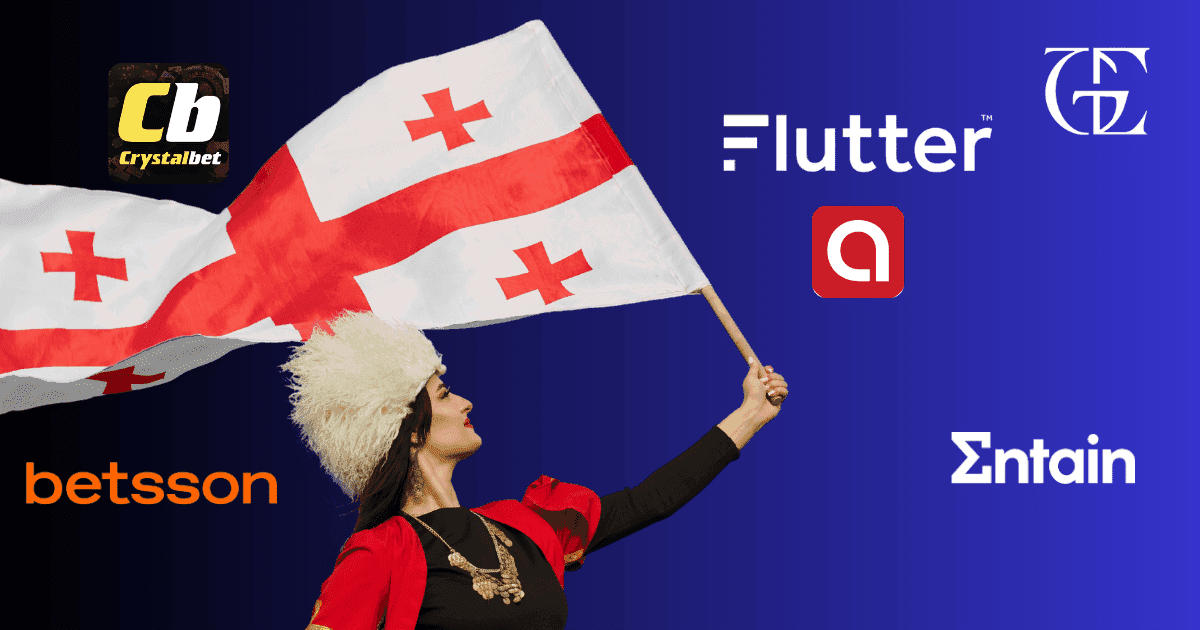
The regime only covers operations directed at customers outside of Georgia. Georgian citizens are systematically blocked from accessing these platforms, and the tax incentives do not apply to the domestic market. In this way, Georgia aims to attract foreign investments and foster skilled job creation without relaxing its restrictive stance on local gambling. International brands like Flutter Entertainment with Adjarabet and Betsson Georgia operate exclusively under domestic regulations, outside the scope of the new international scheme.
Taxation and Conditions for Operators
License holders must pay:
- 5% of GGR in taxes
- An additional 1% as a regulatory supervision fee
- An annual fee of GEL 100,000 (approximately €33,370)
- 0% tax on reinvested profits
The license is granted in blocks for five years. It includes comprehensive banking, payment, and compliance solutions, including management under the MCC code 7995, specifically intended for gambling transactions on card networks. The entire onboarding process can be managed remotely, with no requirement for a physical office in Georgia.
The Georgia International Strategic Group (GISG), responsible for promoting the offer internationally, highlights the presence of software providers, live casinos, gaming studios, and international support teams already established in Georgia to serve clients from various markets.
“Georgia is not building another licensing jurisdiction. We are creating a nationwide ecosystem for international iGaming,” stated Vakhtang Katamadze, a member of the supervisory board of Random Systems Georgia.
Legal Framework and Regulatory Scope
This regime is based on reforms to the Law on the Organization of Lotteries, Gambling and Profitable Games, processed under expedited procedure in the Georgian Parliament in June 2026. The new provisions create permits to offer online casinos, slot machines, and sports betting to foreign audiences—foreigners and stateless individuals—while automatically blocking the participation of Georgian citizens.
Each license is associated with a unique website; an operator with multiple domains must apply for a separate license for each one. Non-compliance with the conditions or delays in payments incur fines of GEL 20,000 (around €6,670).
Key Market Players in Georgia
The local market already has a presence from renowned international groups. Flutter Entertainment, under Paddy Power Betfair, acquired 51% of Adjarabet in 2019, positioning it as a leader in Georgia and Armenia. Betsson entered in 2015 by acquiring Europe-Bet and solidified its rebranding as Betsson Georgia in 2025. Entain (formerly GVC) took majority control of Crystalbet in 2018. Tbilisi, the capital, hosts operations from Evolution and Georgia-founded studios like Spribe and SmartSoft, as well as teams from Flutter, Entain, and Betsson.
Domestic Market Under Strict Restrictions
The national regulatory environment remains rigorous. Since 2024, the minimum age to gamble has been raised to 25 years; furthermore, public employees and individuals with criminal records are excluded, which has left over 1.5 million citizens banned in a country of 3.8 million inhabitants. The international license does not alter these restrictions.
Comparison with Other European Jurisdictions
Georgia adopts a different model than Malta, Gibraltar, or the Isle of Man, whose licenses have historically been based on low taxation but now face changes. Malta introduces a new taxation scheme in October: 15% for casinos and 10% for betting, replacing the 5% standard that has been in effect since 2018. In Gibraltar, the Gaming Commissioner has denied a crisis despite the impact of the UK's increased Remote Gaming Duty to 40%. Estonia has opted for a gradual reduction of its tax to 4%, pending review after low revenues and the absence of new licensed operators.
The Georgian model applies its 5% rate only to operators with international public. Thus, the State manages to attract capital and innovation without relaxing domestic regulations.
Immediate Future and Next Steps for the Georgian Model
Random Systems Georgia estimates that the first operators will begin soon under this regime. The volume of applications in the coming months, along with the behavior of banks and payment processors regarding transactions under MCC 7995, will be key indicators to measure the potential of the Georgian framework against already established licenses.
Legislators anticipate that the scheme will boost skilled employment in technology and marketing, expanding the national service sector. Georgia already offers the B2B labor base; the unknown is whether the country will also attract leading international operators.
For more regional analysis, consult the regulation section.
Frequently Asked Questions
¿Quién puede solicitar la licencia internacional de iGaming en Georgia?
Only operators that exclusively offer games to foreigners can apply for the international license in Georgia, as Georgian citizens are legally restricted from participation. The regime does not apply to activities with Georgian customers.
¿Qué impuestos y tasas impone la licencia internacional de Georgia?
The license requires a 5% tax on GGR, a 1% regulatory supervision fee, and an annual fee of GEL 100,000 (around €33,370), while reinvested profits are taxed at 0%.
¿El operador necesita oficina física o residencia en Georgia?
No, the new regime allows the entire application, incorporation, and operational processes to be managed remotely, without the need for a physical presence in Georgia.
¿Cómo afecta la licencia internacional al mercado doméstico georgiano?
The international license does not alter internal rules: Georgian citizens cannot participate, and restrictions such as the minimum age of 25 years and the exclusion of certain groups remain in place.
¿En qué se diferencia la licencia de Georgia respecto a Malta o Gibraltar?
Unlike Malta and Gibraltar, Georgia only applies its low 5% tax to operators with foreign clients, isolating the domestic market and prioritizing the attraction of foreign investment without liberalizing local access.
Tags
About the author

Miguel Sandoval
Regulatory Affairs Correspondent
Miguel Sandoval tracks gambling legislation, licensing, and regulator enforcement — from Spain's DGOJ and the Latin American authorities to the UKGC, the MGA, and the state-by-state map in North America. The reports answer three questions precisely — what changed, where, and who it affects — with jurisdictions, dates, and penalties cited exactly as published. Operators and compliance officers read Miguel Sandoval to know which rulebook moved before their next meeting.
More from Miguel Sandoval