Georgia Opens 5% GGR Licence to International iGaming Operators
Georgia’s new licensing regime for international operators offers a 5% GGR tax, five-year licences, and remote onboarding, with Georgian citizens excluded from participation.
Key Takeaways
- Georgia's international iGaming licence charges a 5% GGR tax for platforms serving non-Georgian players.
- Licences are valid for five years, require no local office, and permit remote onboarding.
- Georgian citizens are barred from licensed international sites; domestic operators remain under stricter rules.
- Random Systems Georgia oversees the framework, which aims to attract foreign investment and skilled jobs.
- Permit holders pay a GEL 100,000 annual fee and a 1% regulatory monitoring charge.
Georgia has launched its international iGaming licence, providing a 5% gross gaming revenue (GGR) tax for operators that serve players outside of Georgia. The framework, confirmed fully live by Random Systems Georgia (RSG) after a pilot phase in July, offers five-year permits, does not require local offices, and bars Georgian citizens from accessing licensed platforms. This structure is designed to attract foreign-facing online casino, slots, and sports betting businesses without altering domestic market restrictions.
Key Terms of the Georgia International iGaming Licence
The international licence grants operators several distinct advantages:
- 5% tax on GGR for all revenues generated from foreign players.
- 1% regulatory monitoring fee applied to GGR.
- An annual permit fee of GEL 100,000 (approximately €33,370).
- 0% tax on reinvested profits.
- Each licence is valid for a single website; multiple sites require multiple permits.
- The permit spans five years and can be acquired via remote onboarding, eliminating the need for a physical presence in Georgia.
- No obligation to establish a local office or domestic staff.
Operators must comply with the framework’s requirements, including timely payments. Failing to meet licence obligations, such as missing fee deadlines, results in fines of GEL 20,000 (about €6,670).
Tax Structure and Regulatory Oversight
All operators under the scheme are subject to a streamlined fiscal regime:
- GGR subject to 5% tax
- 1% regulatory fee collected by RSG
- Additional Permit Fee: GEL 100,000 annually
- Reinvested profits are untaxed, incentivising ongoing local reinvestment
Permits also include integrated banking, payment, and compliance services, including arrangements for the gambling-specific merchant category code (MCC) 7995. RSG has confirmed that foreign-facing operators will be able to process payments using this code, subject to successful onboarding.
Market Exclusions and Restrictions
The licence framework applies strictly to operators serving external markets. Georgian citizens and residents are categorically blocked from accessing licensed international sites. Only foreign nationals and stateless persons abroad may use these platforms. Domestic operations continue under tight rules:
- The legal age for gambling is now 25, introduced in 2024
- Additional exclusions for public-sector employees and individuals with criminal records
- Over 1.5 million citizens are barred from licenced gambling (from a national population of 3.8 million)
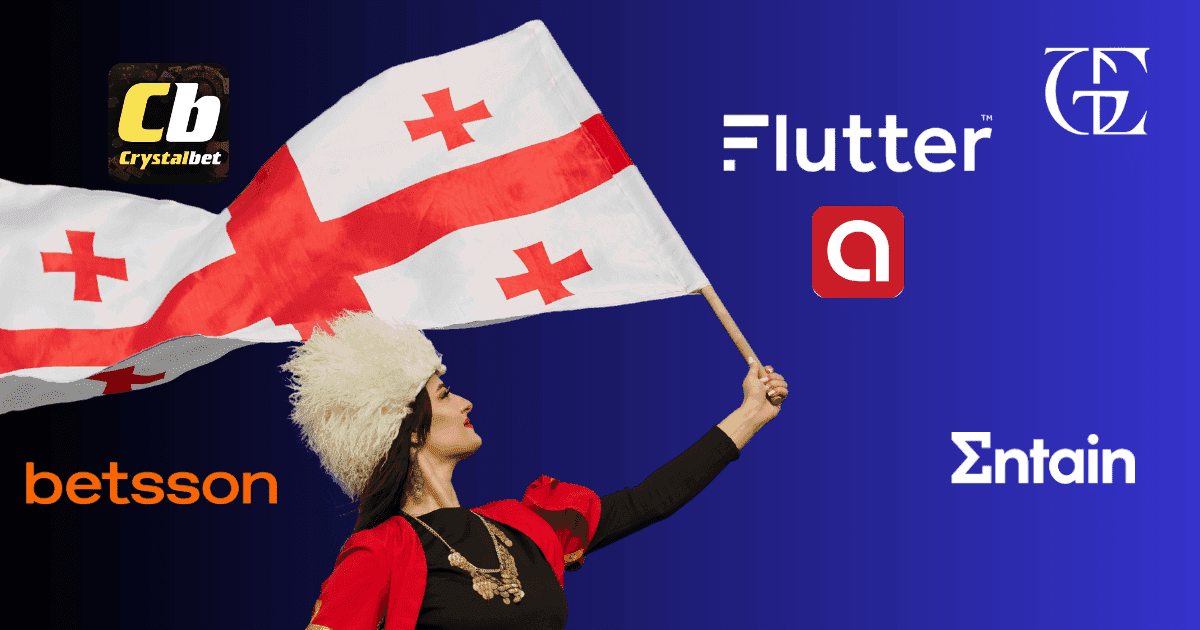
Existing brands in the domestic market, such as Flutter Entertainment’s Adjarabet, Betsson Georgia, and Entain’s Crystalbet, operate under these restrictions, not the new international licence.
Existing Market and Industry Presence in Georgia
International iGaming brands have had a presence in Georgia for years. Flutter Entertainment, trading as Paddy Power Betfair at the time, acquired a 51% stake in Adjarabet in 2019, which it identifies as the country’s leading gaming brand. Betsson entered Georgia with its 2015 acquisition of Europe-Bet and completed its rebrand to Betsson Georgia in 2025. Entain (formerly GVC) acquired a majority position in Crystalbet in 2018.
The country is also home to major suppliers: Evolution maintains operations in Tbilisi, along with Georgian-founded Spribe and SmartSoft. Local teams work for Flutter, Entain, and Betsson, leveraging a workforce skilled in customer support, product development, and live casino operations. The Georgia International Strategic Group (GISG) has highlighted these resources in promoting Georgia as a hub for international gaming operations.
"Georgia is not building another licensing jurisdiction. We are building a country-level ecosystem for international iGaming," — Vakhtang Katamadze, supervisory board member, Random Systems Georgia
Legal Foundations of the International Licence
Georgia’s international iGaming regime is based on amendments to the Law on the Organisation of Lotteries, Gambling and Profitable Games, fast-tracked through Parliament in June. The law authorises Random Systems Georgia to oversee licencing for online casino, slots, and sports betting platforms serving non-Georgian players.
Each international licence is tied to a single website; operators with multiple sites must obtain individual permits for each. RSG, which is also active via Malta-registered Random Systems International, will supervise the framework and monitor compliance. RSG was recently appointed to run Armenia’s gambling monitoring system beginning 1 January 2027, underscoring its regional regulatory presence.
Georgia’s Position Versus Other Licensing Hubs
Georgia’s 5% GGR tax applies only to foreign-facing business, contrasting approaches seen in jurisdictions like Malta, Gibraltar, and Estonia:
- From 1 October, Malta will move from a uniform 5% gaming tax to a 15% rate for casino games and 10% for betting.
- Gibraltar faces sector stress from the UK’s increase in Remote Gaming Duty to 40%.
- Estonia’s staged online gambling tax cut, targeting 4%, is already under early review due to low fiscal returns.
In Georgia, the intent is to attract foreign capital, skilled technology resources, and marketing talent while maintaining strict controls for residents.
Implementation Outlook and Next Steps
RSG expects the first licensees to go live soon, with the application volume and success of MCC 7995 payment processing seen as evidence of the regime’s appeal. The government and industry bodies forecast enhanced foreign investment in the country’s technology and marketing sectors, taking advantage of a sizeable B2B workforce.
The coming months will determine whether Georgia becomes a significant new centre for international iGaming or remains primarily a B2B service location.
Frequently Asked Questions
Who is eligible for the Georgia international iGaming licence?
Only operators serving foreign nationals and stateless persons can obtain the Georgia international iGaming licence. Georgian citizens are expressly excluded from accessing licensed platforms as required by law.
What are the financial obligations of licensees under the new regime?
Licensees must pay a 5% tax on GGR, a 1% regulatory monitoring fee, and an annual permit fee of GEL 100,000 (around €33,370). Reinvested profits incur 0% tax rate according to the rules.
Do operators need a physical presence in Georgia to apply?
No physical office or local staff is needed for onboarding. The process is completed remotely and operators can be licensed without establishing a physical Georgian entity.
How does Georgia's international iGaming licence differ from Malta’s or Gibraltar’s model?
Georgia’s 5% GGR tax applies solely to foreign-facing platforms, whereas Malta is raising gaming taxes, and Gibraltar has reacted to UK fiscal changes. Georgia’s approach focuses on attracting foreign investment while keeping local consumption tightly restricted.
What enforcement actions apply if licence conditions are breached?
Operators that fail to meet licence requirements or payment deadlines can be fined GEL 20,000 (approximately €6,670). This includes incomplete documentation and non-payment of fees.
Tags
About the author

Eleanor Whitfield
Regulatory Affairs Correspondent
Eleanor Whitfield tracks gambling legislation, licensing decisions, and regulator enforcement across key markets — from the UKGC, MGA, and Germany's GGL to Spain's DGOJ and the state-by-state map in the Americas. The reporting answers three questions precisely: what changed, where, and who it affects, with jurisdictions, effective dates, and penalty figures named exactly as published. Compliance officers and operators read Eleanor Whitfield to know which rulebook moved before their next board meeting.
More from Eleanor Whitfield