CFTC proposes to classify event contracts as swaps and excludes casino-style betting
Proposal would expand swap definition; provisional rule excludes casino-style products and opens 30-day comment periods
Key Takeaways
- The CFTC on 9 October 2026 proposed to add event contracts to the swap definition and simultaneously adopted a provisional rule excluding casino-style gambling products.
- The provisional exclusion requires the provider to be authorised under state or tribal gaming laws and that the product not be traded on an organised exchange.
- Both the proposal and the provisional rule open 30-day public comment periods after publication in the Federal Register.
- The measures respond to conflicting federal court decisions in the Third, Ninth and Sixth Circuits about whether sports contracts are swaps.
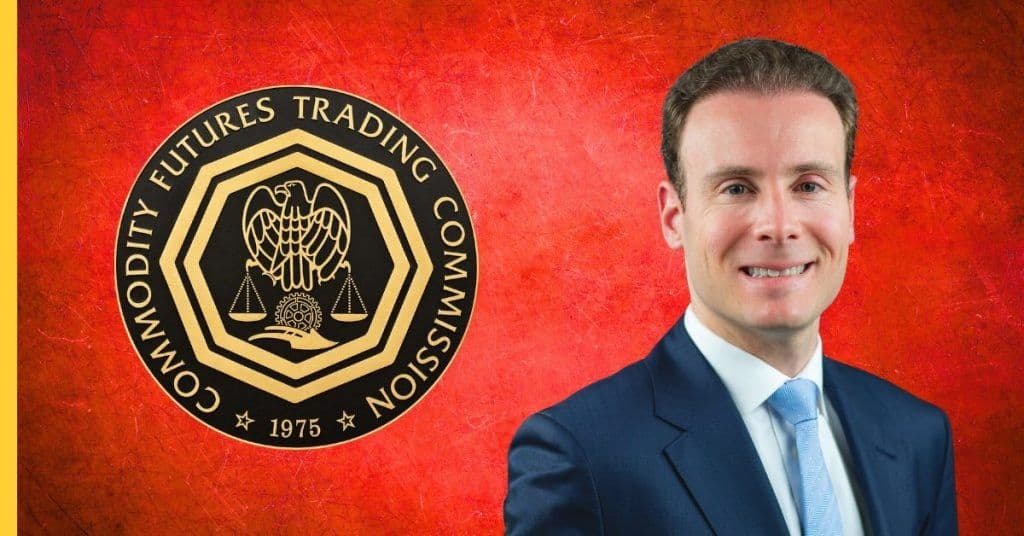
The Commodity Futures Trading Commission (CFTC) on 9 October 2026 took two contrasting actions: it proposed to classify event contracts explicitly as swaps and simultaneously adopted a provisional rule that excludes casino-style gambling products and house bets from that definition. The proposal would expand the definition of swap to cover contracts tied to sports, politics, cultural events and weather; the provisional rule takes effect on publication in the Federal Register and opens a 30-day public comment period.
## What the CFTC did on 9 October 2026
The agency published for public comment an amendment that would add a category to the swap definition: “event contracts, including those based on sports-, politics-, cultural, and weather-related events.” That inclusion will require a final rule before it becomes effective. At the same time, the Commission adopted a provisional rule excluding casino-style gambling products from the term “swap”; the exclusion applies upon official publication and is also subject to a 30-day comment period.
Chairman Michael Selig said in the CFTC statement that “These products are commodity derivatives squarely within the CFTC’s regulatory remit under the Commodity Exchange Act and are within the agency’s exclusive jurisdiction.” In a separate announcement on the provisional exclusion Selig stated: “Casino-style gambling products are not derivatives.”
## How the provisional rule distinguishes traditional gambling from exchange contracts
The provisional rule establishes two cumulative requirements for a gambling product to qualify as excluded:
The provider must be authorised under state or tribal gaming laws and operate within that authorisation, with the product regulated as gambling.
The product must not be traded on an organised exchange or on another market where transactions are executed between multiple participants or are individually negotiated.
Under that framework the CFTC separates traditional betting books —where the customer wagers against the operator under house rules— from prediction markets or exchanges, where participants trade contracts between buyers and sellers and prices emerge from market interaction.
## Why the CFTC proposes to include event contracts as swaps
The proposal responds to conflicting federal court decisions over whether event contracts fall within the Commodity Exchange Act (CEA). In 2026 the United States Court of Appeals for the Third Circuit held in April that Kalshi’s sports contracts were swaps; the Ninth Circuit reached the opposite conclusion in August; and the Sixth Circuit rejected swap status in September. The CFTC describes those decisions as causing “widespread confusion” and justifies the amendment as a way to clarify the federal scope.
The proposal document offers several arguments for inclusion: that these instruments are “commonly known to the trade as swaps,” that many have characteristics of binary options, and that underlying events can produce financial, economic or commercial consequences. The CFTC cites tangible examples of consequences: increased ticket sales, changes in advertising revenue, player bonuses and economic benefits for local businesses when a team advances in a tournament.
## Relationship between the proposal and recent case law
The proposal directly addresses the reasoning of the courts that rejected swap classification. In particular it challenges the Ninth Circuit’s interpretation of CFTC Regulation 40.11 and argues that Congress created special rules regarding event contracts precisely because those contracts can fall within federal domain. Nonetheless, the CFTC itself recognises in the record that economic similarities between wagers and event contracts “does not make the two products one and the same.”
The agency argues that the provisional exclusion preserves state and tribal authority over traditional gambling while the proposal proceeds through federal rulemaking.
"Casino-style gambling products are not derivatives," Michael Selig said in the provisional-rule announcement.
## Regulatory and litigation implications
The two measures do not conclusively determine the outcome of pending lawsuits. Courts retain the authority to interpret the CEA; the Sixth Circuit also held that Ohio and Tennessee gaming laws would not be preempted even if certain contracts were considered swaps. The CFTC record notes a Supreme Court filing on 7 October in which 39 states and the District of Columbia supported New Jersey’s petition asking the Court to review the federal-jurisdiction dispute.
The CFTC justified adopting the provisional rule without the usual notice-and-comment because of ongoing litigation and conflicting federal court decisions, invoking an exception to the standard rulemaking process.
## What happens next: timelines and next steps
The provisional rule takes effect on its publication in the Federal Register and will have a comment period of 30 days.
The proposed inclusion in the swap definition will also open a 30-day comment period after publication and will require a final rule to take effect.
Interested parties— including prediction market operators, technology platforms and state gaming authorities— must submit comments within those deadlines. For regulatory analysis and timelines of similar measures, consult coverage in regulation and related reporting in news.
## Practical conclusions for operators and regulators
Operators of exchanges that offer event contracts should consider that the CFTC has stated its intent to assert jurisdiction over those products if the proposal becomes final. At the same time, operators authorised under state or tribal gaming laws retain a pathway to exclusion if they meet the provisional rule’s criteria and do not list their products on organised markets.
For state regulators the provisional rule reaffirms preservation of their authority over products regulated as gambling when the CFTC’s listed requirements are met.
"These products are commodity derivatives squarely within the CFTC’s regulatory remit under the Commodity Exchange Act," Michael Selig said in the statement on the proposal.
Frequently Asked Questions
What did the CFTC change on 9 October 2026?
The CFTC published a proposal to add “event contracts” to the swap definition and adopted a provisional rule excluding casino-style gambling products; both actions were announced on 9 October 2026 and will open 30-day comment periods.
What requirements does the provisional rule set to exclude a product as traditional gambling?
The provisional rule sets two cumulative requirements: the provider must be authorised under state or tribal gaming laws and the product must be regulated as gambling; additionally, the product cannot be traded on an organised exchange or on a market with multi-participant executed transactions.
Does the CFTC proposal take immediate effect?
No; inclusion of event contracts in the swap definition requires a final rule to become effective, while the provisional exclusion takes effect upon publication in the Federal Register and is followed by a 30-day comment period.
How do these measures affect exchanges such as Kalshi?
If the proposal becomes a final rule, exchanges offering event contracts could clearly fall under the CFTC’s federal jurisdiction; meanwhile the provisional rule preserves a state or tribal exclusion pathway for operators that meet its criteria.
Tags
About the author

Miguel Sandoval
Regulatory Affairs Correspondent
Miguel Sandoval tracks gambling legislation, licensing, and regulator enforcement — from Spain's DGOJ and the Latin American authorities to the UKGC, the MGA, and the state-by-state map in North America. The reports answer three questions precisely — what changed, where, and who it affects — with jurisdictions, dates, and penalties cited exactly as published. Operators and compliance officers read Miguel Sandoval to know which rulebook moved before their next meeting.
More from Miguel Sandoval