PAGCOR Awaits Imminent GCG Ruling on Separation of Regulatory and Commercial Roles
The Philippine Amusement and Gaming Corporation seeks Governance Commission approval to split its regulatory and commercial functions, with a decision expected soon and further endorsement required from the Office of the President.
Key Takeaways
- PAGCOR's proposal to decouple regulatory and commercial functions remains under GCG review, with a decision due shortly.
- Endorsement by the GCG will send the proposal to the Office of the President for evaluation and possible Executive Order.
- Chairman Alejandro H. Tengco described the reform as crucial to eliminating conflicts of interest and strengthening regulatory focus.
- Rapid changes in electronic gaming are a driving factor in reassessing PAGCOR’s institutional structure.
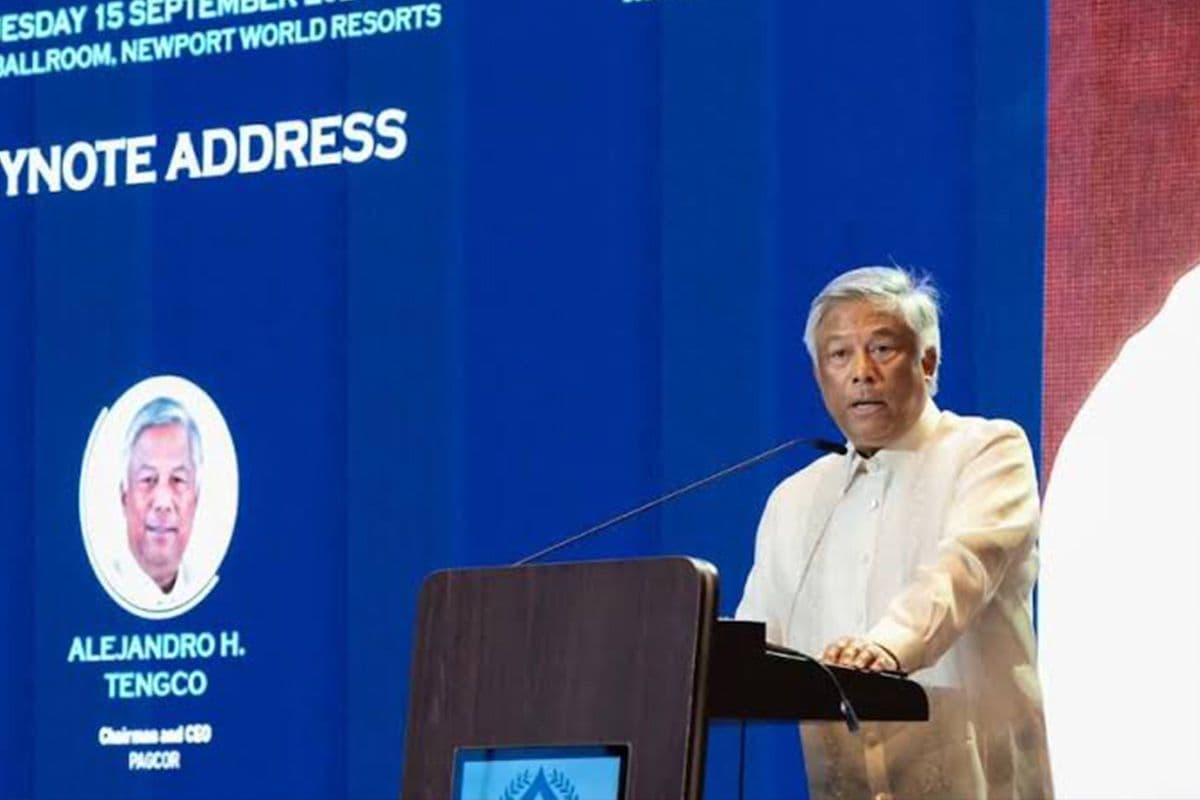
The Philippine Amusement and Gaming Corporation (PAGCOR) anticipates a final decision from the Governance Commission for Government-Owned or-Controlled Corporations (GCG) on its proposal to separate PAGCOR's regulatory and commercial functions within weeks. Chairman and CEO Alejandro H. Tengco confirmed on 15 September that the GCG review is nearing completion and, if approved, the proposal will proceed to the Office of the President for evaluation and possible enactment via Executive Order.
Current Status of PAGCOR Decoupling Proposal
During his keynote address at the IAG Academy Summit 2026 at Newport World Resorts Manila, Mr. Tengco informed industry stakeholders that the dual-role structure of PAGCOR remains under GCG review. "Currently, the proposal remains under review by the GCG, and we expect a decision to be out very soon," he stated on 15 September. Any endorsement by the GCG would result in the matter being forwarded to the Office of the President for further assessment. Should the President approve, formal separation will be enacted through an Executive Order, legally instituting the change.
Institutional Reform: Legal and Operational Impact
Decoupling PAGCOR’s dual mandate represents a significant shift for the Philippine gaming landscape. Mr. Tengco emphasised that the change involves extensive legal, financial, operational, and human resource considerations. The agency has initiated internal preparations for this potential transition, with a focus on reallocating capacity and expertise primarily toward regulatory functions, rather than commercial operations. He outlined that the reform aims to strengthen PAGCOR as an institution: > "This is not about how much we will generate. It is about strengthening PAGCOR, and with its strength, we can do our work better," Mr. Tengco explained.
Addressing Conflicts of Interest and Industry Evolution
A central motivation for the proposed decoupling is to resolve the inherent conflict presented by PAGCOR operating both as regulator and commercial operator. Mr. Tengco candidly remarked, > "You do not want a regulator to regulate its own operations," highlighting industry best practice separating market oversight from commercial participation. Since the establishment of Casino Filipino, the advent and rapid growth of private sector licensees—including new casino entrants and technology providers—has altered the market dynamic, necessitating a review of PAGCOR's commercial participation vis-à-vis its supervisory mandate.
Electronic Gaming and the Competitive Imperative
Mr. Tengco called particular attention to fast-moving changes in electronic gaming. He characterised this sector as the most visible example of industry transformation and stated that maintaining regulatory relevance and effectiveness requires evolving institutional structures at a pace matching technological and market change. "The reality is that the industry is evolving at an unprecedented pace, and nowhere is that transformation more visible than in Electronic Gaming," he noted.
Next Steps and Strategic Outcomes
If endorsed by both the GCG and the Office of the President, the separation will be implemented by Executive Order, resulting in PAGCOR dedicating its institutional focus to regulation. As internal preparations advance, PAGCOR's leadership views the decoupling as vital to maintaining effective oversight and adapting to the competitive pressures of a changing gaming market. Mr. Tengco concluded that the reform marks an "important step toward building a stronger and more focused gaming regulator" for the Philippines.
For ongoing updates on regulatory developments, see the regulation and news sections.
Frequently Asked Questions
What is the current status of the PAGCOR decoupling proposal?
The Governance Commission for Government-Owned or-Controlled Corporations is currently reviewing PAGCOR's proposal to separate its regulatory and commercial functions, with a decision expected very soon according to Chairman Alejandro H. Tengco.
What happens after the GCG decision on PAGCOR's proposal?
If the GCG endorses the decoupling proposal, it will be forwarded to the Office of the President for evaluation. Should the President approve, an Executive Order will be issued to implement the separation.
Why is PAGCOR seeking to separate its regulatory and commercial roles?
Chairman Tengco noted the inherent conflict of interest in regulating an industry while also operating within it, and views decoupling as necessary for institutional strengthening and effective regulation.
What impact does electronic gaming have on PAGCOR's structural reform?
The rapid expansion and evolution of electronic gaming in the Philippines has highlighted the need for an agile, focused regulator, prompting PAGCOR to reassess its dual role.
Tags
About the author

Eleanor Whitfield
Regulatory Affairs Correspondent
Eleanor Whitfield tracks gambling legislation, licensing decisions, and regulator enforcement across key markets — from the UKGC, MGA, and Germany's GGL to Spain's DGOJ and the state-by-state map in the Americas. The reporting answers three questions precisely: what changed, where, and who it affects, with jurisdictions, effective dates, and penalty figures named exactly as published. Compliance officers and operators read Eleanor Whitfield to know which rulebook moved before their next board meeting.
More from Eleanor Whitfield