Supreme Court of India rejects review petitions against state online-gaming bans
Ten reviews dismissed; bans in Tamil Nadu and Karnataka remain in force.
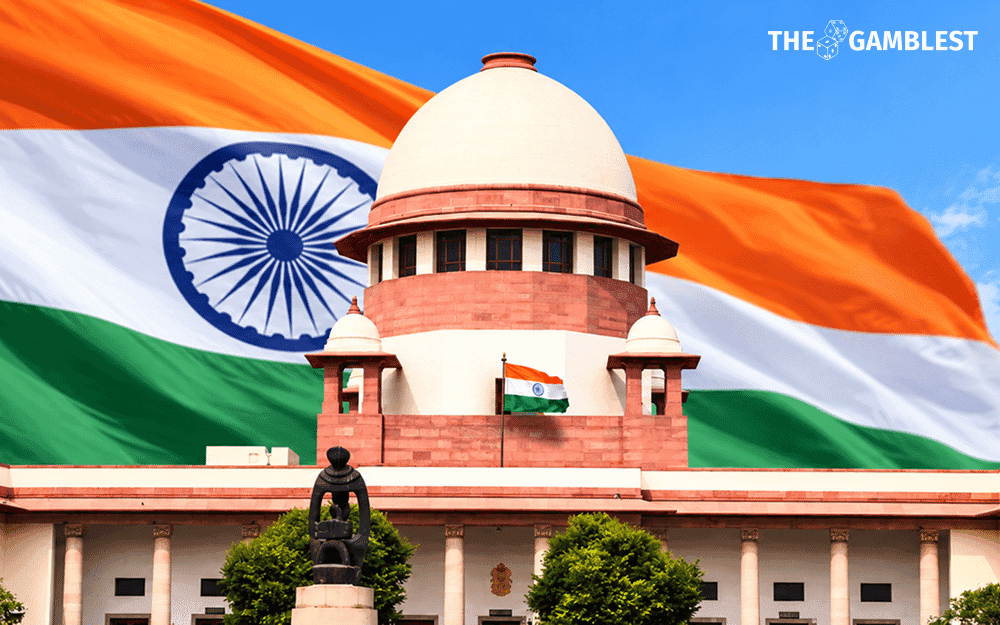
Key Takeaways
- The Supreme Court of India dismissed ten review petitions without a public hearing, in an opinion by Justices J.B. Pardiwala and R. Mahadevan.
- The 27 May 2026 judgment holds that states may ban online games involving monetary stakes, including games deemed skill-based.
- Petitioners included Junglee Games India, Play Games24x7, Head Digital Works, All India Gaming Federation and Federation of Indian Fantasy Sports.
- Challenges to the Promotion and Regulation of Online Gaming Act, 2025 are separate; that federal law began to be implemented in early May 2026.
The Supreme Court of India dismissed ten review petitions against its own judgment upholding online-gaming bans in Tamil Nadu and Karnataka. The decision was delivered by Justices J.B. Pardiwala and R. Mahadevan without a public hearing, and it leaves intact the 27 May 2026 judgment.
By Miguel Sandoval, Regulatory Correspondent.
Who challenged the bans and what they sought
The review petitions were filed by Junglee Games India, Play Games24x7, Head Digital Works, All India Gaming Federation and Federation of Indian Fantasy Sports. The petitioners argued the challenged games are based on skill and therefore should not be treated as gambling; they also contended that the venue of play — online or offline — does not change the games’ nature.
Reasoning of the judgment and scope
The Supreme Court affirmed its 27 May 2026 ruling that states may prohibit online games involving monetary stakes, and that such prohibitions extend to games classified as skill-based. The Court rejected the operators’ arguments and maintained its prior position; dismissing the ten reviews left the May judgment unchanged.
Relation to the federal law and next steps
The petitions against the Promotion and Regulation of Online Gaming Act, 2025 are distinct from these state-level reviews. Implementation of that federal law began in early May 2026. The Supreme Court had scheduled a final hearing on challenges to the central law for 6 and 7 October 2026, but the current status of that hearing could not be confirmed. The outcome of that process does not alter the state causes that keep prohibitions in force in Tamil Nadu and Karnataka. Regulation
Frequently Asked Questions
What did the Supreme Court decide about state online-gaming bans?
The Supreme Court dismissed ten review petitions and left unchanged its 27 May 2026 judgment that allows states to prohibit online games involving monetary stakes, including games classified as skill-based. The decision was delivered by Justices J.B. Pardiwala and R. Mahadevan without a public hearing.
Who filed the review petitions before the Supreme Court?
The petitions were filed by Junglee Games India, Play Games24x7, Head Digital Works, All India Gaming Federation and Federation of Indian Fantasy Sports. They argued the challenged games are based on skill and should not be treated as gambling.
Does this ruling resolve challenges to the federal online-gaming law of 2025?
No. The petitions against the Promotion and Regulation of Online Gaming Act, 2025 are separate and are not resolved by this dismissal. Implementation of the federal law began in early May 2026, and a final hearing on those challenges had been scheduled for 6–7 October 2026, whose current status could not be confirmed.
Tags
About the author

Miguel Sandoval
Regulatory Affairs Correspondent
Miguel Sandoval tracks gambling legislation, licensing, and regulator enforcement — from Spain's DGOJ and the Latin American authorities to the UKGC, the MGA, and the state-by-state map in North America. The reports answer three questions precisely — what changed, where, and who it affects — with jurisdictions, dates, and penalties cited exactly as published. Operators and compliance officers read Miguel Sandoval to know which rulebook moved before their next meeting.
More from Miguel Sandoval









