Macau must hit MOP236bn GGR in final quarter to meet 2026 target, chief executive says
Sam Hou Fai warns October will be decisive after four months of year-on-year declines
Key Takeaways
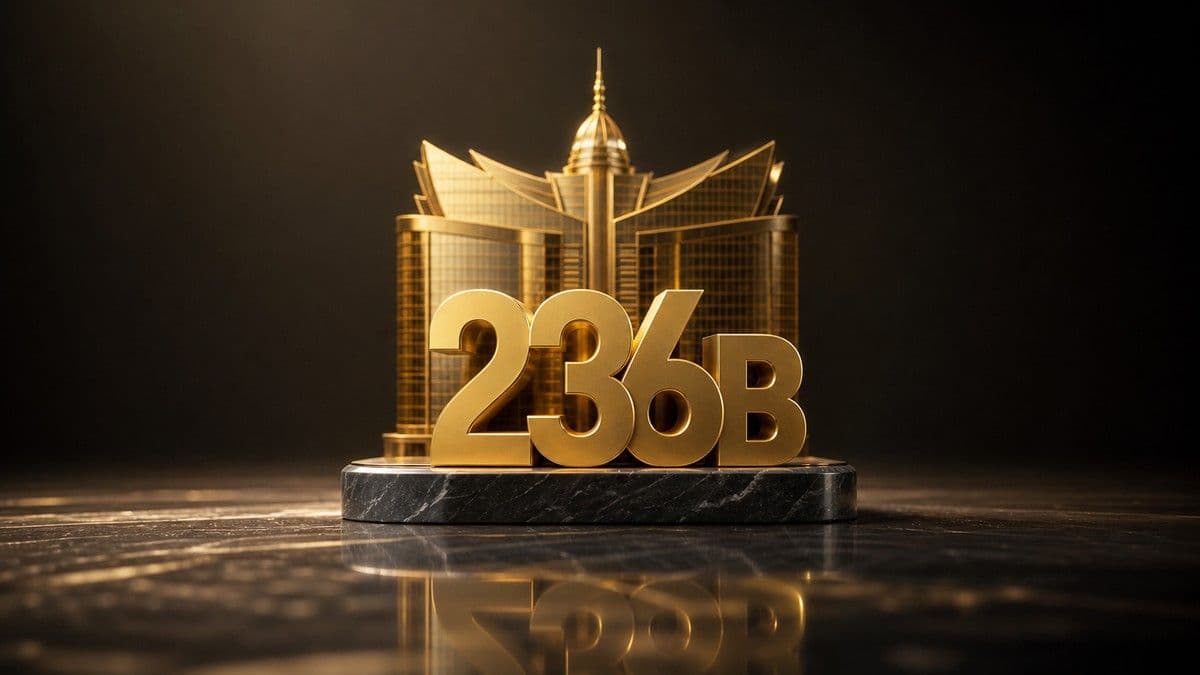
- Chief Executive Sam Hou Fai said October could determine whether Macau hits its 2026 GGR target of MOP236 billion (US$29.20bn).
- GGR for the first nine months totalled approximately MOP187.1 billion, requiring about MOP50 billion in the final quarter to meet the forecast.
- Macau recorded year-on-year visitor growth during October’s Golden Week, and the government is checking if this translated into higher GGR.
- Gaming accounts for 80 percent of Macau’s fiscal tax revenue and faces scrutiny if declines persist.
Macau Chief Executive Sam Hou Fai said October could prove decisive for whether the city meets its 2026 gross gaming revenue (GGR) assumption of MOP236 billion (US$29.20 billion), after four consecutive months of year-on-year GGR declines through September. He told attendees at a Government Headquarters open day on Saturday that the administration would monitor incoming monthly GGR figures closely and temper public spending plans accordingly.
Why October matters to the Macau gaming revenue forecast
Sam Hou Fai opened by noting the city’s monthly GGR had fallen year-on-year for four straight months up to September. The government uses the annual GGR estimate — a revenue base subject to an effective 40 percent tax rate — as the guide for public spending and fiscal planning. That makes the October numbers politically and financially significant because they will influence whether the administration sticks to the current MOP236 billion target for 2026.
The Chief Executive set out the arithmetic: GGR for the first nine months of the year totalled approximately MOP187.1 billion, which implies the final three months must generate roughly MOP50 billion in aggregate to reach the government’s forecast. The scale of that final-quarter requirement is the direct reason October’s performance matters.
Visitor volumes during Golden Week and the revenue question
Mr Sam highlighted that, despite the recent GGR declines, October recorded a year-on-year increase in visitor numbers during the Golden Week holiday period. The government is tracking whether the higher visitor volume translated into higher gaming revenue.
"We will monitor carefully how public spending sits with the incoming monthly GGR numbers over the final quarter," Mr Sam said on Saturday.
He made clear there were no immediate plans to revise the full-year GGR forecast, but the administration would continue to assess the trajectory as monthly data arrived.
Assessing the causes: cyclical markets or a post-pandemic peak?
The Chief Executive said the government was evaluating whether the downturn reflected "shifting internal and external economic conditions," and he specifically cited cyclical adjustments in stock and property markets in neighbouring regions as one possible factor. He also said officials were considering whether the strong post-pandemic year-on-year growth seen since 2023 had now run its course and was moving toward stabilisation or decline.
The administration intends to consult with sectors across Macau — including gaming operators and civil society — to determine how to prioritise essential expenditures if gaming revenue continues to fall. Those spending areas include fiscal obligations, social security, healthcare and education.
Fiscal implications of a shortfall in gaming revenue
The Chief Executive reiterated the centrality of gaming to Macau’s public finances. He said the gaming industry accounts for 80 percent of the region’s fiscal tax revenue and plays a pivotal role in the local economy and public finances. That concentration leaves public budgets particularly sensitive to any sustained decline in GGR.
Officials are therefore watching monthly receipts not only for headline revenue but for the downstream implications on budget planning. The effective 40 percent tax applied to gaming receipts means a shortfall in GGR translates rapidly into lower government income unless offset by other measures.
What the government will do if GGR falls further
Sam said the administration would consult widely before taking fiscal measures. He framed the process as a sequence of assessment, consultation and then decisions on managing essential public expenditures. He did not set out specific cuts or contingency measures, but he stressed that obligations in social security, healthcare and education would be priorities in any reallocation.
Monitoring and next steps
The government will continue to track monthly GGR releases through the final quarter.
Officials will weigh whether observed declines stem from external cyclical forces or the end of a post-pandemic growth phase.
Consultations with industry and society will inform any adjustments to public spending.
What operators and observers should watch next
Operators, investors and analysts should prioritise October and the rest of the fourth quarter for signals on demand recovery and yield per visitor. The comparison points are the four months of year-on-year GGR decline to September and the nine-month cumulative total of MOP187.1 billion.
If the final quarter fails to deliver around MOP50 billion, the government will face pressure to consider budget adjustments. That outcome would also feed into debates over the sustainability of Macau’s heavy fiscal reliance on gaming receipts.
"The gaming industry is the most vital sector of Macau’s economic structure," Mr Sam added, emphasising the sector’s disproportionate contribution to fiscal revenue.
The October data will therefore shape immediate budget conversations in Macau and set the tone for how the city manages public spending heading into 2027.
Frequently Asked Questions
Why is October critical for Macau’s 2026 gaming revenue forecast?
October is critical because Chief Executive Sam Hou Fai said the month could determine whether the city reaches the 2026 GGR target of MOP236 billion (US$29.20bn). This follows four consecutive months of year-on-year GGR declines and the government needs the final three months to generate about MOP50 billion after MOP187.1 billion in the first nine months.
How much GGR has Macau generated so far this year and how much is needed?
Macau’s GGR for the first nine months totalled approximately MOP187.1 billion, so the final quarter must produce roughly MOP50 billion in aggregate for the government to meet its MOP236 billion forecast for 2026.
Did visitor numbers improve in October and will that help GGR?
Visitor numbers rose year-on-year during the Golden Week holiday in October, and the government is closely monitoring whether that higher visitor volume has translated into increased gross gaming revenue.
What fiscal risk does a GGR shortfall pose to Macau?
A GGR shortfall poses a significant fiscal risk because the gaming industry provides about 80 percent of Macau’s fiscal tax revenue and gaming receipts are taxed at an effective 40 percent rate, making public budgets highly sensitive to sustained declines.
Tags
About the author

Oliver Grant
Industry Technology Correspondent
Oliver Grant covers the technology and business machinery of iGaming — platform and data deals, AI and compliance tooling, affiliate and marketing shifts, and the quarterly numbers behind them. The reports lead with the announcement, name the vendors and figures exactly as published, and separate genuine capability from press-release promise. When a supplier ships a new engine or a regulator tightens ad rules, Oliver Grant explains what actually changes for the companies involved.
More from Oliver Grant