Miele to disable Pennsylvania skill-game machines ahead of October enforcement
Company will disable devices during next collection visits ahead of the October 13 deadline
Key Takeaways
- Miele Manufacturing will disable Pennsylvania Skill machines during its next collection visits ahead of the state's October 13, 2026, enforcement deadline.
- The Pennsylvania Supreme Court ruled that skill-game terminals constitute gambling after more than a decade in a legal grey area.
- Attorney General Dave Sunday warned that unplugged or inactive machines could still trigger enforcement and urged hosts to arrange removal.
- Rep. Russ Diamond has proposed legislation that would legalise limited skill games with a 20% tax and reduce casino taxes to 49.9%.
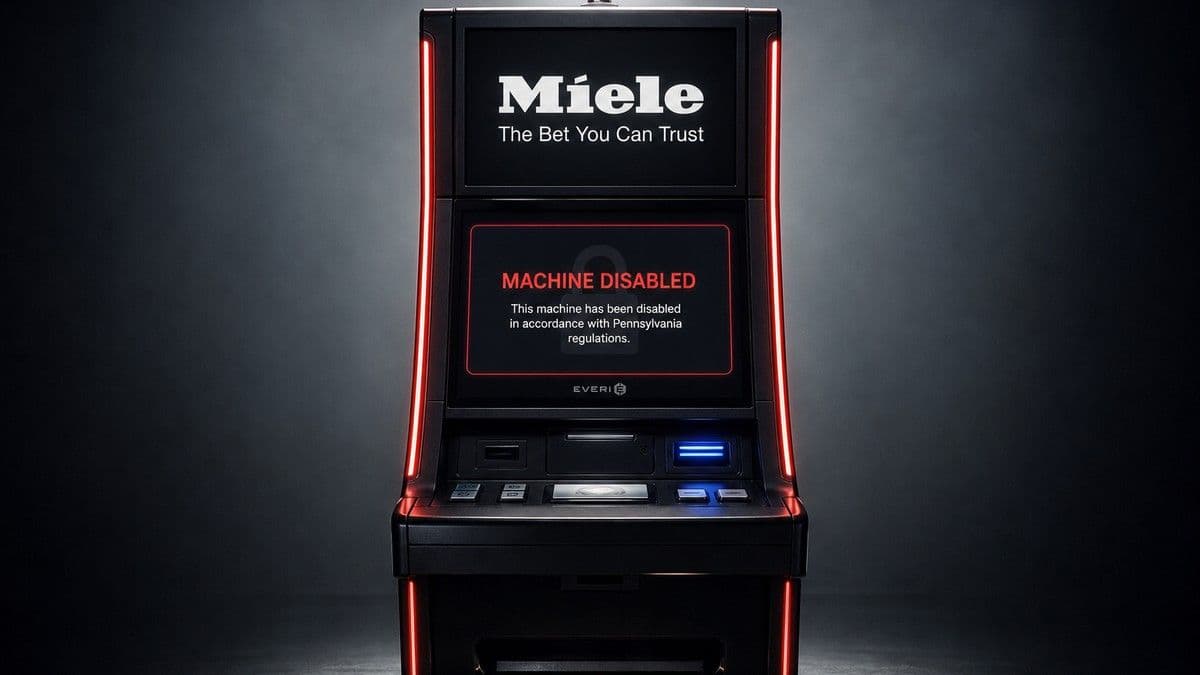
Miele Manufacturing will disable its Pennsylvania skill-game machines during its operating divisions' next collection visit as the state prepares to enforce an October 13, 2026, deadline. The decision follows a Pennsylvania Supreme Court ruling that classified skill-game terminals as gambling; Miele has told host businesses the devices will be made inoperative and urged operators to discuss removal with distributors.
Miele Pennsylvania skill games: shutdown plan and timing
Miele Manufacturing, one of the largest suppliers of skill-game machines in Pennsylvania, has notified convenience stores, bars, restaurants and other small businesses that its operating divisions will disable the devices during the next scheduled collection run. The company distributes the Pennsylvania Skill cabinets and works with Pace-O-Matic, which supplies the gaming software used on many of the terminals.
Miele's affiliated companies, Miele Amusements and Pennsylvania Amusements, operate many of the installed machines. The notice to hosts came as the state prepares to act on a Supreme Court ruling that determined the terminals constitute gambling. The state’s enforcement deadline is set for October 13, 2026. It remains unclear from Miele's communication whether the company will remove the hardware entirely from host premises or only render the units inoperative during collection visits.
Regulatory backdrop: Pennsylvania Supreme Court ruling and enforcement
The Pennsylvania Supreme Court's decision reclassified skill-game terminals as gambling after more than a decade in a legal grey area. That ruling removes the legal basis the operators had been relying on and exposes operators, distributors and host businesses to enforcement actions under state gambling laws.
Attorney General Dave Sunday has warned that simply unplugging or marking machines as inactive will not necessarily shield businesses from enforcement. He urged business owners to contact distributors to arrange removal of machines to avoid potential legal consequences.
This enforcement posture places distributors and operators in a constrained timeframe. Businesses that host machines face a practical choice: arrange for physical removal with distributors, accept disabled units that may be targeted in enforcement sweeps, or seek other legal remedies.
Market players and the technology chain
Pace-O-Matic (POM) supplies the gaming software that drives many Pennsylvania Skill cabinets distributed by Miele. The supply chain involves hardware distributors, software vendors and operating affiliates that handle day-to-day cash collection and machine maintenance. In Pennsylvania this ecosystem has placed machines in a wide range of retail locations.
Miele Amusements and Pennsylvania Amusements operate under the same corporate umbrella as Miele Manufacturing and are named in industry records as the operators installing and servicing cabinets at host locations. The operational model historically relied on collection visits to retrieve revenue and perform maintenance, a cadence that Miele is using to schedule the disabling of devices.
Political response and proposed legislation
Republican Representative Russ Diamond of Lebanon County has announced he is preparing legislation to re‑legalise skill games under a regulated framework. His proposal would permit skill games in private clubs, liquor-licensed restaurants and bars, and qualifying truck stops, with a cap of five machines per location.
The bill as described by Rep. Diamond would tax skill-game revenue at 20% while reducing the tax rate on casino slot machines and online casino games to 49.9%. The proposed legislation would direct gambling-derived revenue to the Race Horse Development Trust Fund, to compulsive gambling treatment programs, and to the state’s General Fund. It would also create an annual gaming dividend for eligible homeowners that would scale with legal gambling revenue and could expand property tax relief to up to 96% of homeowners in the state.
If enacted, the Diamond proposal would carve out a regulated niche for skill games and change the tax profile for other forms of gaming in Pennsylvania. The bill remains in the drafting stage and faces the normal legislative process before it could provide a statutory pathway for the machines to return under state law.
Practical implications for operators, hosts and vendors
For host businesses the immediate practical advice from the Attorney General is to engage distributors proactively to arrange removal rather than relying on simply deactivating machines. Distributors that are also operators — like Miele Amusements and Pennsylvania Amusements — now face operational decisions about collection schedules, hardware retrieval and contractual relationships with hosts.
Vendors of cabinet hardware and software, including Pace-O-Matic, will watch the legislative process closely. A statutory allowance with taxation and operating limits would create a new commercial market, but the timing and structure are uncertain. In the interim, the landscape is one of legal risk and operational disruption for those with installed terminals.
What hosts should do now
Hosts that currently host Pennsylvania Skill cabinets should:
Contact their distributor or the operator responsible for the machine to confirm whether a collection visit will include disabling or removal.
Seek written confirmation of removal plans and any liabilities or obligations the host may retain.
Monitor the state’s enforcement communications and consult legal counsel if there is ambiguity about enforcement exposure.
The Attorney General's guidance prioritises removal over simple deactivation, emphasising that inactive or unplugged machines may still attract enforcement measures.
Where this sits in the wider US context
Skill-game terminals have occupied contested legal spaces in multiple states; Pennsylvania's Supreme Court ruling resolves that ambiguity for this jurisdiction by designating the devices as gambling. Legislative remedies are under consideration inside the state, but until statute changes the courts' determination and the scheduled enforcement date, operators and hosts must treat the ruling and the October 13 deadline as the immediate governing reality.
For operators and suppliers working in Pennsylvania, the decision forces short-term operating changes and keeps longer-term commercial options contingent on pending legislation and tax policy changes. The industry will track Rep. Diamond's bill for any statutory safe harbour that could enable a regulated return of skill-game machines.
Frequently Asked Questions
Why is Miele disabling its skill-game machines in Pennsylvania?
Miele is disabling devices because a Pennsylvania Supreme Court ruling classified skill-game terminals as gambling and the state set an enforcement deadline of October 13, 2026. The company told host businesses it will render machines inoperative during its next collection visits as the state prepares to act.
Will unplugging machines protect businesses from enforcement?
Unplugging machines may not protect businesses from enforcement. Attorney General Dave Sunday warned that inactive or unplugged machines could still result in enforcement measures and recommended hosts contact distributors to arrange removal.
What legislative remedy is being proposed for skill games in Pennsylvania?
Republican Rep. Russ Diamond is preparing legislation to allow skill games in clubs, liquor-licensed restaurants and bars, and qualifying truck stops with up to five machines per location. His proposal would tax skill-game revenue at 20% and reduce casino slot and online game taxes to 49.9%, and direct revenue to specific state funds.
Tags
About the author

Marcus Webb
Industry Deals Correspondent
Marcus Webb covers the deal flow of the gambling industry — operator strategy, M&A, market entries, and product launches from sportsbook rebrands to full platform migrations. The reports name the companies, valuations, and jurisdictions exactly as disclosed and separate the announcement from its market impact. When a group consolidates a brand or a challenger launches into a new state, Marcus Webb explains who gains, who pays, and what closes next quarter.
More from Marcus Webb