Congress to examine college sports betting at November 11 hearing
Hearing will probe player props, athlete harassment and campus advertising
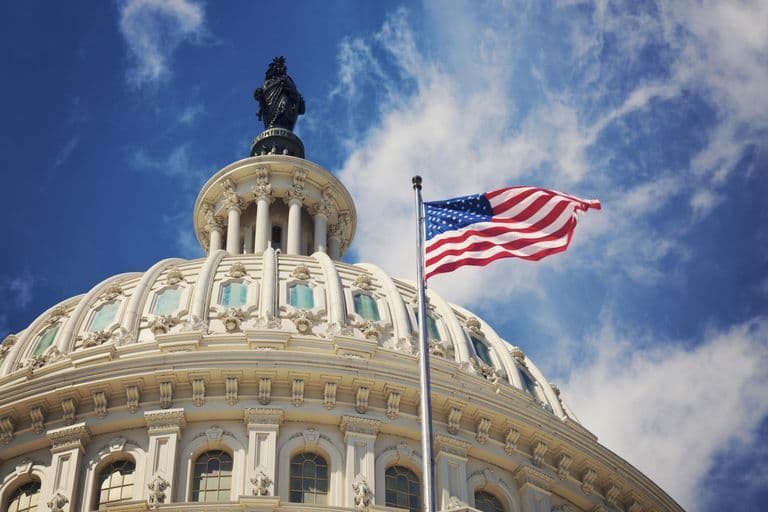
Key Takeaways
- The House Subcommittee on Higher Education and Workforce Development will hold a hearing on November 11, 2026 at 10:15 a.m. in the Rayburn House Office Building in Washington, D.C.
- NCAA president Charlie Baker is urging states to ban wagers on individual college-athlete performances.
- The PROTECT Student Athletes Act, introduced by Rep. Michael Baumgartner in February 2025, would federally prohibit bets on individual college-player performances while allowing game-outcome bets per state law.
- Thirty-nine states and Washington, D.C. have legalised sports betting since the Supreme Court’s 2018 decision, but rules on player props differ by state.
Congress will hold a hearing on November 11, 2026 to examine betting on college campuses, its impact on student-athletes and regulation of so-called [player props](/sports) on collegiate athletes. The session will be chaired by Representative Burgess Owens (R-UT) and begins at 10:15 a.m. at the Rayburn House Office Building in Washington, D.C.; the forum is titled “The Rise of Sports Gambling on College Campuses.”
November 11 hearing
The House Subcommittee on Higher Education and Workforce Development hearing will be chaired by Rep. Burgess Owens, who played college football at Miami from 1969 to 1972 and was a first-round NFL Draft pick in 1973. The session will be livestreamed on the committee’s YouTube channel; the organisers have not published a detailed public agenda.
NCAA president Charlie Baker has asked states to ban bets on individual student-athlete performances. The committee’s announcement says the meeting will address athlete harassment, student protections and how operators and sports organisations handle betting.
Congressional inquiries and requests for information
Several lawmakers have already requested documentation on college-sports betting policies. On October 22, 2026 Representative Jimmy Patronis (R-FL) requested details on sports-betting policies from the Atlantic Coast Conference. Patronis wrote: “Seeing as the ACC is asking Congress for help with NIL, I believe we must have transparency regarding each body’s policies and how they navigate online betting.”
Senator Richard Blumenthal (D-CT), Representative Paul Tonko (D-NY) and Representative Valerie Foushee (D-NC) also sought information on sportsbooks’ VIP programmes after accusing FanDuel of providing “misleading and incomplete” answers.
State differences and the PROTECT Student Athletes Act
After the Supreme Court’s 2018 decision overturning the federal ban on sports betting, 39 states and Washington, D.C. have legalised sports betting. Legalisation does not automatically allow every type of college bet: some states prohibit wagers on individual player performances while others permit them under conditions.
Representative Michael Baumgartner (R-WA) introduced the PROTECT Student Athletes Act in February 2025, which would federally prohibit bets on individual college-player performances while allowing bets on college-game outcomes where state law permits them. A federal restriction would reduce disparities between state markets, although states would retain authority over other sports-betting rules. In this context, Congress will assess whether additional legislative action is required. For analysis of the regulatory framework consult [regulation](/regulation).
Advertising, university partnerships and student protection
Concerns include sportsbook advertising near campuses and commercial deals with universities. Many jurisdictions limit advertising close to campus. The American Gaming Association updated its responsible marketing code in 2023 to bar members from forming university partnerships that promote sports betting, with exceptions for alumni networks, responsible-gaming education and problem-gambling awareness.
The committee will examine whether current protections cover risks of match-fixing, athlete harassment and marketing targeted at students. The stated aim of the hearing is to evaluate whether existing policies provide sufficient transparency and protections for players and educational institutions.
Frequently Asked Questions
When and where is the congressional hearing on college-campus betting?
The hearing is scheduled for November 11, 2026 at 10:15 a.m. at the Rayburn House Office Building in Washington, D.C., chaired by Rep. Burgess Owens; it will be livestreamed on the committee’s YouTube channel.
What is the NCAA asking for regarding bets on college players?
NCAA president Charlie Baker has asked states to prohibit wagers on individual student-athlete performances, arguing for stricter limits following incidents of match manipulation.
What would the PROTECT Student Athletes Act change?
Introduced in February 2025 by Rep. Michael Baumgartner, the bill would ban federal bets on individual college-player performances while allowing bets on college-game outcomes where state law permits them.
How many states allow sports betting after the 2018 Supreme Court decision?
Since the 2018 decision, 39 states and Washington, D.C. have legalised sports betting, though permissiveness for bets on individual player performances varies across states.
Tags
About the author

Renata Quiroga
Betting Markets Correspondent
Renata Quiroga covers sports betting and prediction markets — sportsbook launches, odds technology, event contracts, and the regulatory calls that decide what can be bet on and where. The reports open with the product or the ruling, name operators and platforms precisely, and explain the mechanics without needless jargon. When a book enters a Latin American market or a prediction exchange lists a contested contract, Renata Quiroga reports what changes for the bettor.
More from Renata Quiroga