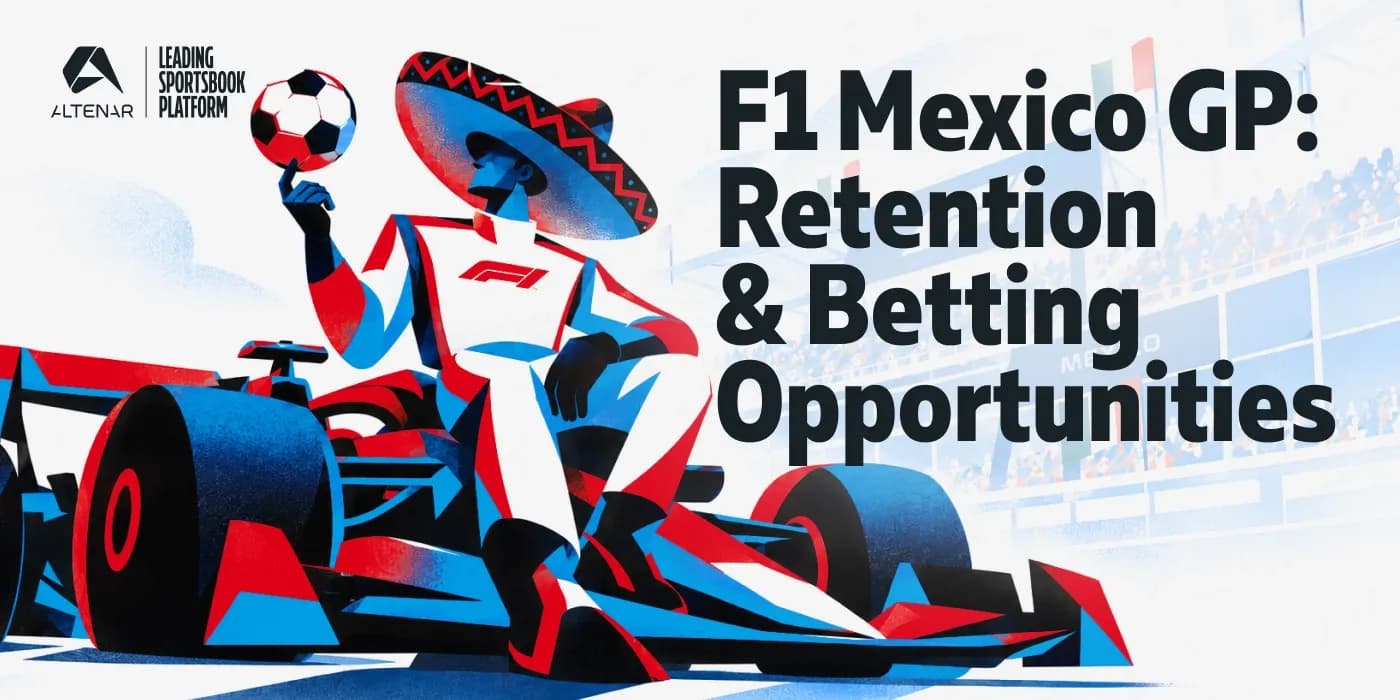
Maximising Retention and F1 Betting at the Mexico City Grand Prix
The Mexico City Grand Prix delivers a high-impact opportunity for sportsbooks to activate, engage and retain bettors by leveraging F1’s growing audience, tailored promotions and data-driven personalisation.
Key Takeaways
- The Mexico City Grand Prix provides multiple engagement points for sportsbooks to drive F1 betting and long-term retention.
- LATAM fan growth, with over 48 million F1 followers in Mexico, makes this region a prime audience for cross-sell and personalisation.
- Live betting success relies on rapid odds, reliable data and clear navigation—especially during the fast-evolving F1 race.
- Operators must tailor localisation beyond language, adapting promotions, payments and market prominence for Mexican customers.
- Post-race data should feed immediate retention campaigns, with São Paulo and succeeding races ensuring sustained F1 engagement.
The Mexico City Grand Prix offers sportsbook operators a unique chance to capture fresh F1 betting interest, reactivate lapsed customers and establish stronger bettor habits. The event’s multi-day structure empowers operators to drive engagement before, during and after race day, while tailored localisation, cross-selling, and fast live markets are essential to maximising retention well beyond the chequered flag.
Why the Mexico City Grand Prix Matters for Sportsbooks
Mexico’s home Grand Prix stands out due to its attendance figures and expanding fan base. Formula 1 estimates approximately 48 million F1 fans in Mexico, with regional numbers across Latin America and the Caribbean reaching over 150 million—a 5% rise since 2024. Notably, 43% of those fans are under 35, and nearly half in Mexico began following F1 in the last four years, confirming a swell of new enthusiasts. Since its calendar return in 2015, every edition has sold out, and the 2024 weekend drew a record 405,000 attendees.
The Mexico City event is more than a single surge of betting; it’s a condensed customer journey with multiple engagement points. With practice, qualifying and race sessions spread out, operators gain several chances to convert casual viewers into habitual F1 bettors.
Activation and Cross-Selling: Finding the Next F1 Bettor
Targeting Formula 1’s existing fans inside the sportsbook is a more efficient approach than relying on broad acquisition. Many football, basketball, tennis and American football bettors already follow F1 but may not have wagered on it. Prior motorsport activity is one clear signal, but broader crossover can be identified via their live-betting patterns, event-driven engagement, and past responses to cross-sport campaigns.
Personalised segmentation allows operators to:
- Identify which customers are likely to respond to F1 promotions.
- Time offers for maximum impact.
- Present relevant markets to different customer types.
Making the first F1 bet accessible is key. Instead of showcasing the sport’s full market range, operators should default to intuitive options for newcomers—race winner, podium finish and simple driver head-to-head bets—while surfacing more complex markets for advanced bettors as engagement deepens.
Building Engagement Throughout the Grand Prix Weekend
The event’s structure gives operators multiple touchpoints:
Pre-Race and Practice Sessions
Pre-event markets (outright winner, driver/constructor props, targeted boosts) are ideal for early engagement. Practice sessions offer an evolving narrative and allow operators to update communications based on new developments, keeping offers and recommendations timely.
Qualifying as a Natural Second Act
Qualifying dramatically reshapes the betting landscape, impacting odds for winners and podium finishers. Operators can present qualifying bettors with race-specific offers and invite those engaged in earlier sessions to re-evaluate their selections.
Race Day: The Pivotal Moment
By Sunday, the operator holds actionable data about each bettor’s journey. The task becomes presenting customised markets and promotions based on prior behaviour. Maintaining clarity in market hierarchy helps both new and experienced bettors navigate efficiently, continuing engagement smoothly into live play.
Live Betting Dynamics in Formula 1
The live element is especially volatile in F1: overtakes, pit stops, retirements, safety cars and weather shifts all dynamically alter the betting landscape. Real-time odds and rapid market management require robust data feeds, trading tools, and mobile-optimised interfaces. However, market depth means little if customers can’t find or place relevant bets quickly—intelligent ordering and responsive navigation are crucial here, a point many LATAM-focused sportsbook suppliers now prioritise.
Localising the F1 Experience for the Mexican Market
True localisation extends beyond translating betting menus into Spanish. For the Mexico City Grand Prix, operators must shape the experience to suit Mexican preferences, habits and regulations:
- Use regionally appropriate Spanish in all communications.
- Adjust market prominence based on local bettor interest.
- Offer payments in Mexican Pesos and support popular local payment methods.
- Structure promotions around the home event, avoiding generic global offers.
- Time campaigns and engagement for key sessions (practice, qualifying, race).
- Feed customer behaviour back into personalisation for subsequent offers.
A LATAM strategy should consider variations between Mexico, Brazil, Colombia and Argentina. Failing to differentiate by country risks missing key engagement levers and compliance requirements.
Retaining Mexico City Bettors Beyond Race Weekend
The opportunity for long-term retention starts when the race ends. Operators now have a richer data set on who interacted, how frequently and in what markets. Retention strategies should distinguish:
- One-time pre-race punters from weekend-long active bettors.
- Market selections and bet types—e.g., live bets vs pre-race selections.
- Responsiveness to promotions and communication cadence.
Personalising follow-ups maximises the chance of converting event-only bettors into regular F1 or even multisport customers. Rapid calendar succession helps: the São Paulo Grand Prix follows Mexico City in just seven days, with Las Vegas, Qatar and Abu Dhabi concluding the season. Re-engagement offers tied to these events play to recency and habit-building.
For cross-sold customers, the aim is not just F1 retention but fostering repeated sportsbook use—mirroring the challenge seen after major football tournaments, where repeated, event-led interaction builds long-term value.
Sportsbook Technology: The Foundation for Sustained Engagement
Behind the scenes, delivering such a nuanced customer journey requires extensive technological support. Platform flexibility underpins:
- Segmented audience targeting.
- Responsive in-play data feeds and market management.
- Front-end customisation and localisation by market.
- Dynamic CRM and player-management integration.
This infrastructure enables operators to translate short-term event interest into ongoing engagement and revenue. Reliable technology is, in effect, the difference between a fleeting traffic spike and establishing Mexico City as a meaningful entry point for new long-term customers.
For a broader view on platform resilience, see our B2B coverage.
"Mexico City provides the initial attention. The task afterwards is to turn an event bettor into a repeat F1 bettor, then into a multisport, long-term sportsbook customer." — Altenar editorial
The Path Forward for Sportsbook Operators
Sportsbook teams looking to capture and grow F1 interest should evaluate their current platform’s ability to deliver personalised, fast, and locally relevant experiences before, during and after tentpole events like the Mexico City Grand Prix. Those best equipped are set not only to win the weekend but to convert it into lasting customer relationships.
Frequently Asked Questions
How big is the F1 betting audience around the Mexico City Grand Prix?
Formula 1 now estimates 48 million F1 fans in Mexico and over 150 million across Latin America and the Caribbean as of 2026, contributing to high engagement potential for bookmakers.
What are the keys to successful live betting for the Grand Prix?
Rapid odds updates, reliable real-time data, clear mobile navigation, and responsive market management are critical to engaging bettors during the Mexico City Grand Prix's fast-moving race conditions.
How should sportsbooks localise F1 betting for Mexican players?
Localisation includes offering Mexican Peso payments, using locally relevant Spanish, adapting promotions to the event, and structuring the sportsbook for Mexican betting behaviours instead of applying a generic LATAM strategy.
How can operators retain bettors after the Mexico City Grand Prix?
Operators should use weekend betting patterns to personalise follow-ups and quickly direct customers toward upcoming F1 races like São Paulo, leveraging recency to foster repeat engagement.
Why is cross-selling important during F1 events?
Cross-selling football, basketball, or tennis bettors who also follow F1 allows sportsbooks to leverage existing customers, increasing the chance of creating long-term F1 bettors without high acquisition costs.
Tags
About the author

Tessa Coleman
Betting Markets Correspondent
Tessa Coleman covers betting products and markets — sportsbook launches, odds and trading technology, and the fast-growing prediction-market space from regulated exchanges to event contracts. The stories lead with the product or the ruling, name the operators and platforms precisely, and translate trading jargon into what bettors can actually do. When a book reworks its pricing or a prediction market wins a license fight, Tessa Coleman explains the mechanics and the stakes.
More from Tessa Coleman