IMF Rates Cambodia's Legal Framework for Blocking Criminals from Casino Ownership as "Deficient"
IMF report calls for license reviews ahead of 2027 renewal.
Key Takeaways
- The IMF rates Cambodia's legal framework for preventing criminals from owning casinos as deficient.
- The law requires suitability for shareholders ≥10% and senior executives, but the CGMC only reviews criminal history.
- Most casino licenses are expected to be renewed around 2027, providing an opportunity to tighten requirements.
- Authorities revoked 18 licenses and suspended operations of 9 casinos in the campaign against online scams.
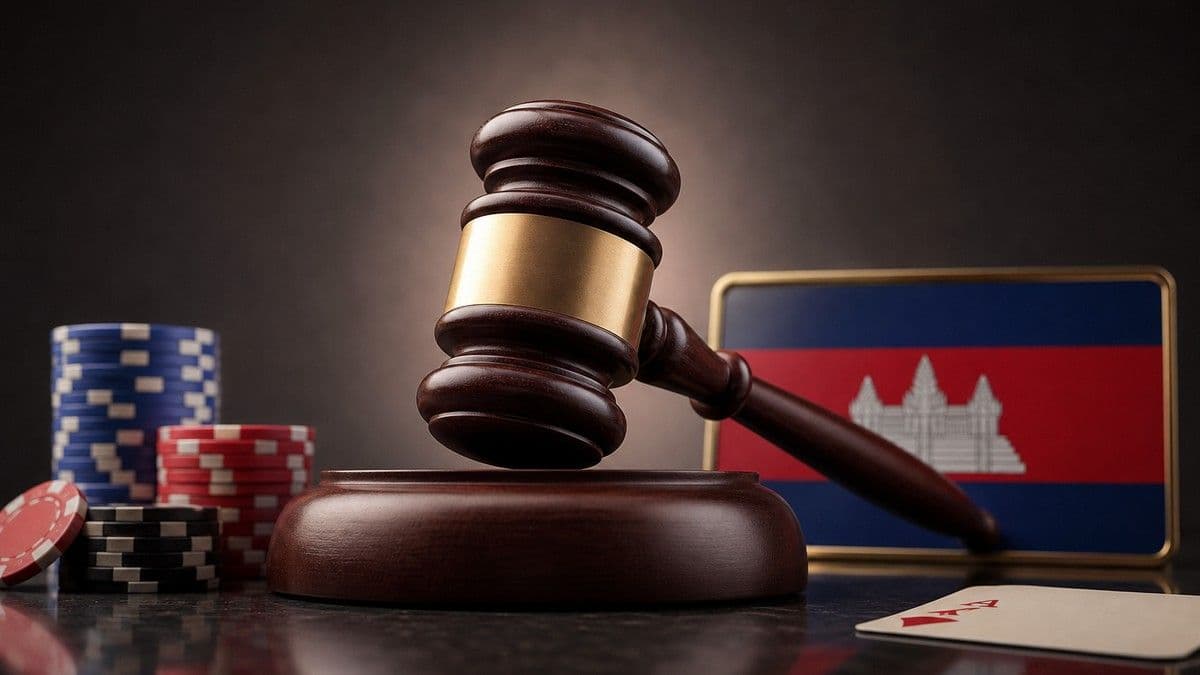
The International Monetary Fund (IMF) states that Cambodia's legal framework for preventing criminals from owning or controlling casinos is deficient and needs to be addressed urgently, according to its report published on Monday. The organization recommends improving the investigation process regarding ownership and taking advantage of the mass license renewal expected around 2027 to implement stricter requirements.
Diagnosis of the legal framework for casinos in Cambodia
The report highlights two key shortcomings: the absence of "fit-and-proper" requirements for beneficial owners and the lack of a mandate to verify the legitimate source of funds in licensing banks, payment entities, and casinos. The IMF describes both omissions as "a significant vulnerability" that should be prioritized.
"The absence of fit-and-proper requirements for beneficial owners, as well as the lack of a requirement to establish a legitimate source of funds... is a significant vulnerability," notes the IMF report.
The document states that the Law on the Management of Commercial Gambling requires significant shareholders — those with a stake of 10% or more — and senior executives to have a "good reputation" and traits of "honesty and integrity." However, in practice, the evaluation by the Commercial Gambling Management Commission of Cambodia (CGMC) "does not go beyond verifying criminal background certificates submitted by applicants," according to the IMF.
License review and timeline: the 2027 window
The IMF identifies 2027 as a turning point: most existing licenses are expected to be renewed around that year. The organization understands that this renewal process presents "a good opportunity" to assess license holders against updated requirements.
The Cambodian government, led by Prime Minister Hun Manet, has expressed an intention to gradually reduce the number of casinos and tighten licensing requirements for the sector. The Prime Minister described the current total as "excessive."
Cambodia still operates over 100 legally authorized casinos, as noted in the report and official statements.
Assessment of the regulatory authority: CGMC and its integrity framework proposal
The Commercial Gambling Management Commission of Cambodia (CGMC) is the entity responsible for evaluating license applications and renewals. The IMF criticizes that CGMC's practice is limited to verifying criminal background certificates and recommends subjecting beneficial owners and shareholders, as well as executives and managers, to a robust suitability test.
The CGMC has stated — and GGRAsia previously reported — that it is developing an integrity assessment framework to be used when considering license applications and renewals. The initiative aims to strengthen sector oversight and establish suitability requirements for operators.
Recent actions and penalties: revocations and suspensions
Cambodian authorities confirmed this month that they revoked the licenses of 18 casinos as part of a national campaign against online scam operations. In addition, operations of 9 casinos were suspended while further investigations are carried out.
These formal actions appear in the report and official statements as concrete measures of regulatory efforts to clean up the sector and act against illicit activities linked to certain gaming establishments.
Practical implications for regulators and operators
For authorities, the IMF recommends two concrete lines of action: broaden the definition and scope of suitability tests to include beneficial owners and require proof of the legitimate source of funds in banking, payment entity, and casino licenses. Including these requirements aims to cut off channels for dubious capital inflows.
For operators, the combination of a stricter integrity framework and reviews during the 2027 renewals will imply greater due diligence on shareholding structures and source of funds. Companies with shareholders exceeding 10% or with opaque ultimate beneficiaries may face more extensive investigative processes by the CGMC.
Where this places Cambodia on the regional agenda
The IMF report positions Cambodia among countries that need to strengthen their controls over gambling and finances to mitigate risks of money laundering and crime linked to the sector. The analysis directly links reforming the licensing regime with managing vulnerabilities affecting banks and payment providers.
For readers interested in the broader regulatory impact, the regulatory implications intersect with financial oversight and compliance issues in payments and licensing, making the topic relevant for compliance teams, platform providers, and tax authorities. For updates on regulatory reforms, we cover the regulations and their effects in the regulation section and operational news for the sector in news.
Frequently Asked Questions
What deficiencies does the IMF note in Cambodia's casino legal framework?
The IMF points out the lack of 'fit-and-proper' requirements for beneficial owners and the absence of a duty to verify the legitimate source of funds in licenses for banks, payment entities, and casinos. The report describes these omissions as 'a significant vulnerability.'
What does Cambodian law currently require regarding casino shareholders and executives?
The Law on the Management of Commercial Gambling requires that shareholders with a stake of 10% or more and senior executives possess a 'good reputation' and traits of 'honesty and integrity.' The IMF warns that in practice, the CGMC limits verification only to criminal background certificates.
Why is 2027 relevant for casino licenses in Cambodia?
Most existing licenses are expected to renew around 2027, which the IMF identifies as a 'good opportunity' to reassess holders against updated requirements.
What recent actions have Cambodian authorities taken against casinos?
Authorities confirmed this month that they revoked licenses from 18 casinos and suspended operations at 9 others as part of a national campaign against online scam operations, according to official confirmations collected in the report.
Tags
About the author

Miguel Sandoval
Regulatory Affairs Correspondent
Miguel Sandoval tracks gambling legislation, licensing, and regulator enforcement — from Spain's DGOJ and the Latin American authorities to the UKGC, the MGA, and the state-by-state map in North America. The reports answer three questions precisely — what changed, where, and who it affects — with jurisdictions, dates, and penalties cited exactly as published. Operators and compliance officers read Miguel Sandoval to know which rulebook moved before their next meeting.
More from Miguel Sandoval