Belarus President Criticises Gambling Ads Amid iGaming Search Surge on September 11
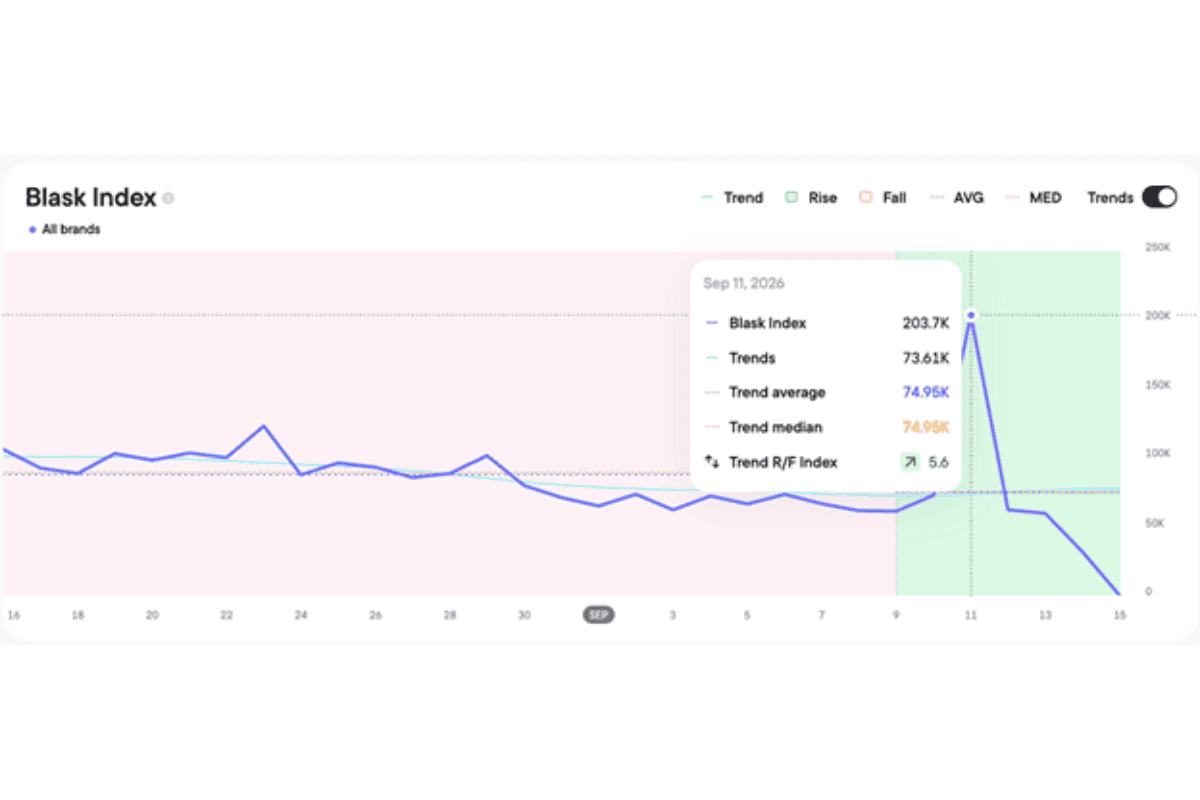
President Aleksandr Lukashenko’s ‘casino’ comments and actions against Maxline ads coincided with a sharp spike in Belarus iGaming search activity, peaking at 203,700 on Blask Index before normalising.
Key Takeaways
- Belarus saw a one-day iGaming search surge to 203,700 queries on 11 September, according to Blask Index.
- President Lukashenko’s remarks and targeted criticism of Maxline coincided with government removal of gambling ads in Minsk.
- The search spike was short-lived, with demand returning to typical ranges within two days.
- Tennis player Aryna Sabalenka’s US Open semifinal win is argued as a potential driver for increased sports betting interest.
President Aleksandr Lukashenko directly criticised Belarus’s gambling advertising landscape on 11 September, naming operator Maxline as part of an ongoing state campaign against gambling promotions. Coinciding with these remarks, iGaming search demand in Belarus surged to 203,700 single-day queries on Blask Index—three times its usual range—before dropping back to typical levels by 13 September. The spike in online interest was not sustained, and questions remain over whether politics, sporting events or both were the primary drivers, as the data do not isolate each effect.
Lukashenko’s Remarks and Targeting of Maxline
On 11 September, President Lukashenko claimed Belarus had “turned into a casino,” identifying Maxline, a licensed gambling operator, for specific criticism. Such direct references to brands are rare in official government commentary in Belarus. The comment came as authorities stepped up a public campaign to restrict gambling advertisements in the capital Minsk.
Recent actions have included removal of gambling billboards in Minsk, a move confirmed in regional reports. Outside of the capital, branded signage and vehicles advertising gambling providers reportedly remained visible, indicating that enforcement has been uneven so far.
"The country has turned into a casino," President Aleksandr Lukashenko said, citing concerns over gambling’s social impact.
iGaming Search Demand Spikes on Blask Index
The most immediate market impact appeared in digital behaviour. According to Blask Index, which tracks search volume for iGaming brands using normalised real-time data, Belarus saw daily iGaming searches surge to 203,700 on 11 September. This figure is nearly three times the market’s typical range of 60,000–80,000.
Blask notes that demand returned to baseline by 13 September. The cited 64.7% week-on-week increase thus reflects a single-day anomaly, not a sustained underlying shift in market behaviour. Brand-level data is not yet available to determine which operators benefited most from the surge in searches.
Sporting Success as an Additional Trigger
The timing of the spike also coincided with a major sporting moment for Belarus. On the same day as Lukashenko's remarks, Belarusian tennis world No. 1 Aryna Sabalenka defeated Jessica Pegula in the US Open semifinal, advancing to her fourth consecutive final at the tournament. Sabalenka was seeking her third straight US Open crown but ultimately lost in the 12 September final to Elena Rybakina.
Analysts from the Blask Index suggest Sabalenka’s performance may have provided a more direct, event-driven reason for the spike in betting-related searches, compared to political statements about advertising. The search activity peaked on the day of the semifinal, not after the final or Lukashenko’s comments, lending weight to the sporting hypothesis. Still, the presence of a politically charged media narrative complicates any attribution of cause.
No Evidence of Lasting Market Shift
While the surge was acute, Blask Index data indicates a rapid return to normal search volumes. The pattern—a sharp one-day increase, then normalization—suggests that neither the crackdown on gambling ads nor the tennis result produced lasting structural changes in market demand. Further brand-level data may clarify the impact on operator performance once available.
Belarus iGaming Market: Regulation and Public Campaigns
Belarus has taken a more interventionist approach to gambling regulation in recent years, combining licensing requirements with periodic enforcement actions. The current campaign focuses on advertising visibility, beginning with billboards in Minsk. The explicit naming of Maxline by President Lukashenko marks an escalation in tone, but there is no evidence yet of material sanctions or restrictions placed on named operators beyond advertising constraints.
Such campaigns have precedent in other markets, with varying impact on end-user demand. In this case, the lack of a sustained spike suggests local appetite for iGaming was more responsive to a national sport event than to regulatory commentary.
Real-Time Monitoring and Market Response
The Blask Index provides near real-time demand data by aggregating national search and online interest for licensed iGaming brands in Belarus. This metric is widely used by industry participants to monitor both organic player engagement and the effect of major events or announcements.
Events like Sabalenka’s US Open performance, and heightened government scrutiny on gambling operators, both have the potential to move headline numbers, but only sustained regulatory action or repeated sports success converts to structural demand shifts. The September event made for a pronounced, but fleeting, signal in Blask’s data.
Frequently Asked Questions
What triggered the Belarus iGaming search surge on September 11?
Belarus iGaming searches rose sharply to 203,700 on September 11, a peak coinciding both with President Lukashenko’s public criticism of gambling ads and Aryna Sabalenka’s win in the US Open semifinal.
How did Belarusian authorities respond to gambling advertising?
Authorities removed gambling billboards in Minsk as part of the campaign highlighted by Lukashenko, but similar ads reportedly continued on regional roads and branded vehicles outside the capital.
What is the Blask Index and how does it measure demand?
The Blask Index uses real-time, normalized search data to gauge market demand for iGaming brands in specific countries, allowing tracking of spikes tied to major events.
Did the iGaming search spike in Belarus have lasting effects?
The demand increase was temporary, with searches returning to baseline by September 13, indicating neither the tennis result nor regulatory comments caused sustained market change.
Which operator was specifically named by Lukashenko during the crackdown?
Maxline was singled out by President Aleksandr Lukashenko on September 11, marking a rare instance of state commentary addressing a particular iGaming brand.
Tags
About the author

Oliver Grant
Industry Technology Correspondent
Oliver Grant covers the technology and business machinery of iGaming — platform and data deals, AI and compliance tooling, affiliate and marketing shifts, and the quarterly numbers behind them. The reports lead with the announcement, name the vendors and figures exactly as published, and separate genuine capability from press-release promise. When a supplier ships a new engine or a regulator tightens ad rules, Oliver Grant explains what actually changes for the companies involved.
More from Oliver Grant