Lisbon panel flags marketing and channelisation as key risks for Finland gambling market
Panelists warned execution, technical specs and affiliate limits will decide market outcomes
Key Takeaways
- Panelists at the SBC Summit in Lisbon identified marketing rules and the kanavointiaste as the principal operational risks for the Finland gambling market.
- Finnish Gaming Experts (29.9.2026) called the new system workable but said technical details remain unresolved.
- Finnplay's Brian Forth warned final technical requirements must be known by year-end to allow building, testing and auditing.
- The new law permits marketing in defined channels but omits the broader payment and traffic blocks KKV had proposed.
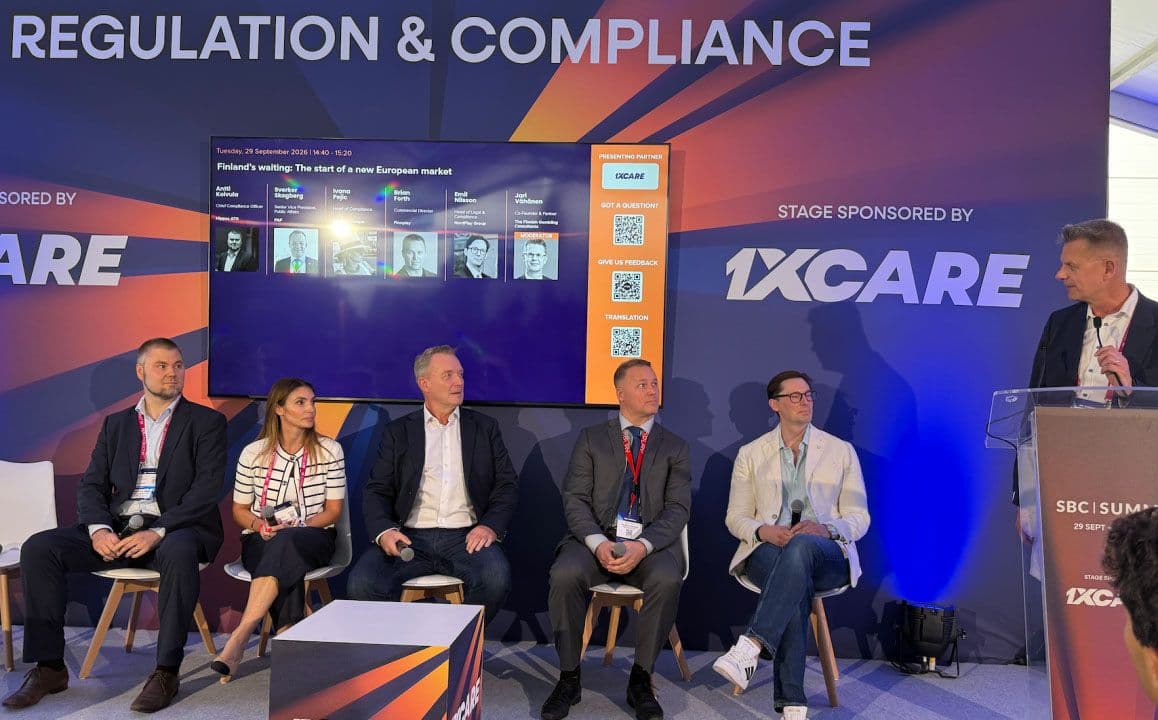
A panel at the SBC Summit in Lisbon in late September 2026 set out the immediate risks for Finland's newly opening gambling market: marketing rules and the system's channelisation rate. The session, moderated by Jari Vähänen of Finnish Gambling Consultants, gathered industry executives who warned that practical execution — not the legislation on paper — will determine whether the licence regime succeeds.
Who spoke and what was at stake for the Finland gambling market
Panel participants were Antti Koivula from Hippos ATG, Sverker Skogberg from Paf, Ivana Pejic from Betsson Europe, Brian Forth from Finnplay and Emil Nilsson from NordPlay Group. The discussion is summarised in a Finnish Gaming Experts report dated 29.9.2026, which describes the new system's architecture as workable but highlights operational worries.
The panel repeatedly returned to one metric: the kanavointiaste — the share of play that flows to licensed operators. Industry figures said success cannot be measured only by how many companies secure a Finnish licence; licensed supply must also be attractive enough from a player's perspective to retain consumers inside the regulated market.
Marketing rules under the Finnish gambling law and the affiliate question
The new gambling law permits licence-holders to market in specific channels — television, radio, sporting events, print media, search engines, their own websites and social media — subject to conditions that marketing be moderate in volume, scope, visibility and frequency. Paf's Sverker Skogberg described the package as "fairly balanced" while warning some parts of the marketing framework may be too permissive.
Panelists agreed that compromises are unavoidable when moving from a monopoly to a licence model. Still, Finnish Gaming Experts and several panel members singled out affiliate marketing as a live concern. The new framework does not allow regulated affiliate activity in the same way some other markets do, and that absence could remove a legitimate customer-acquisition channel for licence-holders.
Operators and observers fear that affiliates operating from outside Finland will remain able to reach Finnish consumers beyond the reach of domestic rules. The Police Board (Poliisihallitus) has already intervened in marketing that appears in live streams and social media under the current monopoly system, but cross-border affiliate activity presents a tougher enforcement problem.
Technical implementation deadlines and vendor implications
Brian Forth of Finnplay stressed the need for final technical requirements to arrive in time for vendors and operators to build, test and audit systems. "By the end of the year we must know what is required," he said, "so there is time to construct the necessary functions." The panel noted that unresolved technical details are already complicating development work for technology suppliers.
Finnish Gaming Experts points out specific operational strain: vendors may have to undertake development before all rules are finalised, which increases commercial and compliance risk. National authorities have said preparations are advancing and that the new Lupa- ja valvontavirasto will assume responsibility for gambling licensing and supervision in 2027. The panel framed the calendar as tight: licences must be granted, systems audited and marketing interpretations settled ahead of market opening.
Channelisation, consumer experience and enforcement
Panelists argued that licensed operators will have to comply with Finnish consumer-protection, responsibility and technical requirements. If unlicensed operators can offer materially freer or more attractive services to Finnish consumers, players will migrate outside the regulated market. The Competition and Consumer Authority (Kilpailu- ja kuluttajavirasto, KKV) has warned that preventing gambling harm may become harder if play shifts to unlicensed providers.
KKV had proposed broader payment and internet traffic blocks to deter unlicensed play, but the new law does not include those extensive measures. That omission leaves enforcement reliant on a combination of marketing controls, technical measures inside licensed platforms, and the new supervisory authority's capacity to act against offshore supply.
The panel also stressed the importance of a smooth customer journey. Registration, identification, payments and the gaming service itself must run without friction; competition will therefore extend beyond game libraries to include the entire player experience.
What the next 12 months will decide
The discussion concluded with a practical timetable. Authorities must finalise technical regulations and licensing processes, and the new supervisory body must build operational ties with industry. Finnish Gaming Experts frames the real test as operational rather than legislative: only when the market opens and the systems are in place will it be possible to measure actual channelisation.
"The real test will be in the execution," the Finnish Gaming Experts summary says, noting unresolved technical details and the need for timely requirements.
Panelists were clear that the July window next year will be decisive: licences, technical compliance and settled interpretations of marketing rules must be in place for licensed operators to compete effectively and prevent consumer flow to unlicensed sites.
Implications for vendors, operators and regulators
Vendors should expect demand for integration work that covers identification, payments, compliance logging and the specific technical hooks the authority will require. Operators will need clear marketing playbooks and localised creative that fits Finnish cultural expectations; Finnplay's Forth observed that marketing that appeals in Sweden or Denmark cannot simply be copied into Finland. Cultural fit, humour and consumer expectations matter.
Regulators face a capacity challenge: the new Lupa- ja valvontavirasto will need to enforce against unlicensed activity while issuing licences and publishing technical requirements. KKV's recommendations on payment and traffic blocks remain on the table as policy options, but the absence of those powers in the current law shifts the burden back onto licensing conditions and enforcement against cross-border promotion.
For more on the regulatory changes and their commercial impact see the regulation and b2b sections of our site.
The Lisbon panel did not resolve the open questions. It did, however, make the stakes clear: the legal framework exists, but the market's performance will hinge on tight implementation, prompt technical specifications and how effectively Finland prevents unlicensed channels from undercutting licensed competition.
Frequently Asked Questions
What did the Lisbon panel identify as the main risk for the Finnish gambling market?
The panel identified marketing rules and the channelisation rate (kanavointiaste) as the main risk. Panelists said licensed supply must be competitive from a player's perspective, otherwise consumers may migrate to unlicensed operators, and Finnish Gaming Experts noted unresolved technical and enforcement details in its 29.9.2026 summary.
Will affiliate marketing be allowed under the new Finnish gambling law?
The new framework restricts marketing channels and does not provide the same regulated affiliate model some markets use. Finnish Gaming Experts and panelists warned that the lack of a regulated affiliate channel could remove a customer-acquisition route for licence-holders while affiliates outside Finland may still reach Finnish consumers.
When do operators and vendors need final technical requirements?
Vendors and operators need final technical requirements by the end of 2026, according to Finnplay's Brian Forth. He said that knowing requirements by year-end is necessary to build, test and audit systems ahead of market opening.
Does the new law include payment and internet traffic blocks to stop unlicensed play?
No, the law does not include the broad payment and traffic block measures that KKV recommended. KKV warned such measures help prevent harm, but their absence leaves enforcement focused on licensing conditions, marketing controls and the new supervisory authority's actions.
Tags
About the author

Oliver Grant
Industry Technology Correspondent
Oliver Grant covers the technology and business machinery of iGaming — platform and data deals, AI and compliance tooling, affiliate and marketing shifts, and the quarterly numbers behind them. The reports lead with the announcement, name the vendors and figures exactly as published, and separate genuine capability from press-release promise. When a supplier ships a new engine or a regulator tightens ad rules, Oliver Grant explains what actually changes for the companies involved.
More from Oliver Grant