Miele Manufacturing to deactivate skill machines in Pennsylvania before October 13, 2026
The company will disable devices during the next cash collection after the state Supreme Court ruling
Key Takeaways
- Miele Manufacturing will deactivate its skill machines during the next cash collection before the October 13, 2026 deadline.
- The Pennsylvania Supreme Court ruled that skill terminals constitute gambling.
- Attorney General Dave Sunday warned that inactive or disconnected machines could still be subject to enforcement actions.
- Representative Russ Diamond proposes legalising skill machines in selected venues with a 20% tax and a maximum of five per location.
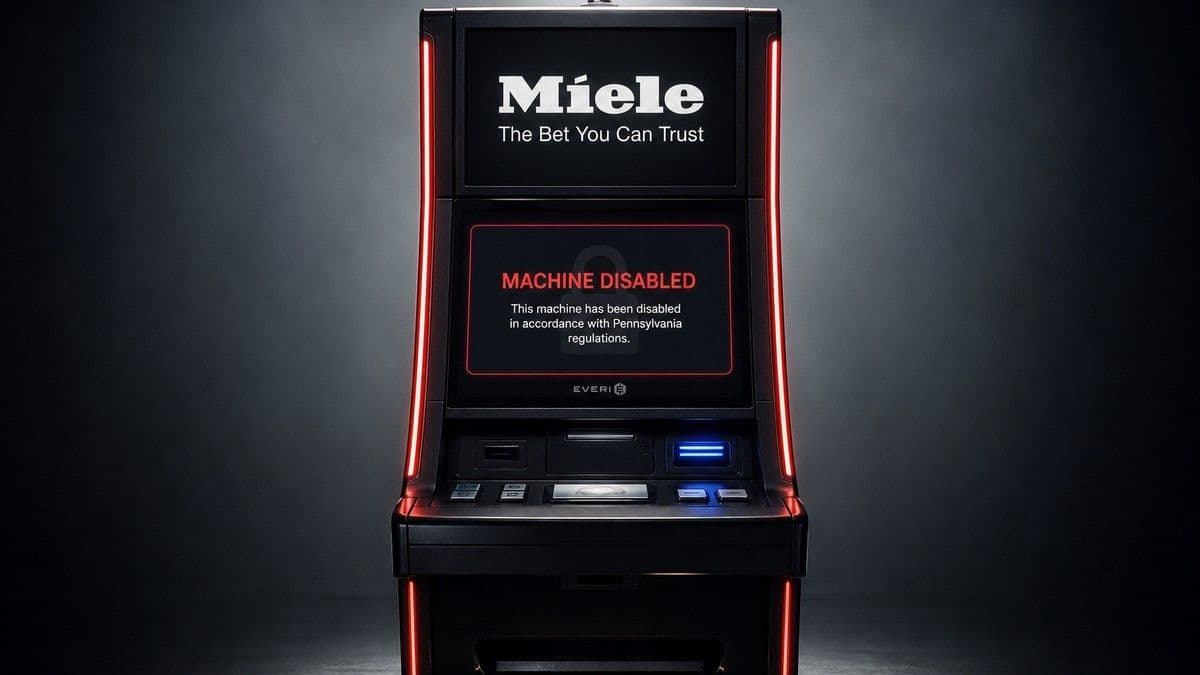
Miele Manufacturing has informed its customers that it will deactivate its skill machines during the next cash collection by its operating divisions, ahead of the compliance deadline set by the state on October 13, 2026. The decision follows a ruling from the Pennsylvania Supreme Court that classified these terminals as gambling devices, paving the way for enforcement measures.
What Miele Manufacturing will do and when
Miele Manufacturing, one of the largest suppliers of skill machines in Pennsylvania, stated that its operators will disable devices installed in establishments during the upcoming cash collection. The company distributes the Pennsylvania Skill cabinets and collaborates with Pace-O-Matic, which provides the gaming software. It remains unclear whether Miele will physically remove the equipment from locations or limit its action to rendering the terminals inoperative.
October 13, 2026, is the date set by state authorities to begin enforcing the Supreme Court ruling, and Miele has taken action with the intention of avoiding direct sanctions to its operating divisions.
Attorney General's warning and business risk
The Attorney General of Pennsylvania, Dave Sunday, has explicitly warned that inactive or simply disconnected machines could still result in enforcement actions. Sunday urged business owners to contact distributors to coordinate the removal of equipment.
The Attorney General's recommendation places practical responsibility onto the supply chain and local operators: turning off a terminal does not guarantee immunity from administrative sanctions or civil proceedings that state authorities may initiate.
Where the machines were installed and who operated them
Miele's skill machines frequently appear in proximity stores, bars, restaurants, and other small businesses. In addition to Miele Manufacturing, the affiliated companies Miele Amusements and Pennsylvania Amusements operated terminals in the same types of points of sale.
Pace-O-Matic (POM) is listed as the supplier of the software that runs on the Pennsylvania Skill cabinets. This technical and commercial relationship is relevant to understand who supplies the hardware and who provides the gaming platform that has now been considered by the Supreme Court as gambling activity.
Legal framework: the Supreme Court's decision and consequences
The Pennsylvania Supreme Court has ruled that skill gaming terminals constitute gambling. The ruling eliminates the legal grey area in which these devices had operated for over a decade, and authorizes the state to enforce the rules and penalties inherent in gambling legislation.
This change forces operators, distributors, and business owners to reassess the presence of machines in their establishments, and opens the door to audits by state agencies that oversee compliance with the law.
Legislative proposal to regulate skill machines
State Representative Russ Diamond (Republican, Lebanon County) has stated that he is preparing a bill to allow skill machines in clubs, restaurants, and licensed liquor bars, as well as in qualifying truck stops. The draft contemplates a maximum of five machines per location.
The proposal would include a tax of 20% on the revenues from skill machines and, at the same time, reduce the tax rate on casino slot machines and online gaming to 49.9%. The text also foresees allocating gaming revenue to several state funds: the Race Horse Development Trust Fund, treatment for problem gambling, and the state General Fund.
The project would propose the creation of an annual dividend for eligible homeowners that would increase in parallel with legal gaming revenue, aimed at extending tax relief to property owners up to potentially 96% of homeowners in the state.
What operators and distributors should do now
Establishment owners hosting machines must talk to their distributors to arrange for the removal of equipment, according to the Attorney General's warning. Distributors and operators will have to decide whether to limit operation to deactivating terminals or proceed to physical removal, and coordinate logistics before October 13.
For software providers and cabinet manufacturers, the ruling and potential future legislation require a review of contracts, liabilities, and supply chains in Pennsylvania. The platform and point-of-sale services sector will need to prepare technical and legal responses to inspections and regulatory requirements.
Market outlook and next steps
The Supreme Court ruling turns a widespread practice into an immediate compliance issue. If the legislation proposed by Representative Russ Diamond succeeds, it could create a restricted and taxed regulatory framework allowing the reintroduction of skill machines in certain locations under strict fiscal and operational conditions.
Meanwhile, the timing for the enforcement of the ruling and the Attorney General's warning creates a period of high urgency for operators and distributors in Pennsylvania. Local businesses now hosting terminals must prioritize communication with their suppliers to avoid legal and operational risks.
"Inactive or disconnected machines could still result in compliance actions," said Attorney General Dave Sunday, urging coordinated removal by distributors.
For regulatory follow-up and business implications, see the regulation section and related coverage in news.
Frequently Asked Questions
Why will Miele Manufacturing deactivate its machines in Pennsylvania?
Miele will deactivate the equipment because the Pennsylvania Supreme Court ruled that skill terminals are gambling devices, and the state set October 13, 2026, as the date to enforce the ruling. The company reported that its operating divisions will leave the devices inoperative during the next cash collection.
Does turning off or disconnecting the machines prevent state action?
Turning off or disconnecting the machines does not guarantee protection from penalties. Attorney General Dave Sunday warned that inactive or disconnected machines could still lead to compliance measures and recommended coordinating removal with distributors.
What role does Pace-O-Matic play in this matter?
Pace-O-Matic supplies the gaming software that runs on the Pennsylvania Skill cabinets distributed by Miele. This technical-commercial relationship is relevant because the Supreme Court ruling affects both hardware and the gaming platform.
What does Representative Russ Diamond's legislation propose?
Russ Diamond proposes allowing skill machines in licensed clubs, restaurants, and bars, as well as qualifying truck stops, with a maximum of five machines per location and a 20% tax on revenues. The draft also intends to lower the tax rate on slot machines and online gaming to 49.9% and direct revenues to several state funds.
Tags
About the author

Gonzalo Marín
Industry Deals Correspondent
Gonzalo Marín covers the corporate deal flow of gambling — operator strategy, M&A, regulated-market entries, and product launches. The reports open with the transaction, cite companies, valuations, and jurisdictions exactly as released, and keep the announcement apart from its actual effect. When a Latin American operator raises capital or a European brand lands in the region, Gonzalo Marín reports who signs, for how much, and on what terms.
More from Gonzalo Marín