Operators stay for service: how to verify platform support before signing
NuxGame COO explains what keeps clients long-term and how to test support during selection.
Key Takeaways
- McKinsey's 28 May 2026 survey of nearly 4,000 B2B decision makers in 13 countries found inconsistent information and poor access to experts are top reasons suppliers are replaced.
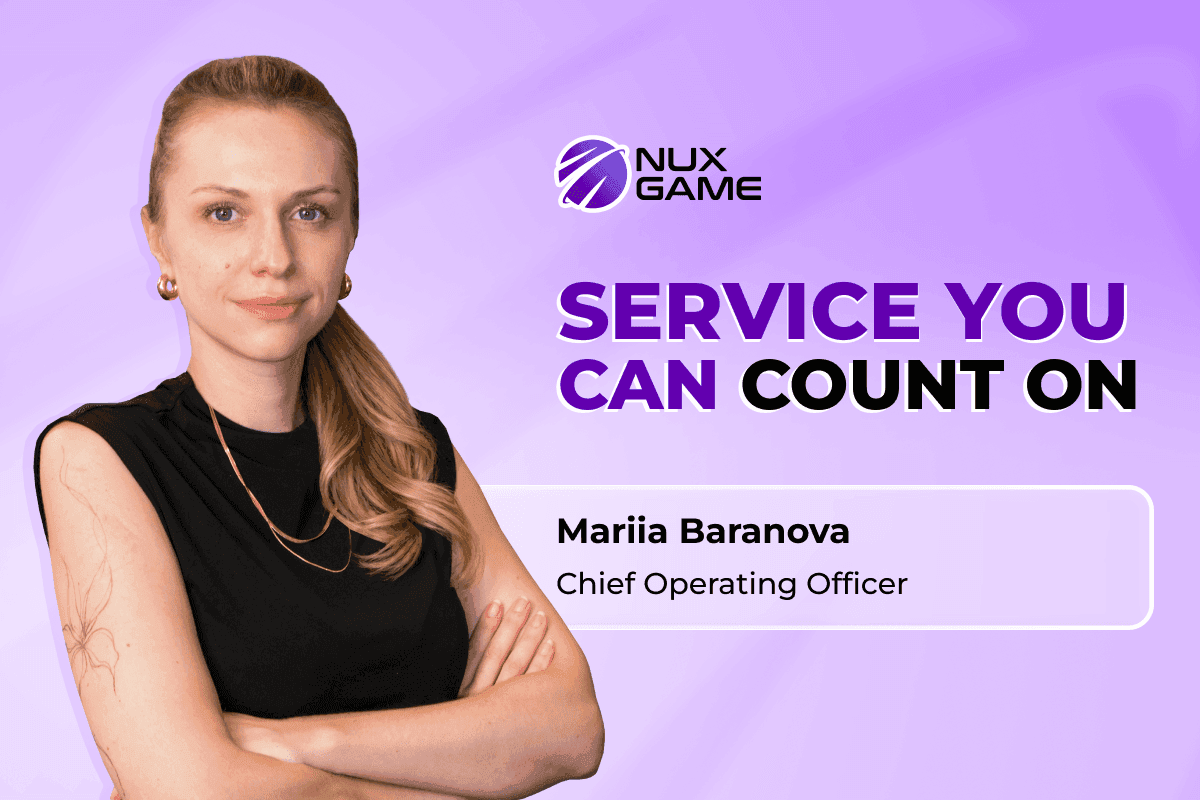
- Mariia Baranova, COO at NuxGame, says operators stay for fast, expert responses and one person who owns each task end-to-end.
- NuxGame reports operators rated its dedicated-service model 4.8 out of 5 over the past six months.
- Operators should test who will lead their project, support hours and response times, onboarding scope, and how client feedback shapes the product roadmap.
- NuxGame offers access to 18,500+ titles from 140+ providers, but Baranova calls integrated support and vendor alignment the real retention driver.
NuxGame's senior team says operators remain with a platform primarily for the quality of service, not for a single headline feature. Mariia Baranova, Chief Operating Officer at NuxGame, told EGR that rapid, expert responses and single-point ownership of issues are the deciding factors; her argument references a McKinsey survey of nearly 4,000 B2B decision makers in 13 countries, published on 28 May 2026, which found inconsistent answers and poor access to knowledgeable staff are top drivers of supplier switching.
Why service beats features when operators decide to stay with a platform
Operators compare platforms feature by feature at the procurement stage. Baranova argues they judge a supplier on how it performs when the platform is live and under pressure — for example on a Friday evening before a major weekend campaign. Vendors can show their product at its best during sales. The long-run test is how the provider handles day-to-day incidents and campaign support.
"Features help operators choose a platform. Service is why they stay," said Mariia Baranova, COO at NuxGame.
Baranova highlights three operational behaviours that create retention: fast responses, a deep understanding of client needs and one person who takes each task from start to finish. She calls that single accountable expert the difference between a handler who passes tickets and an expert who owns resolution end-to-end.
How operators can check support before choosing a platform (platform service quality)
Baranova offers practical checks operators can run before signing a deal. These are testable facts rather than sales promises:
Ask who will lead your project — a sales representative or a dedicated account manager. The latter indicates longer-term commitment.
Ask about support coverage and guaranteed response times. NuxGame runs technical support around the clock, every day of the week; Baranova stresses that response speed matters to operators as much as page-load times.
Inspect onboarding scope: what the provider handles and what the operator must do.
Request details on how feature requests and the product roadmap are managed, and whether client feedback feeds the roadmap.
Ask to meet the actual account team assigned to your business before signing; Baranova says seeing those people is revealing.
These points map directly to the McKinsey finding that inconsistent information and lack of access to experts drive switching. Baranova recommends testing process as evidence of consistent answers rather than relying on marketing materials.
What strong service looks like inside a provider
Baranova contrasts handlers with experts. A handler routes a request; an expert owns it until resolution. NuxGame assigns every client a dedicated manager who liaises with product, technical and operations teams on the client's behalf. Over the past six months, operators have rated that dedicated-service model 4.8 out of 5, she reported.
Three internal behaviours support durable service:
honesty in sales, setting realistic expectations instead of over-promising;
flexibility and willingness to find practical compromises across client sizes;
active care for the company's reputation so every team member protects consistent quality.
Baranova uses a medical analogy: one family doctor who knows the history beats multiple receptionists each holding a fragment of context.
Why integrated partners matter for day-to-day operations
A platform is not just the CMS or game catalogue; it sits inside an ecosystem of payments, CRM and KYC suppliers. Baranova says NuxGame purposefully integrates those partners so operators spend less time coordinating vendors and more time running the product. That reduces vendor-management overhead at launch, market entry and scaling stages.
NuxGame's platform gives operators access to 18,500+ titles from 140+ providers, a catalogue Baranova calls a baseline rather than a differentiator. The differentiator is the provider's ability to support an operator through different lifecycle stages: launch, market entry, and scale.
Testing service in commercial due diligence and procurement
Procurement teams can embed service checks into standard vendor diligence processes. Practical steps include:
making support response times contractual;
requiring a pre-contract call with the account team who will run your account;
asking for recent client satisfaction scores or NPS-type metrics;
verifying escalation paths and the SLA for critical issues.
Those checks reveal whether the provider's public promises align with internal processes and real people assigned to accounts.
Final advice from NuxGame's COO to operators
Baranova's closing argument is operational: choose the people as carefully as the platform. She says features will continue to improve across vendors, but the daily experience — the answer that returns when an operator needs a fix or a campaign tweak — is the lasting differentiator. The person who manages your account should learn the business month by month; that institutional knowledge is what keeps operators on a platform for years.
Mariia Baranova is Chief Operating Officer at NuxGame and previously led account management there. The comments above were given in a Q&A with EGR Intel and draw on both Baranova's operational role and the McKinsey survey referenced earlier.
For background on choosing suppliers and commercial due diligence see our b2b coverage and read operational checklists in the casino section when assessing platform ecosystems.
Frequently Asked Questions
What is the single feature operators stay for when choosing a platform?
Operators stay for sustained, high-quality service provided by the vendor. Mariia Baranova says that fast responses, deep business understanding and one accountable expert per client are the operational behaviours that make operators remain with a provider.
How can an operator verify a provider's support before signing a contract?
An operator can verify support by asking who will lead the account, whether the provider offers dedicated account managers, requesting committed response times, inspecting onboarding responsibilities and meeting the assigned account team before signing. Baranova recommends these checks because they show whether a provider's process creates consistent answers.
What evidence did NuxGame provide of its service performance?
NuxGame reported that operators rated its dedicated-service model 4.8 out of 5 over the past six months. The company also states its technical support operates around the clock, every day of the week.
How do product breadth and service compare as selection criteria?
Product breadth is now a baseline; NuxGame offers access to 18,500+ titles from 140+ providers, but Baranova says that service quality and integrated vendor support determine long-term retention. She argues that operators increasingly prioritise partners who can support launch, market entry and scaling.
Tags
About the author

Marcus Webb
Industry Deals Correspondent
Marcus Webb covers the deal flow of the gambling industry — operator strategy, M&A, market entries, and product launches from sportsbook rebrands to full platform migrations. The reports name the companies, valuations, and jurisdictions exactly as disclosed and separate the announcement from its market impact. When a group consolidates a brand or a challenger launches into a new state, Marcus Webb explains who gains, who pays, and what closes next quarter.
More from Marcus Webb