CFTC gives 30 days to remove geofencing in US prediction markets
Registered exchanges must drop state blocks or justify limits to CFTC oversight
Key Takeaways
- The CFTC on 5 November 2026 told federally regulated exchanges to remove geofencing or explain why they cannot within 30 days.
- The order relies on Commission Regulation 38.151(b), which requires DCMs to provide competitive, open and impartial access.
- DraftKings said on 6 November it expects little impact, while Kalshi, Polymarket and Crypto.com have faced state orders.
- The Ninth Circuit in August rejected Kalshi’s impossibility argument in Nevada and on 4 November required blocks on certain California tribal lands.
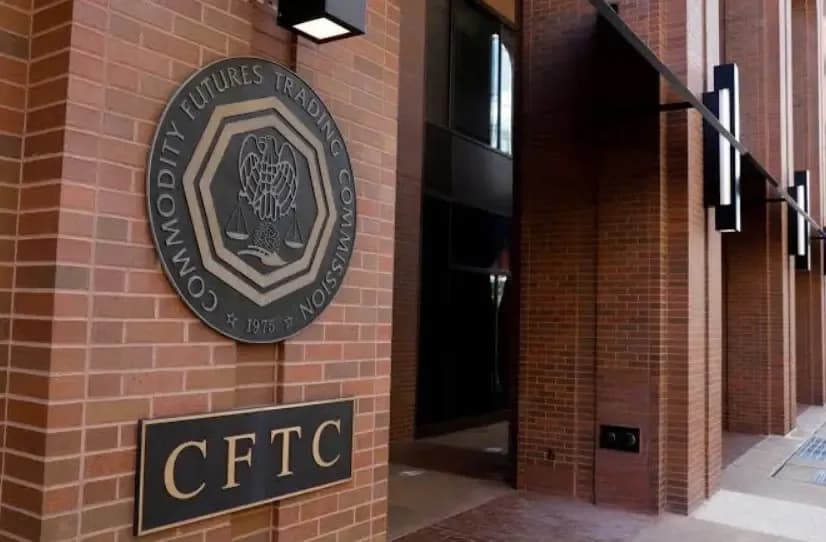
The Commodity Futures Trading Commission (CFTC) ordered federally regulated prediction-market exchanges to remove geographic trading restrictions within 30 days or submit a written explanation of why they cannot comply, in an interpretation published on 5 November 2026. The directive applies to Designated Contract Markets (DCM) and follows a string of legal disputes among operators, states and tribes.
Scope of the order and legal framework
The CFTC issued the interpretation on 5 November under Commission Regulation 38.151(b), which requires DCMs to provide competitive, open, fair and impartial trading access. Chairman Michael Selig defended the national-access mandate under federal derivatives law:
"Derivatives markets must operate on a uniform basis at a national scale in order to achieve the purposes set out in the Commodity Exchange Act," said Michael Selig. "Geographic access restrictions are inconsistent with those purposes and the Act’s impartial access requirements."
Exchanges must eliminate domestic restrictions that violate those requirements or file written explanations with the Division of Market Oversight of the CFTC within 30 days. The guidance also requires intermediaries accessing regulated exchanges to follow the same impartial-access rules.
Conflict with court orders and state laws
The legal fight centers on whether federal derivatives regulation preempts state gambling laws. Under the Commodity Exchange Act, exchanges registered with the CFTC operate under federal oversight. Nevertheless, several states argue that contracts on sporting events are gambling products subject to state licensing.
Courts have not maintained a uniform stance on whether CFTC registration bars state enforcement. In August, a unanimous Ninth Circuit rejected Kalshi’s claim that Nevada geofencing orders made federal compliance impossible; the judges called the position a "false, all-or-nothing proposition." On 4 November, the Ninth Circuit required Kalshi to block access to certain contracts on California tribal lands.
Senator Adam Schiff sharply criticized the new guidance: "the CFTC’s most egregious attempt yet to undermine state law, the Tribes, and now, the courts." The dispute also touches tribal sovereignty, because federally recognized tribes retain gaming rights under separate legal frameworks.
Impact on operators
DraftKings Holdings, which holds DCM status, expects limited impact. CEO Jason Robins downplayed the consequences on the 6 November third-quarter earnings call:
"As far as the CFTC thing, I would not make anything of that. I do not think that is going to affect anything for us. There is a process for demonstrating why you can only operate in certain geographies. We have had a really good relationship with the CFTC, and I think that will be something that we can work through with them easily," said Jason Robins.
Other platforms face a more complicated situation. Kalshi, Polymarket and Crypto.com restricted contracts on sporting events in Michigan under court directives. Nevada and Washington have also sought restrictions, and several platforms withdrew contracts from Utah after felony charges were filed against Kalshi.
Procedure and gaps in the guidance
The directive does not explain how operators must act when faced with conflicting court orders nor does it specify penalties for non-compliance. The commission said it will assess individual circumstances before considering regulatory action. The interpretation builds on prior CFTC interventions: in July the CFTC instructed Kalshi to honor trades in Michigan despite a state court order, and in August ordered Kalshi to continue operating in New York despite state limits.
The federal-state conflict now reaches across the US prediction-market industry and sets an immediate timetable: regulated exchanges have 30 days from the 5 November publication to adjust access or justify limitations to the Division of Market Oversight.
Frequently Asked Questions
What exactly does the CFTC require with the new interpretation?
The CFTC requires registered exchanges to remove domestic geographic restrictions that violate impartial-access requirements or submit a written explanation to the Division of Market Oversight within 30 days of the 5 November 2026 interpretation.
Can a platform keep blocks because of state court orders?
The guidance does not automatically override state court orders; platforms must weigh federal requirements against court orders and may submit explanations to the Division of Market Oversight if they claim inability to comply.
What did DraftKings say about the directive's impact?
On the 6 November earnings call, DraftKings said it does not expect significant impact, noting there is a process to demonstrate geographic limitations and a constructive relationship with the CFTC to resolve issues.
Which judicial precedents shaped this dispute?
In August the Ninth Circuit rejected Kalshi’s argument in Nevada, and on 4 November it required Kalshi to block access on certain California tribal lands; these rulings form the legal context for the 5 November interpretation.
Tags
About the author

Renata Quiroga
Betting Markets Correspondent
Renata Quiroga covers sports betting and prediction markets — sportsbook launches, odds technology, event contracts, and the regulatory calls that decide what can be bet on and where. The reports open with the product or the ruling, name operators and platforms precisely, and explain the mechanics without needless jargon. When a book enters a Latin American market or a prediction exchange lists a contested contract, Renata Quiroga reports what changes for the bettor.
More from Renata Quiroga