CFTC rule filings and an Illinois injunction reshape prediction markets landscape
Federal rulings, $1bn funding talks and Brazil vote divergence test market models and controls.
Key Takeaways
- A federal judge granted preliminary injunctions to Kalshi, Coinbase and the CFTC on Oct. 2, 2026, favouring federal-preemption arguments.
- The CFTC sent a proposed rule to expand the swap definition to include event contracts and an interim final rule excluding casino-style games to the White House.
- Kalshi is reportedly nearing a $1bn raise that would value the exchange at about $40bn, while Novig seeks up to a $2bn valuation.
- Polymarket added deposit limits and self-exclusion in its US app; the National Council on Problem Gambling said its helpline is receiving reports tied to prediction markets.
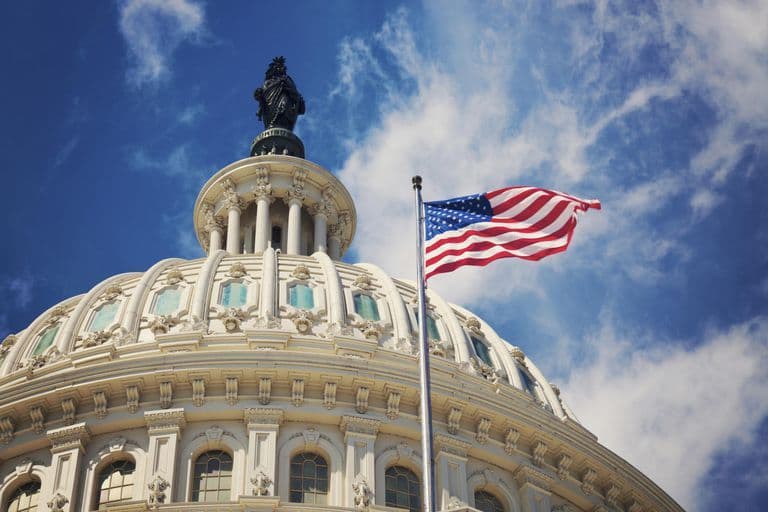
A federal judge in the US District Court for the Northern District of Illinois granted preliminary injunctions sought by Kalshi, Coinbase and the Commodity Futures Trading Commission on Oct. 2, 2026, in litigation over state attempts to regulate sports-event contracts. The Commodity Futures Trading Commission also sent two rules to the White House for review the same week — a proposed rule expanding the definition of a “swap” to cover event contracts and an interim final rule excluding casino-style games — moves that could redraw the federal lane for prediction markets.
CFTC rulemaking reshapes prediction markets regulatory lane
The CFTC filed two separate items for White House review: a proposed rule to expand the statutory definition of a swap to include event contracts and an interim final rule that would explicitly exclude casino-style games such as slots and roulette. The dual filings aim to cover different product types: they would strengthen federal jurisdiction for sports and other event contracts while drawing a clear line around purely casino-style products.
Timing matters because federal appeals courts remain split on whether Kalshi’s sports contracts qualify as swaps subject to exclusive CFTC jurisdiction. The Sixth Circuit ruled on Sept. 25 that Kalshi had not shown its contracts qualify, following a similar Ninth Circuit decision; the Third Circuit reached the opposite conclusion earlier in 2026. The new filings do not guarantee a judicial resolution: since the US Supreme Court’s 2024 Loper Bright decision, courts are not obliged to defer to agency interpretations on statutory questions.
Regulatory scrutiny extended to trading incentives. Front Office Sports reported the CFTC is examining incentive programmes over concerns about promotions labelled “risk-free” trades, guaranteed payouts and other rewards that could mislead customers. Kalshi filed on Sept. 28 to terminate a volume incentive plan three days after updating a Deposit and Trading Reward Incentive Program that allowed up to $2,500 per promotion and $5,000 per participant over the program’s life.
Illinois injunction adds to circuit split on Kalshi and state regulation (/regulation)
Judge Martha Pacold granted the preliminary injunctions in part, while continuing portions of the motions for further proceedings. The ruling supports the federal-preemption argument advanced by Kalshi, Coinbase and the CFTC and creates what attorney Daniel Wallach described as an “intra-circuit split” alongside a Wisconsin decision now on appeal to the Seventh Circuit. New Jersey has asked the US Supreme Court to review a Third Circuit decision favourable to Kalshi, citing a direct split with the Ninth Circuit.
The injunctions and rule filings together sharpen the federal-versus-state conflict. Some states, including Ohio, continue to pursue enforcement: Ohio Governor Mike DeWine pledged to enforce state gambling laws against Kalshi after the Sixth Circuit ruling and the Ohio Casino Control Commission is pursuing a $5m civil penalty.
Funding boom and valuations in prediction markets
Investor interest remains high. Kalshi is reported to be nearing a funding round that would value the exchange at about $40bn, up from a $22bn valuation attached to its May raise; the company is reportedly in talks to raise roughly $1bn. That round would price Kalshi at roughly 10x the $4bn annualised revenue figure cited in coverage, assuming public investors value it as a derivatives exchange rather than a sportsbook.
Novig is also seeking new capital at a valuation of up to $2bn, according to Front Office Sports, four times the $500m valuation from its February funding round. Trading and market-making firm Raven received strategic backing from Coinbase Ventures and CMCC Global at a reported $90m pre-money valuation. These deals show investor appetite extending into exchange infrastructure and trading firms as well as the platforms themselves.
Markets, product moves and mainstream distribution (/b2b)
Mainstream outlets and platforms are integrating prediction-market data. CBS News announced a partnership with Kalshi to incorporate the exchange’s market prices into CBS Mornings coverage for the 2026 US midterm elections. Gemini launched a dedicated politics hub offering Senate, House and governor markets, an interactive governor map, a tossup-race tracker, a Senate-control forecast and a live election-news feed.
Market pricing shifted markedly toward Democrats in early October: as of Oct. 1, Polymarket priced Democratic House control at 93% and Senate control at 63%; Kalshi showed roughly similar probabilities. Platforms are also expanding product ranges: Polymarket US introduced 15-minute Bitcoin up/down contracts, and Robinhood added corporate-earnings contracts supplied by Cboe.
White-label distribution widened. Plaee’s partnership with Optimove gives sportsbook and iCasino clients access to Plaee’s white-label platform and federally regulated event contracts through Crypto.com | Derivatives North America, a CFTC-designated contract market. ProphetX partnered with Plaee to offer a stack that includes a white-label trading interface, customer-management tools and risk controls. Axis is pursuing a “Shopify of prediction markets” model and said it has hundreds of potential clients in its pipeline, including a reality-TV company and a sports league.
Responsible trading, insider-trading scrutiny and corporate responses
The National Council on Problem Gambling told NEXTPredict.io that its $2m relationship with Kalshi has not changed its view that event contracts function as gambling and should carry protections such as self-exclusion, age verification, risk disclosures and direct access to help. The group said its national helpline is receiving outreach from people experiencing problems tied to prediction markets.
Polymarket US added deposit limits, self-exclusion and treatment resources in its app this week; the global Polymarket site retained a narrower account-pause option. Corporate employers updated rules: FedEx, PepsiCo and TKO added explicit restrictions on employee prediction-market trading involving confidential company information, joining JPMorgan, Cisco and Goldman Sachs.
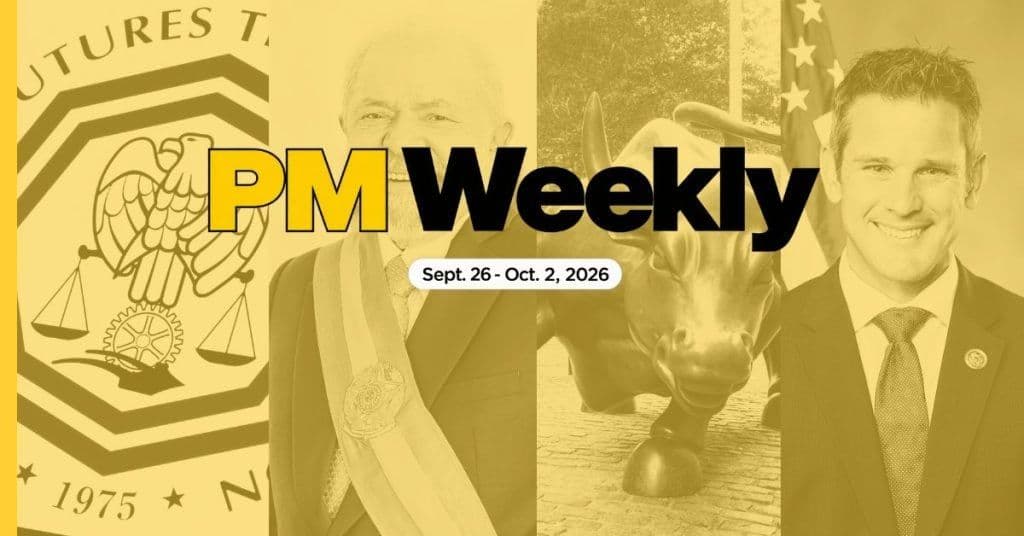
Insider-trading probes widened. The CFTC is examining former US Representative Adam Kinzinger’s Kalshi trades tied to whether he would receive a pardon from former President Joe Biden; Kinzinger posted screenshots showing an $823 profit and denied having inside information. House Oversight Committee Chair James Comer expanded an inquiry that began with Kalshi and Polymarket to include Hyperliquid, Crypto.com and PredictIt owner Aristotle Exchange; the committee said the probe has produced nearly 1,000 documents and five briefings.
Related criminal litigation continued. Gannon Ken Van Dyke, the US Army Special Forces soldier charged with using classified information to profit from Polymarket contracts tied to Nicolás Maduro, sought to dismiss three Commodity Exchange Act charges by arguing the contracts were not swaps. The Department of Justice argued on Sept. 30 that contracts tied to US military action in Venezuela and Maduro’s removal could qualify as swaps because the events are “inherently economic.”
International moves, studies and sector notes (/news)
Brazil’s first-round presidential vote on Oct. 4 set up a live test of market pricing versus polling. NEXTPredict.io found Polymarket traders giving President Luiz Inácio Lula da Silva a strong chance of finishing first in the opening round while a Polymarket market on the eventual winner favoured Sen. Flávio Bolsonaro; polls showed Lula slightly ahead in the first round and a tighter runoff prospect.
Canada showed incremental movement: VerdX is seeking approval to become Canada’s first investment dealer devoted to prediction markets, led by former Vanguard Investments Canada CEO Atul Tiwari. TMX Group said it would consider offering prediction markets if clients demand them, though approved dealers in Canada currently can offer only certain economic, financial and climate-related contracts and regulators have ruled out sports and entertainment contracts.
Other sector items this week included:
Kalshi recorded $60.85bn in September notional volume, up 52% from August; combos supplied about 85% of that growth while accounting for 46% of the taker-volume increase. Standalone sports generated more than twice as much taker volume as combos, and Kalshi’s share of tracked volume fell to 75.1%.
Citizens JMP Securities found FanDuel slightly outpriced Kalshi on NFL Week 3 single-game moneyline and total markets; FanDuel and DraftKings also showed better pricing on combo markets in the sample.
Bernstein projected annual prediction-market volume could reach $10tn by 2035, led by growth in non-sports contracts.
Polymarket hired Lisa Mantil, a 27-year Goldman Sachs veteran, as head of institutional growth.
A study found Kalshi’s next-day temperature markets outperformed the National Blend of Models in six of seven US cities; the paper has not been peer reviewed.
Sparkling launched a Telegram trading app that supports Polymarket alongside other products; ORCA announced an AI infrastructure layer to monitor markets and execute cross-platform strategies.
A look ahead this week includes MLB Division Series play, esports tournaments, UEFA Nations League fixtures, Brazil’s Oct. 4 first-round presidential election, the US Supreme Court’s new term beginning Oct. 5, Nobel week announcements and scheduled oral arguments on Oct. 7 in the Van Dyke Commodity Exchange Act case.
“This creates an intra-circuit split with the Wisconsin decision, now on appeal to the CA7,” said Daniel Wallach, describing the Illinois ruling’s effect on the legal landscape.
The coming weeks will test whether regulatory rulemaking, court rulings and market behaviour align or produce further fragmentation across states and platforms.
Frequently Asked Questions
What did the Illinois federal court rule in the Kalshi case?
The US District Court for the Northern District of Illinois granted preliminary injunctions sought by Kalshi, Coinbase and the Commodity Futures Trading Commission on Oct. 2, 2026. Judge Martha Pacold granted the motions in part and continued other portions for further proceedings, creating an intra-circuit split with a Wisconsin decision now on appeal to the Seventh Circuit.
What CFTC actions this week could affect prediction markets?
The CFTC sent two rules to the White House: a proposed rule expanding the statutory definition of a 'swap' to cover event contracts and an interim final rule that would exclude casino-style games. These filings aim to strengthen federal jurisdiction over event contracts like sports while excluding slot- and roulette-style products.
How large are the funding rounds and valuations reported for Kalshi and Novig?
Kalshi is reportedly in talks to raise roughly $1bn at a valuation of about $40bn, up from a $22bn valuation in May 2026. Novig is raising capital at a valuation of up to $2bn, four times the $500m valuation attached to its February funding round.
What steps have platforms and corporations taken on responsible trading and insider risk?
Polymarket US added deposit limits, self-exclusion and treatment resources in its app; Polymarket’s global site retained a narrower pause feature. Companies including FedEx, PepsiCo and TKO updated employee policies to explicitly restrict prediction-market trading involving confidential company information, joining firms such as JPMorgan, Cisco and Goldman Sachs.
Tags
About the author

Tessa Coleman
Betting Markets Correspondent
Tessa Coleman covers betting products and markets — sportsbook launches, odds and trading technology, and the fast-growing prediction-market space from regulated exchanges to event contracts. The stories lead with the product or the ruling, name the operators and platforms precisely, and translate trading jargon into what bettors can actually do. When a book reworks its pricing or a prediction market wins a license fight, Tessa Coleman explains the mechanics and the stakes.
More from Tessa Coleman