Kalshi trading volume and Polymarket patterns draw regulatory scrutiny
Kalshi ends its volume incentives amid a CFTC review of $5bn in ether trades.
Key Takeaways
- Kalshi filed to end its volume incentive programme while the CFTC reviews roughly $5 billion in near-identical ether perpetual trades.
- Both Kalshi and Polymarket deny wash-trading allegations despite unusual trading patterns on their venues.
- Removing Kalshi's incentives creates a data gap that complicates liquidity assessment during the NFL season.
- Markets will reward platforms that publish verifiable trade-level methodologies or auditor-reviewed tapes.
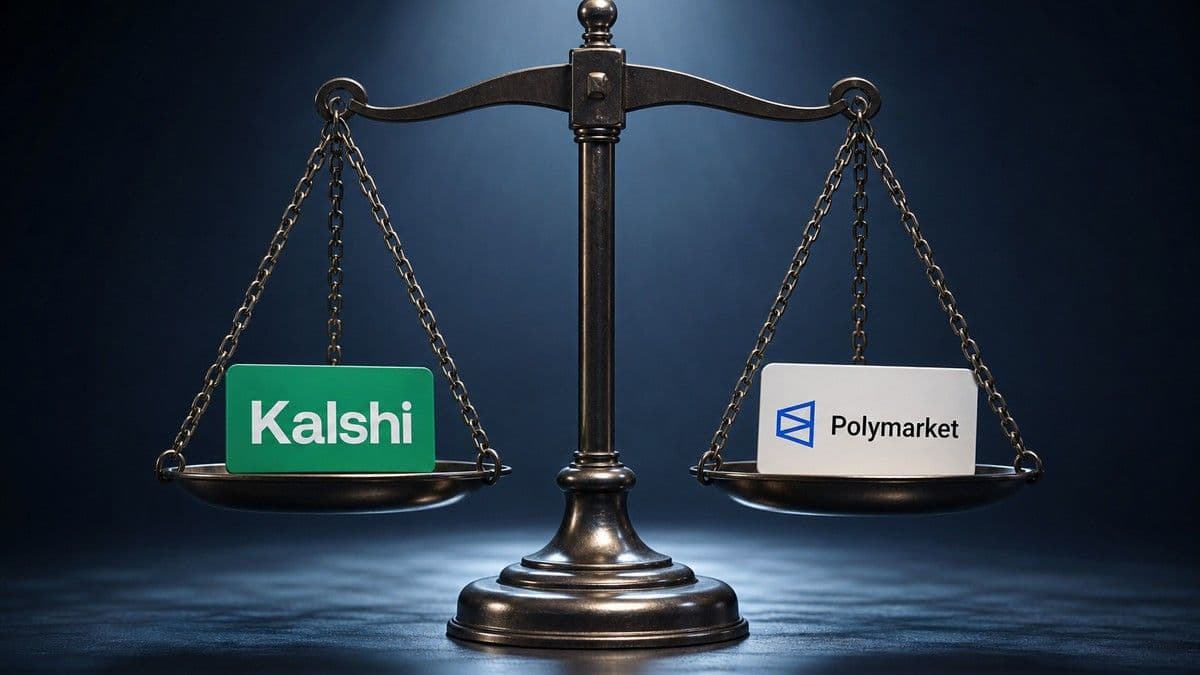
Kalshi filed to terminate its volume incentive programme while the Commodity Futures Trading Commission is examining roughly $5 billion of near-identical ether perpetual trades, and unusual trading patterns on both Kalshi and Polymarket have prompted fresh questions about whether reported volumes reflect organic activity. Both platforms reject allegations of wash trading; scrutiny focuses on Kalshi's ether perpetuals in the US and on low-odds markets at Polymarket's international venue. Traders that rely on headline volume to size liquidity risk now face uncertainty at a moment of peak NFL-season liquidity competition.
Kalshi trading volume: CFTC review and the end of incentives
Kalshi's filing to end its volume incentive programme arrives against a parallel review by the Commodity Futures Trading Commission of almost $5 billion in near-identical ether perpetual trades. The combination of a regulatory review and the removal of incentives creates two simultaneous effects for Kalshi: historic volume figures may be viewed as inflated, and forthcoming volumes will fall once the incentive is removed. That gap complicates any attempt by traders or counterparties to use platform-reported turnover as a reliable proxy for genuine liquidity.
Kalshi has defended its trading as legitimate and denies wash-trading allegations. The CFTC's examination, however, means the issue cannot be closed by a single filing or statement from Kalshi. The regulator's probe applies to the ether perpetual instruments traded on Kalshi's US venue, and the scale cited in filings — $5 billion — underlines the size of the trades under review.
Polymarket volume concerns on low-odds markets
Polymarket is facing separate scrutiny tied to low-odds markets hosted on its international venue. Questions raised by market observers and counterparties centre on whether unusually consistent, high-volume activity in very low-probability outcomes reflects genuine betting interest or coordinated sequencing of trades. Polymarket rejects allegations of engineered volume.
While Kalshi's exposure is concentrated in a US regulatory channel, Polymarket's issues stem from the mechanics of specific market offerings at its international venue. Both cases, however, expose the wider industry problem: headline figures alone no longer convince certain segments of the trading population.
Why this matters to traders and market-makers during the NFL season
Traders size exposure and set liquidity cushions based on observed turnover. Removing an incentive programme that materially inflated past figures leaves a sudden data gap. The NFL season is currently amplifying liquidity competition among derivatives and event-markets products; peak stakes means migration decisions have larger portfolio consequences.
Rivals that maintain clearer incentive designs and publish verifiable trading methodologies can exploit that gap. Market participants seeking counterparties will gravitate toward venues that publish a credible, single-event methodology or independent verification of reported volumes. Firms able to produce audited trade tapes or transparent matching logic stand to capture migrating capital.
How platforms are responding and what they have not yet proven
Platform responses so far have two themes: denial of manipulation and explanation by reference to market-making activity. Kalshi has pointed to internal market-maker behaviour as an explanation for repeated, similar trades; Polymarket has attributed irregularities to concentrated interest in select low-odds markets. Neither platform, according to market commentators, has published a verifiable, single-event methodology or independent proof that reconciles headline volumes with retail and institutional flows.
That absence matters. Market-maker explanations without published proof are losing persuasive force as competitors sharpen transparency as a commercial differentiator. The platform that first makes available independently verifiable evidence of organic liquidity — trade-level data reconciled to matching engines or auditor-reviewed tapes — will have a persuasive case when courting funds and high-frequency liquidity providers.
What operators, regulators and vendors should watch next
independent verification: demand for third-party trade-audit services will increase as counterparties seek reconciled trade tapes; vendors that produce audit trails will be in demand
incentive mechanics: operators will reassess volume-based reward programmes, weighing short-term flow against long-term credibility
regulatory posture: the CFTC review of ether perpetuals on Kalshi signals that US regulators will take a sustained interest in platform-reported volumes
Market-data consumers should treat headline turnover as a conditional input rather than proof of depth until providers publish reconciled evidence. Vendors of surveillance and post-trade analytics should expect increased enquiries from venues seeking to shore up reporting and from operators reworking their incentive frameworks.
Where transparency will decide market share
The immediate commercial effect is simple: traders unwilling to accept headline numbers without proof will move their capital to venues that can demonstrate volume provenance. Kalshi's US regulatory exposure is deeper because the CFTC is involved; Polymarket faces venue-level questions internationally. The platform that publishes a transparent methodology for measuring single-event liquidity first will have an advantage in the migration that follows.
This is not only a regulatory story. It is a market-structure story about how trading data, incentives and verification intersect. As the NFL season continues and quarterly flow windows open, platforms with credible, verifiable volume reporting will be able to make a straightforward commercial case to cash and institutional participants.
For readers tracking regulatory developments see the regulation section for precedents and the news feed for updates on filings and statements from both Kalshi and Polymarket.
Frequently Asked Questions
What did Kalshi file to change and why does it matter?
Kalshi filed to end its volume incentive programme, and that matters because it removes a driver of past trading activity while a CFTC review of roughly $5 billion in near-identical ether perpetual trades is ongoing, creating uncertainty about both historic and future reported volumes.
Is the CFTC investigating trades on Kalshi?
Yes, the Commodity Futures Trading Commission is examining approximately $5 billion of near-identical ether perpetual trades on Kalshi's US venue, which is the principal regulatory exposure cited in public reporting.
What concerns are raised about Polymarket?
Polymarket faces scrutiny over unusual activity in low-odds markets on its international venue; observers question whether concentrated volumes in very low-probability outcomes reflect organic demand or coordinated trading.
Tags
About the author

Tessa Coleman
Betting Markets Correspondent
Tessa Coleman covers betting products and markets — sportsbook launches, odds and trading technology, and the fast-growing prediction-market space from regulated exchanges to event contracts. The stories lead with the product or the ruling, name the operators and platforms precisely, and translate trading jargon into what bettors can actually do. When a book reworks its pricing or a prediction market wins a license fight, Tessa Coleman explains the mechanics and the stakes.
More from Tessa Coleman