Supreme Court could resolve US sports prediction markets by June 2027
Conflicting federal appeals rulings and CFTC rulemaking make June 2027 the earliest realistic date

Key Takeaways
- Three federal circuits (Third, Ninth and Sixth) have issued conflicting rulings on whether sports event contracts fall under federal commodities law or state gambling laws.
- New Jersey petitioned the Supreme Court to review the Kalshi decision and Kalshi must respond by 9 November after receiving an extension.
- Daniel Wallach projected June 2027 as the earliest realistic date for a Supreme Court decision if the court grants review in Dec 2026–Jan 2027.
- The Commodity Futures Trading Commission’s ongoing rulemaking could change the legal basis that courts consider and thus affect the litigation.
- The Ninth Circuit also recognized possible tribal claims under the Indian Gaming Regulatory Act in a separate line of cases.
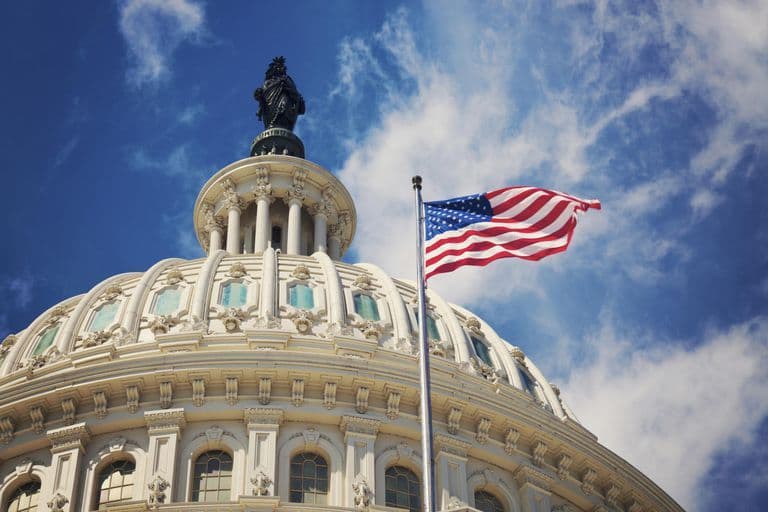
Federal appeals courts are split on whether contracts tied to sporting events are governed by federal commodities law or by state gambling statutes, and June 2027 is the earliest realistic date for a Supreme Court decision if the court accepts review, according to gaming-law attorney Daniel Wallach. New Jersey has already petitioned the Supreme Court to review a ruling favoring Kalshi; Kalshi has a response deadline of 9 November after receiving an extension. — Renata Quiroga, Betting Markets Correspondent.
The split between circuits and why it matters for sports prediction markets
Over the past six months three federal courts of appeals have reached divergent conclusions about whether contracts on sporting events are regulated by the federal Commodity Exchange Act or by state gambling laws.
The United States Court of Appeals for the Third Circuit issued a decision for Kalshi in April, treating event contracts as swaps covered by federal commodities law. On 28 August, the Ninth Circuit reached the opposite conclusion and allowed Nevada to apply its state gaming laws against Kalshi’s sports contracts. On 25 September, the Sixth Circuit rejected Kalshi’s attempts to obtain the same protection in Ohio and Tennessee.
The contradiction raises the central question the Supreme Court may resolve: can platforms regulated by the Commodity Futures Trading Commission offer contracts on sporting events nationwide, or can states enforce their own gambling laws against those contracts?
Possible timeline for the case and Wallach’s projection for June 2027
Wallach explained at the Global Gaming Expo in Las Vegas that the fastest schedule would see the Supreme Court grant review in December 2026 or January 2027, with oral arguments in March or April and a decision in June 2027.
He also warned that a slower timeline is equally possible: if the Court does not take the conflict early in 2027, the dispute could be pushed into 2028 or later. That variation depends on whether the Supreme Court grants review and on the pace of subsequent briefing and argument.
How the CFTC rulemaking affects the process and judicial review
The Commodity Futures Trading Commission’s rulemaking complicates the equation. The Ninth Circuit relied in part on a federal regulation that prohibits certain play-like contracts when it rejected Kalshi’s arguments, while noting that proposed CFTC rules have no legal effect until formally adopted.
At the same time, the CFTC continues a rulemaking process whose outcome could change the legal landscape. If the CFTC adopts amendments before a definitive judicial ruling, that could alter the substantive arguments the Supreme Court would have to consider. Market participants should watch the CFTC’s steps on [regulation](/regulation).
Other litigants and separate tracks: New Jersey, Robinhood and tribal courts
New Jersey has already filed a petition with the Supreme Court asking it to review the decision that favored Kalshi. Robinhood has also sought review of the Ninth Circuit ruling and argued the Supreme Court could hear its case alongside New Jersey’s petition, giving the justices different factual and statutory frames under the Commodity Exchange Act.
Kalshi has separately sought rehearing in the Ninth Circuit; Wallach called the chance of success there "very small." If the Ninth Circuit denies rehearing, the split between the Third and Ninth Circuits would remain, which could strengthen the argument for Supreme Court review.
There is also a separate line of litigation tied to tribal land. The Ninth Circuit recently concluded tribes had shown a likelihood of success on claims about sports contracts offered on tribal territory under the Indian Gaming Regulatory Act. That tribal pathway proceeds independently of the state-versus-federal disputes.
Industry odds and posture
Wallach estimated that states would have roughly a 70% to 80% chance of prevailing if the Supreme Court accepts the central question about sports prediction markets, while cautioning that lower-court outcomes do not guarantee the same result at the high court.
"I’d like to say 100%, but there are no guarantees when you get to the high court," Wallach said.
For operators and suppliers the uncertainty has practical implications for product design and state-by-state expansion. If the Supreme Court favors federal primacy, CFTC-regulated platforms could operate with greater national uniformity. If states retain authority to apply their gaming laws to those contracts, operators will face disparate requirements by jurisdiction, affecting rollout strategies and compliance costs for brokers and platform providers in the [sports](/sports) vertical.
What operators, regulators and suppliers should watch
- Procedural deadlines: Kalshi’s response due 9 November and a potential Supreme Court grant window in December 2026–January 2027. - CFTC rulemaking moves: formal adoption could change the regulatory basis courts use. - Tribal repercussions under the Indian Gaming Regulatory Act, which proceed on a separate track.
Market participants should monitor both the petitions filed at the Supreme Court and regulatory steps by the CFTC. Specifically, the combination of rulings from the Third, Ninth and Sixth Circuits creates a legal mosaic whose resolution will affect the ability of platforms and brokers to offer event contracts at national scale.
Practical conclusion
The dispute could still resolve on a timeline longer than Wallach described, but June 2027 currently stands as the first plausible date for a decision from the nation’s highest court. In the meantime, parallel litigation tracks and the pending CFTC rulemaking keep several paths open that could influence the ultimate outcome.
Practical conclusion
The dispute can still be resolved outside the shorter timeline Wallach mentioned, but June 2027 currently appears as the earliest plausible date for a decision by the highest court. Meanwhile, parallel litigation and the CFTC’s pending rulemaking keep several avenues open that could influence the outcome.
Frequently Asked Questions
Why might the Supreme Court intervene in sports prediction markets?
The Supreme Court could intervene because three federal courts of appeals have issued conflicting decisions on whether contracts tied to sporting events are covered by the federal Commodity Exchange Act or by state gambling laws, creating a circuit split that the high court can resolve.
What is the fastest possible timeline for a Supreme Court decision?
The fastest schedule described by attorney Daniel Wallach is the Supreme Court granting review in December 2026 or January 2027, oral arguments in March or April, and a decision in June 2027.
What role does the Commodity Futures Trading Commission play in this dispute?
The CFTC is conducting rulemaking that addresses play-like contracts; proposed rules were discussed by the Ninth Circuit, and formal adoption by the CFTC before a final court decision could change the regulatory foundation used by the courts.
What odds do experts give states if the Supreme Court hears the case?
Daniel Wallach estimated states have about a 70%–80% chance of prevailing if the Supreme Court accepts the central question, but he cautioned there are no certainties at the high court.
Tags
About the author

Renata Quiroga
Betting Markets Correspondent
Renata Quiroga covers sports betting and prediction markets — sportsbook launches, odds technology, event contracts, and the regulatory calls that decide what can be bet on and where. The reports open with the product or the ruling, name operators and platforms precisely, and explain the mechanics without needless jargon. When a book enters a Latin American market or a prediction exchange lists a contested contract, Renata Quiroga reports what changes for the bettor.
More from Renata Quiroga