Scaling for New iGaming Markets: What to Reuse and What to Rebuild
With major jurisdictions like Alberta and Finland opening their doors in 2026 and 2027, operators face the challenge of maximising reuse across payments, player checks and content rules to lower costs and accelerate market expansion.
Key Takeaways
- Newly regulated markets like Alberta and Finland present major expansion opportunities for iGaming operators.
- The core challenge is knowing what platform and operational elements to reuse and what to redevelop for specific jurisdictions.
- Payments, player checks, and content rules almost always require local adaptation, while back-office systems should remain unified.
- Licensing and payment approvals, rather than front-end development, usually set the timeline for go-live dates.
Operators entering newly regulated iGaming jurisdictions in 2026 and 2027 must determine what parts of their setup can be reused and which must be redeveloped. Alberta, Finland, and Brazil illustrate how targeting payments, player checks, and content rules is essential for efficiency, while streamlined back-office systems can make expansion faster and more cost-effective.
Multiple New Markets: Opportunities and Regulatory Shifts
Jurisdictions such as Alberta, which launched its regulated iGaming market on 13 July 2026, and Finland, which started accepting licence applications from 1 March 2026, are creating significant opportunity for global operators. Alberta saw 22 of 50 registered operators live on day one, while Finland's market officially opens on 1 July 2027. Brazil's fast-growing sector now includes over 80 authorised companies managing 180+ brands. By contrast, the United Kingdom increased remote gaming duty from 21% to 40% in April 2026, sharpening the focus on high-growth regions (see more in regulation).
What Should Be Reused When Entering New iGaming Markets?
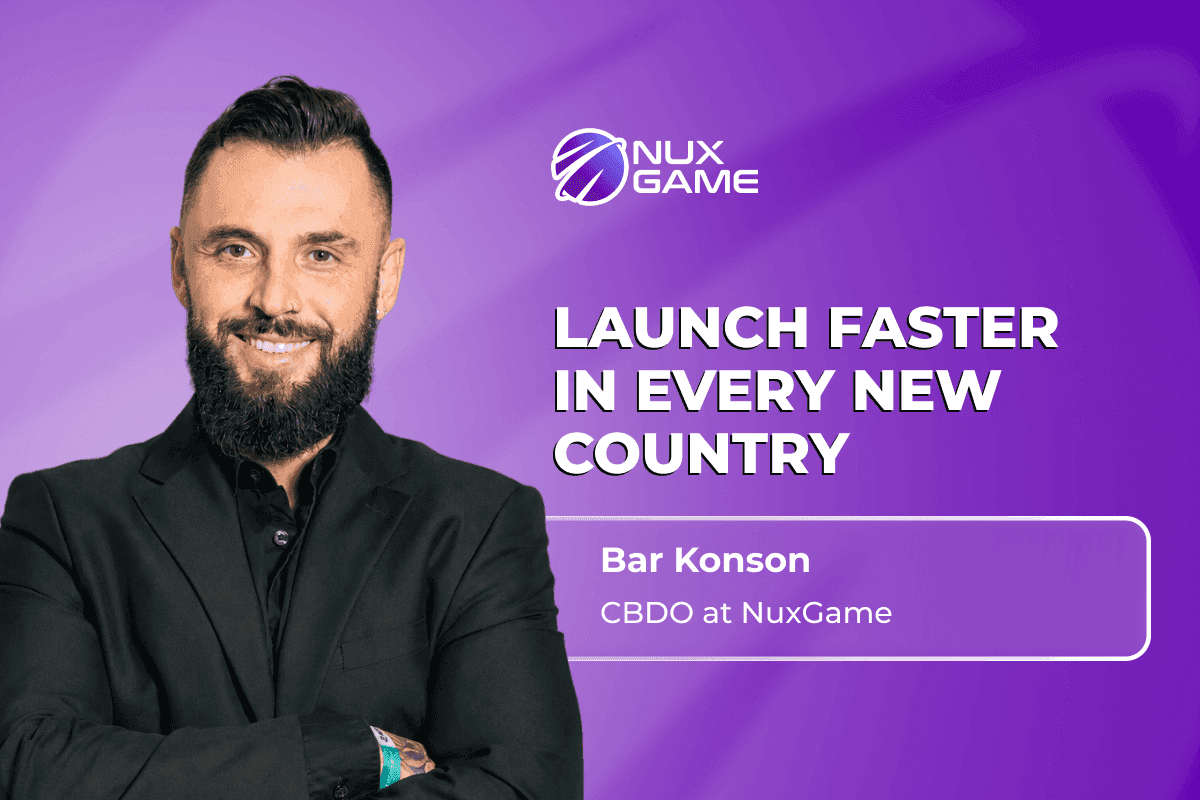
Bar Konson, chief business development officer at NuxGame, stresses the need to identify functions that don't require redevelopment for each new jurisdiction:
- Account creation and player wallet logic
- Bonus systems and offer engines
- Reporting and analytics mechanisms
- Support and affiliate tracking workflows
These core elements are rarely country-specific. Operators should leverage their initial builds across new markets, avoiding "repacking the suitcase" from scratch. Konson highlights cost efficiency as the main indicator:
"Market three should cost you less than market two, which should cost less than market one. If that number stays flat, the market is not the problem. The setup is." — Bar Konson, NuxGame
Operators must ensure cost per launch decreases over time by maximising reuse across technical and operational infrastructure.
What Demands Rebuilding? Payments, Player Checks and Content Compliance
Only three critical aspects typically require fresh planning for every new jurisdiction:
- Payments: Payment preferences and legal frameworks differ sharply by country. For instance, Brazil mandates Pix as the main deposit method and prohibits credit card betting. In Mexico, OXXO and SPEI dominate, while Kenya relies on M-Pesa. Paysafe's 13-market study found 44% of bettors abandoned wagers when their preferred payment method was unavailable.
- Player Checks: Each regulator specifies distinct KYC and player verification demands. Local frameworks may also dictate data storage, as seen in Brazil’s requirement for local system hosting.
- Content & Advertising Rules: Game catalogue, advertising standards and brand structure may change. Brazil, for example, allows one licence per three brands; a fourth brand means a second licence and fee.
Specialised technical asks may emerge, but are typically the exception, not the rule. Operators can improve flexibility by maintaining a broad partner ecosystem spanning payments, compliance and customer relationship management.
The Importance of Unified Back Office for iGaming Expansion
A scalable back-office platform across all markets proves essential. As Konson notes, rolling out a new admin panel, report format, or training sequence for each jurisdiction eats into expansion gains. Consistent back office allows operators to:
- Monitor all players and markets from one interface
- Evaluate comparative player retention
- Measure the performance of cross-market promotions
- Identify which jurisdictions generate the most stable revenue
"No pilot would want the buttons in a different place on every flight, but that is how many operators run their own business." — Bar Konson, NuxGame
Deploying a unified platform treats the business as an integrated whole, not as unrelated legal entities.
Licensing and Payments: The Real Go-Live Milestones
The actual go-live date hinges on the slowest approval, not usually front-end development or game libraries. In many markets, payment providers must be licensed before handling player deposits—a process outside the operator’s direct control. Operators should initiate licensing and payment setup early:
- Finland: Licensing began 16 months before market opening, with around six months needed for processing.
- Alberta: Operators live on launch day had filed applications months prior.
Starting regulatory and payment approval early in the launch cycle is crucial to avoid delays.
Regulatory Harmonisation and Cross-Market Reuse
Some regulators are actively structuring rules to promote reuse. For example:
- Alberta modelled its framework on Ontario, enabling Ontario-licensed operators to adapt quickly.
- Brazil allows up to three brands per licence, with planned fees for additional brands, incentivising early brand structuring.
Operators should rigorously plan entry requirements in tandem with evolving regulatory standards. This alignment can unlock significant time and cost savings when progressing through new territories.
Four Questions to Assess Your Expansion Readiness
Before entering a second or subsequent market, Konson recommends operators ask:
- How much of the initial build is reused in the new market?
- Does the cost per market decrease with each launch?
- Can one operational team manage multiple markets via a unified platform?
- Which approval step will take longest, and has it commenced?
A structured approach to these questions differentiates true expansion from simply replicating earlier work in new jurisdictions.
The Bottom Line for Operators Eyeing Further Growth
2026 has broadened the field for ambitious operators—with Alberta open, Finland preparing, and Brazil expanding. While each first market is an educational challenge, the test of scalability is whether the infrastructure supports travel. Optimising for reuse and effective regulatory sequencing means subsequent market entries are both faster and less costly—a reality that regulatory professionals should communicate to internal stakeholders and partners.
For more regulatory insights, see our B2B platform coverage and events calendar.
Frequently Asked Questions
Which elements should operators reuse when expanding to a new iGaming market?
Operators should reuse core systems like account management, wallet logic, bonus engines, and affiliate tracking. These components are rarely dictated by local regulation and can be leveraged across multiple jurisdictions to control costs.
What localisation is required for payments in new iGaming jurisdictions?
Payment systems must be tailored for each market's preferred methods and legal requirements—such as Pix in Brazil or OXXO/SPEI in Mexico—since nearly half of bettors will abandon sites lacking their chosen payment method.
How can operators accelerate licensing for new markets like Finland or Alberta?
Operators should begin licensing and payment onboarding well in advance, since these approvals—16 months in Finland, several months in Alberta—often determine when operations can start, regardless of front-end development progress.
Why is a unified back office important for multi-jurisdictional operators?
A single back-office system for all markets allows real-time visibility of player activity, streamlines reporting and management, and enables systemic improvements, unlike having separate admin panels and processes per market.
How do regulatory frameworks support cross-market expansion?
Some jurisdictions, like Alberta and Brazil, deliberately align licensing and brand structuring rules with existing markets or support multi-brand licences, reducing redundant effort and enabling faster operator entry.
Tags
About the author

Eleanor Whitfield
Regulatory Affairs Correspondent
Eleanor Whitfield tracks gambling legislation, licensing decisions, and regulator enforcement across key markets — from the UKGC, MGA, and Germany's GGL to Spain's DGOJ and the state-by-state map in the Americas. The reporting answers three questions precisely: what changed, where, and who it affects, with jurisdictions, effective dates, and penalty figures named exactly as published. Compliance officers and operators read Eleanor Whitfield to know which rulebook moved before their next board meeting.
More from Eleanor Whitfield