Blask Publishes Report on the Impact of the 2026 World Cup on iGaming Demand
Blask's report analyzes how the 2026 World Cup affected demand, interest in betting brands, and operators' margins across 44 monitored markets.
Key Takeaways
- Blask's 2026 World Cup report shows only a 0.2% growth in iGaming demand.
- Losses and gains favored bettors, negatively impacting bookmakers' overall balance.
- Demand in the United States fell by 28% after the local team's elimination; Canada rose by 7%.
- Interest in sports betting peaked during the tournament's opening week, not the final.
The latest report published by Blask, an AI-native market intelligence platform for iGaming, asserts that the 2026 World Cup barely boosted global demand and, for the first time, measures which side benefitted in terms of margins: players or bookmakers. The company utilized its real-time tracking of searches and activity to compare demand during the tournament with the period before and with the same timeframe from the previous year, covering 44 key markets.
Blask Index: Slight Growth in iGaming Demand During the 2026 World Cup
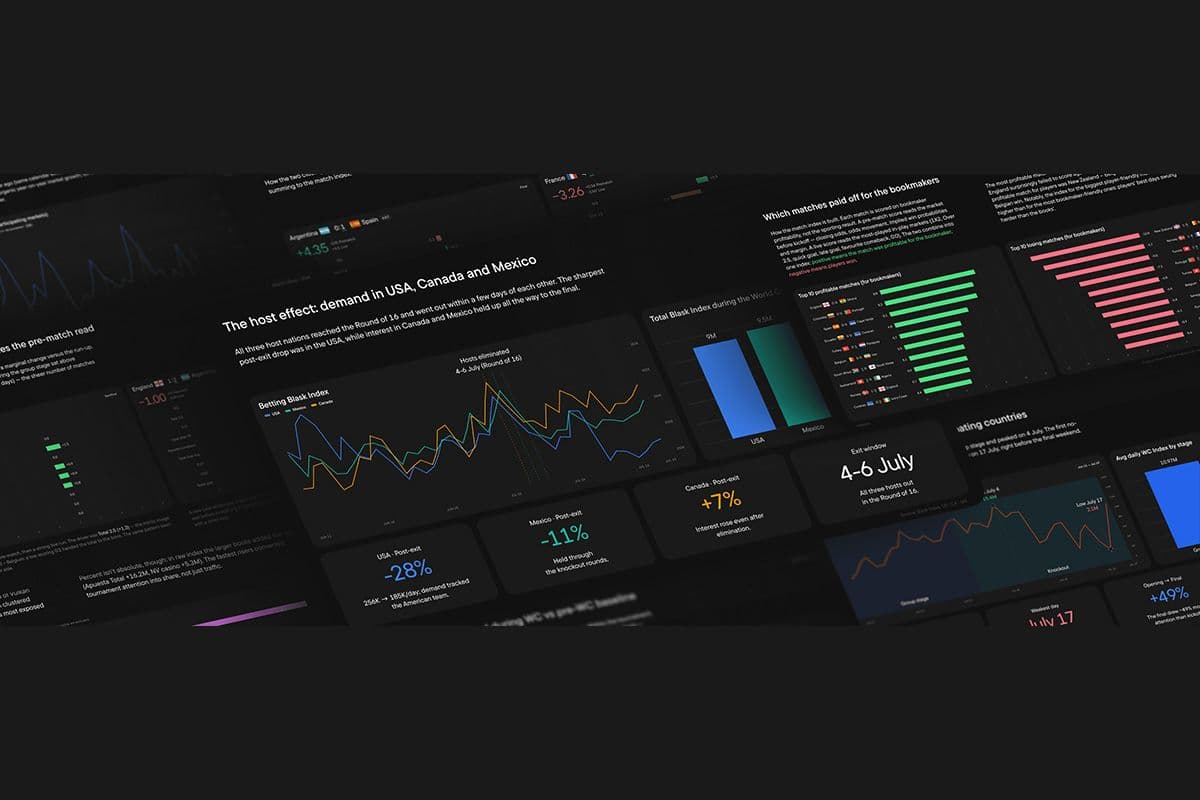
The report indicates that the growth of iGaming demand associated with the World Cup was virtually flat. The Blask Index, a proprietary measure based on real-time search data, only increased by 0.2% compared to the period immediately preceding the tournament. Blask points out that this figure challenges the usual narrative that major sporting events generate sharp and sustained increases in activity, especially in the already mature online segment.
The Temporary Effect of the Tournament on Host Markets
For host countries, the elimination of the national team resulted in an immediate shift in market behavior. In the United States, demand fell by 28% after their team’s exit. Mexico experienced a more moderate decline of 11%, while Canada was the exception with a 7% increase following its elimination. These figures suggest that the draw of the event fades quickly and depends on the continued local interest during the tournament.
"Hosting a World Cup does not guarantee lasting interest once the host is eliminated," emphasizes Blask's report.
Betters vs. Bookies: Margin Shifted in Favor of Players
In this report, Blask introduces the Match Profitability Index, an unprecedented metric that evaluates match by match who gained the most: bettors or bookmakers. Analyzing the 104 matches of the tournament, the indicator reveals that, overall, operators recorded net losses compared to players. The 0-0 draw between England and Ghana was the most profitable match for bookmakers, while New Zealand's 1-5 loss to Belgium represented the highest cost for operators.
This granular overview of betting profitability helps understand how surprises on the pitch translate to operators' balances. It involves not just the event's popularity, but also how the volatility of results affects sector margins.
High Season and Demand Peaks: When the Market Moved
Temporal tracking shows that interest in sports betting peaked in the inaugural week in most markets, rather than coinciding with the final. These data suggest that the novelty effect plays a greater role than the progression of the tournament. The report details that the timing of demand has direct implications for operators, sports providers, and casino platforms when planning campaigns and managing resources.
Brand Dynamics: Wide Differences in Growth
At the brand level, the report highlights that growth was uneven. The largest advance was recorded by a leading brand, which saw a 464% increase during the tournament. Blask notes that these dynamics reinforce the importance of early acquisition strategies and campaign segmentation according to the tournament’s progression and the realities of each national market. A complete breakdown of profitability and growth by brand is available in the report for subscribers.
Perspectives for Operators and Analysts
The World Cup 2026 report from Blask challenges long-accepted assumptions about the impact of large-scale events on the iGaming sector. It presents comparative data, by country and tournament, on when and how demand was actually generated, who came out ahead in the betting balance, and what disconnection exists between expectations and reality in host markets. For operators and analysts, the availability of metrics like the Blask Index and the Match Profitability Index redefines how to evaluate return on investment and the effectiveness of strategies related to major events.
Industry players can consult the full report for a match-by-match breakdown and details of the brands with the most variability in growth during the World Cup.
Frequently Asked Questions
What does the Blask 2026 World Cup report indicate about the growth of iGaming demand?
The report reveals that iGaming demand registered only a 0.2% increase compared to the pre-tournament period, according to the Blask Index, contradicting the idea of widespread growth.
How did the elimination of host teams impact local demand?
Following the elimination, the United States saw its demand drop by 28%, Mexico by 11%, while Canada was the exception with a 7% rise, showing that the World Cup's impact is fleeting and depends on local performance.
What is the Match Profitability Index introduced by Blask?
The Match Profitability Index is a metric that determines whether the betting margins in each match favored operators or players; during the 2026 World Cup, it favored bettors overall.
When was the peak interest in sports betting recorded during the 2026 World Cup?
The highest peak of interest, according to the report, was recorded during the opening week in most markets analyzed by Blask.
Tags
About the author

Emilio Navarro
Industry Technology Correspondent
Emilio Navarro covers the cross-cutting technology and business of iGaming — platforms, data and AI, compliance tooling, affiliate marketing, financial results, and the stories that fit no single rubric. The reports open with the announcement, cite vendors and figures exactly as published, and keep a healthy distance from press-release language. When a supplier unveils a new engine or the advertising rulebook changes, Emilio Navarro reports what genuinely changes.
More from Emilio Navarro