Bulgaria Advances Three Proposals to Restrict Gambling Advertising
A unanimous committee vote sends the measures forward, but none has become law.
Key Takeaways
- Bulgaria’s Budget and Finance Committee backed three gambling advertising proposals by 21-0 on 12 November 2026.
- The government proposal would prohibit gambling advertising across channels and end licensing arrangements for gambling affiliates, subject to limited exceptions.
- An earlier draft proposed a €400,000 online betting licence fee and a €100,000 minimum monthly payment for online gambling organisers.
- The National Revenue Agency would gain proposed powers to restrict digital platforms involved in gambling advertising.
- Blask estimated offshore brands accounted for approximately 3.2% of Bulgarian gambling demand in October 2026, up from approximately 0.3% a year earlier.
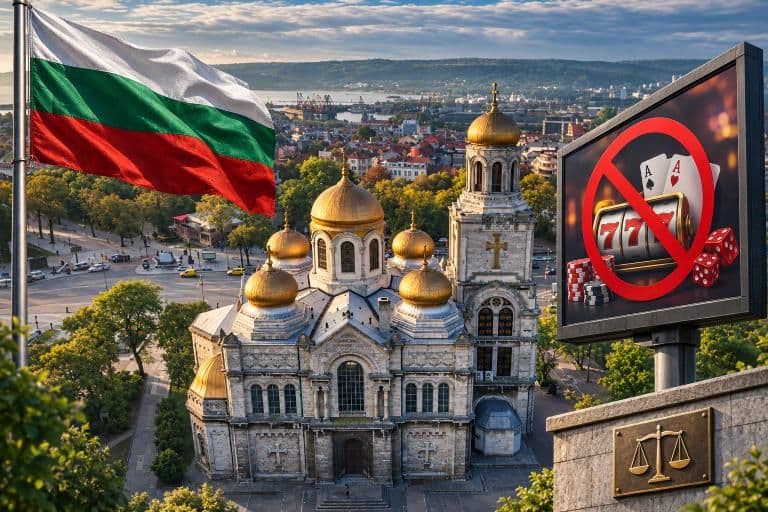
Bulgaria’s parliamentary Budget and Finance Committee voted 21-0 on Thursday, 12 November 2026, to support three proposals for tighter gambling advertising restrictions. The government-backed bill and two opposition initiatives remain under parliamentary consideration; a complete ban has not been approved.
What happens after the committee vote?
Lawmakers said a working group would review and refine the three proposals, examining their different approaches before Parliament determines their final content. The government submitted its initiative to the National Assembly on 11 November, following approval by the Council of Ministers. Representatives of Democratic Bulgaria and We Continue the Change submitted the two opposition proposals.
The renewed effort follows earlier attempts to limit gambling promotion. The government’s package also addresses licensing, taxation and online supervision, with particular concern about advertising reaching younger audiences. Enforcement against websites and businesses outside Bulgaria remains an open question.
What would the advertising ban cover?
The government proposal would prohibit advertising for gambling games, licensed operators and their associated trademarks, regardless of format or distribution channel. It would also end the licensing arrangements that allow affiliates to promote gambling services and direct customers to betting and casino websites. Existing affiliate licences would be subject to the proposed termination provisions.
Limited exceptions would remain for sponsorship of sports clubs and organisations, and support for cultural, healthcare and educational initiatives. Operators could publish essential information on their own websites and inside licensed gambling premises. The distinction is intended to separate operational information from advertising aimed at attracting customers.
Prime Minister Rumen Radev described the government’s position when introducing the broader package in September:
“We are introducing, in practice, a complete ban on gambling advertising.”
“We do not want aggressive advertising that reaches young people and children.”
— Rumen Radev
Bulgaria notified an earlier version of the Gambling Act amendments to the European Commission on 2 October 2026, under the EU procedure for examining certain national draft regulations that could affect services across member states. That text is an earlier draft, not the final wording Parliament may approve.
It proposed restricting exterior advertising signs at licensed premises to the lower of 20% of the building’s façade or 50 square metres. At least 10% of the permitted advertising area would carry a gambling addiction warning. Illuminated panels and displays with moving or changing content would be prohibited.
Gambling branding would also be barred from sports equipment and promotional materials intended for minors. The draft therefore addressed venue presentation and sponsorship materials as well as conventional advertising.
What fees and business requirements are proposed?
The October draft proposed a one-off €400,000 fee for an online betting licence. A variable charge would be calculated on the difference between bets received and winnings paid out, at 21% from 2027 and 22% from 2028. Online gambling organisers would also face a minimum monthly payment of €100,000.
The minimum could produce a higher effective rate for operators with modest betting activity than the headline percentage. Licences granted by 31 December 2026 would be protected from the proposed increases in one-off licensing fees.
For land-based casinos and gambling halls, the alternative tax would rise in 2027 before being replaced in 2028 by a two-component state fee. The proposed replacement would combine fixed payments with variable charges linked to gambling activity. The final costs would depend on the provisions adopted and how they are implemented.
Foreign legal entities seeking an online betting licence would have to conduct their Bulgarian gambling activity through a principal place of business in the country. They would report associated revenues and costs through that establishment and register it before receiving a licensing certificate.
The measure is intended to give authorities greater visibility over financial activity. It could help them compare declared revenues, betting volumes, winnings and operating costs, as well as monitor tax compliance. Foreign operators could face additional administrative work and a review of their corporate and financial arrangements.
How would online restrictions be enforced?
The draft would expand the powers of Bulgaria’s National Revenue Agency to order restrictions on websites and online platforms involved in gambling advertising. The proposed scope includes mobile applications, social media profiles, and video or streaming platforms. Content published through services based outside Bulgaria presents a practical enforcement challenge.
Deputy Finance Minister Lyudmila Petkova has reportedly raised concerns that banning online advertising while removing licensed affiliates could advantage businesses promoting gambling outside Bulgaria’s licensing framework. She suggested allowing online advertising through regulated affiliates under defined conditions, preserving a supervised promotional channel.
The remaining regulatory process must settle the proposals’ wording. The committee vote does not establish how effectively restrictions could be applied to international digital services.
What does Blask’s offshore market data show?
Gambling analysis firm Blask estimated that offshore brands accounted for approximately 3.2% of gambling demand in Bulgaria in October 2026, compared with approximately 0.3% a year earlier. Locally established brands represented approximately 96.8% of its October index.
The figures are commercial market estimates, not official revenue statistics or a complete measure of gambling activity. A change in estimated demand or visibility does not by itself establish that an operator has breached Bulgarian law.
Frequently Asked Questions
Has Bulgaria passed a gambling advertising ban?
No, the proposals remain under parliamentary consideration. A working group will review the government bill and two opposition initiatives after the committee’s 12 November 2026 vote.
Would sports sponsorship still be allowed under Bulgaria’s proposal?
Limited sponsorship of sports clubs and organisations would remain possible under the government proposal. An earlier draft would prohibit gambling branding on sports equipment and promotional materials intended for minors.
How would the proposed online gambling charge be calculated?
The variable charge would be based on the difference between bets received and winnings paid out. The October draft sets the rate at 21% from 2027 and 22% from 2028.
What would foreign betting companies need to establish in Bulgaria?
Foreign entities seeking an online betting licence would need a principal place of business in Bulgaria. They would register it before receiving a licensing certificate and report relevant revenues and costs through it.
Why has Lyudmila Petkova questioned the affiliate proposal?
Petkova has reportedly warned that removing licensed affiliate channels could advantage businesses outside Bulgaria’s licensing framework. She suggested permitting online advertising through regulated affiliates under defined conditions.
Tags
About the author

Eleanor Whitfield
Regulatory Affairs Correspondent
Eleanor Whitfield tracks gambling legislation, licensing decisions, and regulator enforcement across key markets — from the UKGC, MGA, and Germany's GGL to Spain's DGOJ and the state-by-state map in the Americas. The reporting answers three questions precisely: what changed, where, and who it affects, with jurisdictions, effective dates, and penalty figures named exactly as published. Compliance officers and operators read Eleanor Whitfield to know which rulebook moved before their next board meeting.
More from Eleanor Whitfield