ZEAL completes £38.6m buyout of Seven Canyon to back UK prize-draw push
Acquisition gives ZEAL full control of 7days, UKCC and Redline as it targets UK market.
Key Takeaways
- ZEAL Network paid £38.6m in July to acquire the remaining 96.5% of Seven Canyon, gaining full ownership.
- Seven Canyon operates three brands: 7days, UKCC and Redline.
- Stefan Tweraser said the UK is "definitely the biggest prize draw market in Europe" and sees regulatory change as an opportunity.
- ZEAL positions lottery as entertainment and launched a car raffle from concept to market in about six months.
- Tweraser draws on a background at Google and Deezer and cited advice from former Google CEO Eric Schmidt.
ZEAL Network paid £38.6m in July to acquire the remaining 96.5% of Seven Canyon, giving the Hamburg-based business full ownership of a prize-draw operator that runs the brands 7days, UKCC and Redline. CEO Stefan Tweraser said the deal moves ZEAL into the UK prize-draw market — which he called "definitely the biggest prize draw market in Europe" — and positions the company to exploit regulatory and commercial shifts there.
Deal details and strategic rationale for the Seven Canyon acquisition
The transaction completed in July valued the remaining stake in Seven Canyon at £38.6m. ZEAL had previously held a minority interest in the prize-draw operator before agreeing the buyout that brings the total to 100% ownership. The acquired business operates three consumer-facing brands: 7days, UKCC and Redline.
Tweraser framed the purchase as an acceleration of ZEAL's prize-draw strategy. He described the UK as a market with scale and evolving regulation, where voluntary codes of conduct and potential changes to VAT create openings for a compliant, experienced operator. ZEAL presents its existing in-house regulatory capability as a competitive asset for operating in that environment.
How ZEAL approaches lottery and prize draws
Stefan Tweraser said ZEAL treats lottery as entertainment across the customer journey rather than a transactional product. He emphasised the idea that lottery should sell a dream, not just a ticket, and offered the company’s social lotteries as examples of that approach.
"It's not just filling out the lottery ticket, but kind of starting to dream already when you do that," Tweraser said.
ZEAL's portfolio of social lotteries includes a dream house raffle and a car raffle. Tweraser highlighted that the car raffle moved from conception to launch in about six months, underlining the company's product development pace.
Why the UK prize-draw market matters and regulatory context
Tweraser called the UK "definitely the biggest prize draw market in Europe" and pointed to recent regulatory and fiscal developments that could reshape the sector. He referenced a new voluntary code of conduct and the prospect of VAT changes as factors that may increase demand for licensed operators with regulatory know-how.
ZEAL argues its internal regulatory expertise equips it to navigate those changes and advise on compliance. That pitch is central to the company's plan to convert the UK acquisition into scaled revenue and to defend share against informal or unregulated competitors. For readers tracking regulatory shifts, ZEAL expects greater emphasis on compliance and on operators' ability to demonstrate safe, transparent product design. See further coverage on regulation.
Product innovation and market expansion: Germany, AI, and the black market
Beyond the UK, Tweraser touched on growth opportunities in Germany's online market and on tackling the black market. He positioned ZEAL's product-led view of lottery — turning plays into social conversations about life-changing jackpots — as a lever to broaden mainstream appeal.
Tweraser also discussed technology: artificial intelligence is part of ZEAL's toolkit for personalising customer journeys and for operational efficiencies, although he did not disclose specific AI vendors or models. Addressing the black market, he argued licensed operators can differentiate by combining entertainment-led products with demonstrable compliance and better consumer protections.
Talent, background and industry links
Stefan Tweraser joined ZEAL after senior roles at Google and Deezer, bringing a digital-product and platform background to the lottery operator. Tweraser referenced advice from former Google CEO Eric Schmidt as influential in his approach to product and scale.
The company is using that executive experience to accelerate product launches and to integrate prize-draw brands acquired through Seven Canyon into ZEAL's operating model.
Media and wider industry exposure
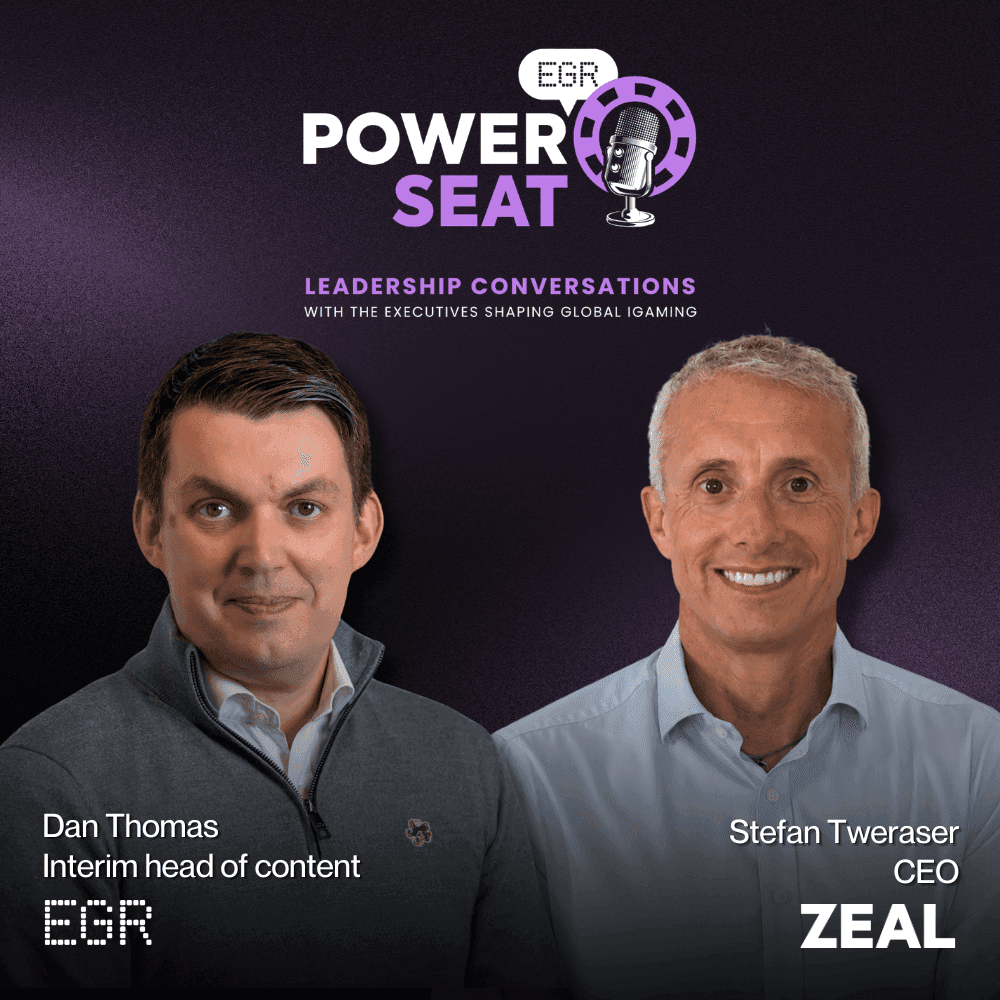
The comments were made on EGR's Power Seat interview series. EGR subscribers receive early access to episodes before they appear on YouTube, Spotify and Apple; previous Power Seat interviews have featured the chief executives of Betsson, LeoVegas Group, Buzz Bingo and BOYLE Sports. All past episodes are available on EGR's media hub.
Commercial implications for operators and vendors
For operators considering prize-draw expansion or M&A, ZEAL's transaction illustrates a playbook: acquire established local brands, apply a product-first marketing approach, and deploy internal regulatory expertise to capitalise on shifting rules. Vendors offering compliance tooling, payments integrations and CRM personalisation should expect increased demand from operators readying to expand in the UK prize-draw market.
ZEAL's rapid launch cadence for products such as the car raffle — roughly six months from idea to market — also signals that platform and fulfilment partners must be capable of short lead times and fast integrations.
What to watch next
Monitor the implementation of any VAT changes and the uptake of the voluntary code of conduct in the UK prize-draw sector. Track how ZEAL integrates 7days, UKCC and Redline into its product roadmap and whether the company replicates its social-lottery concepts across the acquired brands.
Expect further commentary from ZEAL on Germany's online opportunity, AI deployment, and progress against competition from unlicensed operators.
Frequently Asked Questions
How much did ZEAL pay to acquire Seven Canyon and when did the deal close?
ZEAL paid £38.6m in July to acquire the remaining 96.5% of Seven Canyon, completing the transaction that gave it 100% ownership of the prize-draw operator.
Which consumer brands did ZEAL acquire through Seven Canyon?
The acquisition gives ZEAL control of the three consumer brands 7days, UKCC and Redline, all operated by Seven Canyon prior to the buyout.
What is ZEAL's product approach to lottery and prize draws?
ZEAL treats lottery as entertainment and aims to sell a dream rather than just a ticket, using social lotteries like a dream house raffle and a car raffle to create social currency around jackpots.
Why does ZEAL see the UK as strategically important for prize draws?
Stefan Tweraser described the UK as the biggest prize-draw market in Europe and highlighted a new voluntary code of conduct and possible VAT changes as regulatory shifts that create opportunities for licensed operators with regulatory expertise.
Tags
About the author

Marcus Webb
Industry Deals Correspondent
Marcus Webb covers the deal flow of the gambling industry — operator strategy, M&A, market entries, and product launches from sportsbook rebrands to full platform migrations. The reports name the companies, valuations, and jurisdictions exactly as disclosed and separate the announcement from its market impact. When a group consolidates a brand or a challenger launches into a new state, Marcus Webb explains who gains, who pays, and what closes next quarter.
More from Marcus Webb