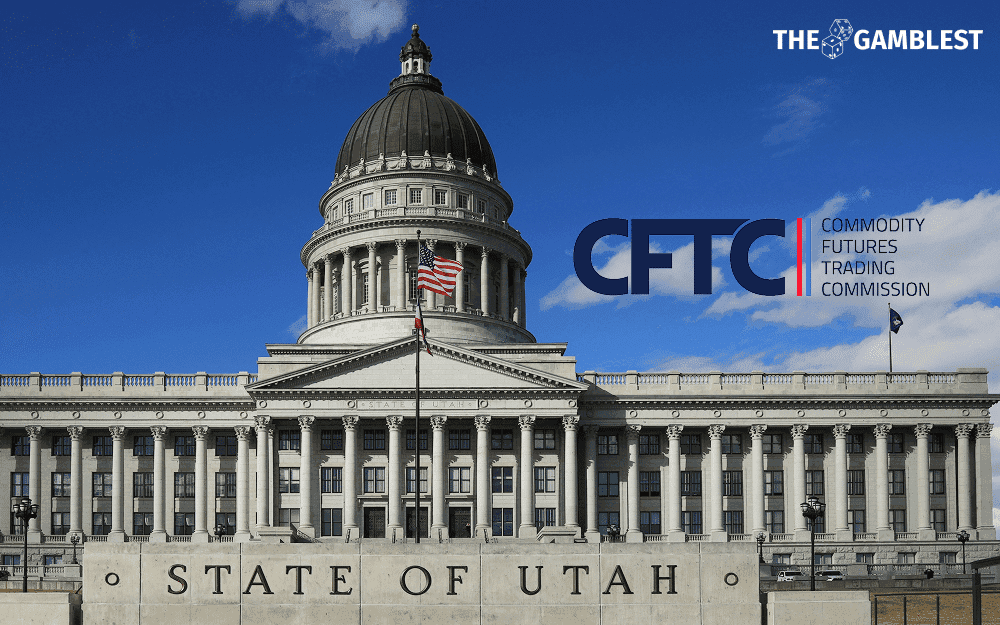
CFTC Sues Utah Over State Enforcement Targeting Prediction Markets
Filed 27 October, the agency says Utah's actions conflict with federal derivatives law.
Key Takeaways
- The Commodity Futures Trading Commission sued the State of Utah on 27 October over enforcement actions against prediction markets that are federally registered.
- The Third District Court of Utah on October 20 awarded $61.2 million in damages to Kalshi alongside other relief.
- A US District Court ruling in August by Judge Robert Shelby dismissed Kalshi's pre-emption claim, prompting Kalshi to appeal to the US Court of Appeals for the Tenth Circuit.
- The CFTC said on October 27 it is also suing nine more states and filing briefs across federal and state courts to defend its jurisdiction.
The Commodity Futures Trading Commission sued the State of Utah on 27 October, challenging Utah's civil enforcement actions against prediction markets and firms that are federally registered with the CFTC. The agency says Utah's efforts restrict the activities of federally registered exchanges and conflict with Congress's decision to give the federal government authority over commodity derivatives.
Federal claim and legal basis
The CFTC filed the complaint on October 27 arguing that federal law pre-empts conflicting state prohibitions on the operation of registered derivatives exchanges. The agency said Utah's enforcement actions target businesses that are federally registered with the CFTC and therefore fall within the Commission's exclusive jurisdiction. The complaint follows Utah's recent lawsuit against Kalshi and a damages award issued by a state court.
"Congress entrusted the CFTC to be the federal regulator with sole responsibility to oversee these markets," CFTC Chairman Michael S. Selig said. "The CFTC has the expertise and responsibility to defend its exclusive jurisdiction over commodity derivatives, and that's exactly what we'll do."
Background: Utah v Kalshi and recent rulings
The CFTC's filing comes after a sequence of state and federal rulings. On October 20 the Third District Court of Utah issued $61.2 million in damages to Kalshi, plus other monetary and injunctive relief. That state-court decision followed an August ruling by Judge Robert Shelby of the US District Court that dismissed Kalshi's argument that federal commodities regulations supersede Utah's gambling laws, leaving Utah free to proceed under its statutes.
Kalshi has appealed the federal-court ruling to the US Court of Appeals for the Tenth Circuit and is separately subject to the Utah court's damages award.
Broader enforcement campaign
The CFTC said in its October 27 statement that the Utah lawsuit forms part of a wider pattern of state challenges. The agency has begun suing nine additional states and has filed briefs in four federal courts and one state supreme court to reinforce its jurisdiction over registered prediction markets. The CFTC framed the dispute as one over regulatory authority, saying event contracts provide information about future outcomes and are not limited to hedging or speculation.
States challenging prediction markets argue some contracts, particularly those tied to sports, resemble illegal gambling and therefore fall under state gambling rules, licensing requirements and enforcement. The CFTC maintains that when exchanges are federally registered, the federal commodities regime controls activity in those markets.
Industry and market mechanics
The complaint explicitly references exchanges and event contracts that the CFTC regulates; it seeks to enjoin state enforcement that would restrict the operations of those registered entities. The filing names the State of Utah as the defendant and positions the Commission as the exclusive federal regulator for the affected markets. The dispute now progresses through multiple courts, including the Tenth Circuit appeal by Kalshi.
Frequently Asked Questions
What did the CFTC file against Utah and when?
The Commodity Futures Trading Commission filed a lawsuit against the State of Utah on 27 October. The complaint challenges Utah's civil enforcement actions against prediction markets and firms that are federally registered with the CFTC.
How much was Kalshi ordered to pay by the Utah state court?
The Third District Court of Utah issued $61.2 million in damages to Kalshi on October 20, in addition to other monetary and injunctive relief.
What did the August federal ruling by Judge Robert Shelby decide?
Judge Robert Shelby dismissed Kalshi's argument that federal commodities regulations supersede Utah's gambling laws, allowing Utah to proceed under its state statutes; Kalshi has appealed that decision to the US Court of Appeals for the Tenth Circuit.
How is the CFTC characterising the role of event contracts?
The CFTC says event contracts provide information about future outcomes and are not limited to hedging or speculative purposes, and that Congress entrusted the Commission with sole responsibility to oversee these markets, according to Chairman Michael S. Selig.
Tags
About the author

Tessa Coleman
Betting Markets Correspondent
Tessa Coleman covers betting products and markets — sportsbook launches, odds and trading technology, and the fast-growing prediction-market space from regulated exchanges to event contracts. The stories lead with the product or the ruling, name the operators and platforms precisely, and translate trading jargon into what bettors can actually do. When a book reworks its pricing or a prediction market wins a license fight, Tessa Coleman explains the mechanics and the stakes.
More from Tessa Coleman