Regulation and Opportunities: The New iGaming Market in Alberta
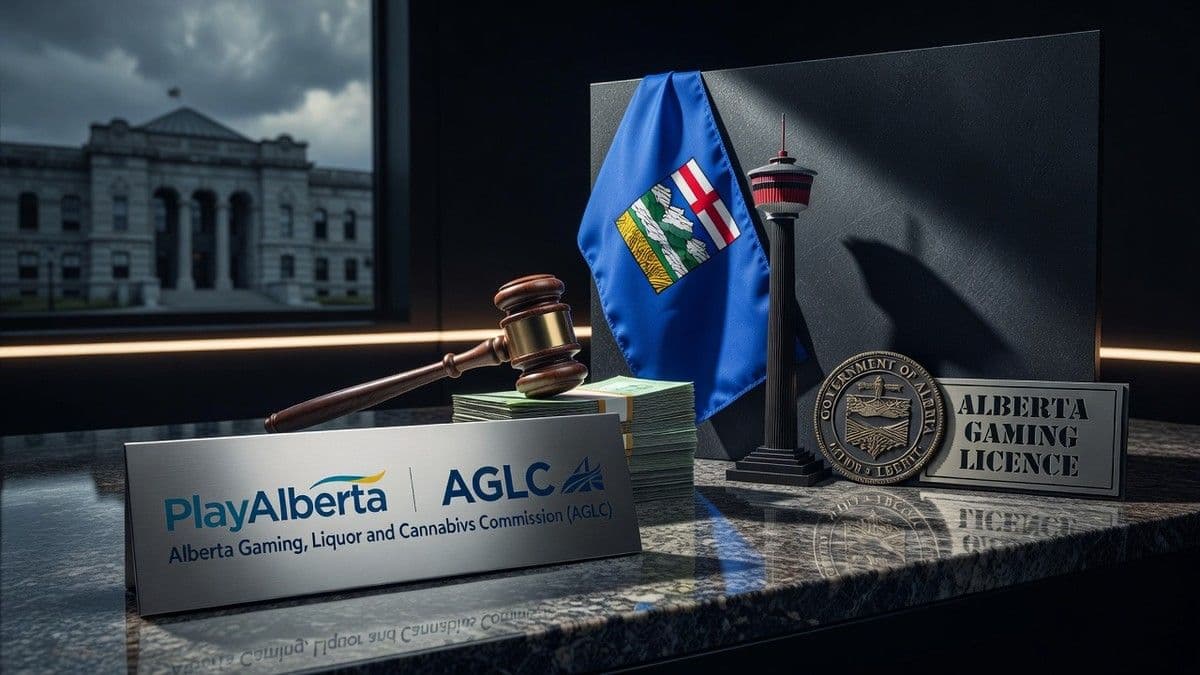
Alberta opens its iGaming market to private operators and providers under a registration model starting July 2026, managed by the Alberta Gaming, Liquor and Cannabis Commission (AGLC) and the Alberta iGaming Corporate (AiGC).
Key Takeaways
- Alberta opened its iGaming market to private operators and providers via a registration regime starting July 2026.
- AGLC and AiGC share regulatory responsibilities; each operator must complete registration and sign an operational agreement.
- There are strict restrictions on marketing and responsible gaming, with independent obligations for online and land-based.
- The open model already has 47 registered operators and 47 B2B providers, including major international brands.
- The tax framework includes a 20% on GGR plus provincial and federal fees.
As of July 13, 2026, Alberta will regulate online gaming through a competitive registration model, allowing entry for private operators and providers that meet specific integrity and sustainability requirements. This new framework positions Alberta, the fourth most populous province in Canada, as a regulatory benchmark in North America, jointly managed by the Alberta Gaming, Liquor and Cannabis Commission (AGLC) and the Alberta iGaming Corporate (AiGC).
Market Opening Process and Regulatory Bodies
With a population exceeding five million and a GDP of 361.5 billion CAD in 2025, Alberta is one of the most prosperous regions in the country. Online regulation began with PlayAlberta, launched in 2020 and expanded in 2021 to single-event betting following its legalization in Canada. Inspired by Ontario's competitive model, the province enacted the iGaming Alberta Act (Bill 48), opening the regulated market to private operators under the shared oversight of AGLC (overall supervision) and AiGC (iGaming registration).
The market potential is notable: PlayAlberta generated approximately 195 million CAD in net revenue in 2024–25, increasing by 25 million CAD year-on-year. Industry projections indicate that the annual regulated revenue from iGaming could exceed 700 million CAD, positioning Alberta among the top ten markets in North America.
Licensing Modalities and Operation of the Online Gaming Market in Alberta
Unlike other systems, Alberta applies a registration regime, rather than a traditional licensing model, for online operators. Each website domain must be registered individually and pay an annual fee. The process includes submission of corporate and financial documentation, integrity evaluations, and background checks on executives, employees, shareholders, and other key personnel. Only after obtaining registration and signing an operational agreement with AiGC can one operate legally.
In the land-based sector, licenses are mainly for the operation of facilities (bingo, casinos, race centers). Charitable entities can access event licenses for bingo, raffles, casinos, and "pull tickets." The dual model requires that the infrastructure be managed by the commercial company (under an "Electronic Games Retailer Agreement"), but the event must be licensed by a charitable organization, which oversees volunteers, operations, and fund distribution.
New licenses for casinos, bingo, or race centers are not available through open applications. AGLC periodically evaluates the market to determine if there is sufficient demand and capacity before considering expansions. Horse racing is separately regulated by Horse Racing Alberta (HRA), with licenses for racetracks and external betting operators in collaboration with the Canadian Pari-Mutuel Agency.
B2B Providers: Requirements and Categories
The main B2B categories in Alberta are platform providers and critical systems providers. There are also registrations for e-wallet providers, oddsmakers, integrity monitors, testing laboratories, and other material services recognized by AGLC. All applicants must be incorporated under Canadian law, undergo a suitability assessment, and comply with ongoing technical and operational standards. The focus on critical technology and security is central, given its supportive role to registered operators.
Taxes, Registration Fees, and Regulatory Obligations
For online gaming, Alberta applies a 3% deduction from GGR for social responsibility and a 20% tax on GGR. Additionally, there is a general tax rate for all businesses in the province (8%, plus the federal rate of 15%, totaling 23%). The GST is 5%, and the federal withholding tax is 25% on certain payments, including interest, dividends, and royalties.
Licenses for land-based facilities are granted for one or two years and are non-transferable. Changes of control or unauthorized transfers result in automatic cancellation, and material ownership changes require notification and, where applicable, AGLC approval.
Responsible Gaming, AML, and Advertising
Alberta requires online operators to implement comprehensive responsible gaming policies: self-exclusion, deposit/spending/time limits, session reminders, blocking of self-excluded individuals, and visible display of help information and warnings. Land-based operators must prevent access to self-excluded individuals, train staff in detecting and responding to problem gambling, and not encourage excessive gambling.
Anti-money laundering (AML) obligations are governed by Canadian federal legislation, with oversight by the Financial Transactions and Reports Analysis Centre of Canada (FINTRAC) and additional operational requirements imposed by AGLC and AiGC. These include KYC processes, transaction monitoring, reporting of suspicious activities, mandatory training (AML certification every two years for casino, bingo, and racing staff), and compliance across all related processes.
Regarding marketing, Alberta imposes strict restrictions on online gaming: public advertising of bonuses, free bets, and credits is not allowed except through direct marketing to players who have explicitly consented. The use of celebrities or athletes is not authorized except in responsible gaming campaigns, and advertising must never target minors or present gaming as risk-free or easy to win. Marketing for the land-based sector adheres to similar guidelines regarding the protection of minors and problem gambling.
Market Entry: Approved Operators and Providers
The open model allowed AGLC to approve 47 operators and 47 B2B providers prior to launch. Among the operators are major international brands such as bet365, BetMGM, Caesars, FanDuel, DraftKings, and 888. Approved providers include EveryMatrix, Evolution, Play'n GO, Games Global, Continent 8, Bede Gaming, and Soft2Bet. The land-based sector still holds significant weight in the provincial economic and social fabric, particularly in community and First Nations funding.
The government consulted with land-based and Indigenous operators during the market design, prioritizing the channeling of offshore gaming into the regulated framework, rather than replacing the existing retail offering. This compatibility remains one of the primary challenges of the regulatory model.
Balance and Perspectives Under the New iGaming Model in Alberta
Alberta represents one of the most significant regulatory developments in North American iGaming since Ontario's opening in 2022. Its registration regime provided agile access for operators and providers, with a moderate tax and compliance burden. Restrictive advertising regulations and technical requirements aim to address challenges identified in other models, even if long-term effectiveness is yet to be measured.
The high number of operators will pose a challenge for supervisory capacity, and player protection, control over offshore operators, and compliance with responsible gaming will remain central to monitoring. Alberta's initial experience will serve as a case study for other jurisdictions in the process of liberalization, including the eventual reconsideration of its highly restrictive scheme in the land-based sector.
Frequently Asked Questions
What regulatory framework governs iGaming in Alberta since 2026?
As of July 13, 2026, Alberta operates a registration-based system for iGaming operators and providers, managed by the Alberta Gaming, Liquor and Cannabis Commission (AGLC) and the Alberta iGaming Corporate (AiGC), in line with Ontario's model.
What are the main taxes and fees for iGaming operators in Alberta?
Online operators must pay 3% of GGR for social responsibility, a 20% tax on GGR, and a total of 23% in combined provincial and federal corporate taxes.
What requirements must a B2B provider meet to enter the Alberta market?
A B2B provider must be incorporated under Canadian law, pass a corporate, financial, and integrity suitability assessment, meet technical standards, and not interact directly with players.
Are there specific restrictions on online gaming advertising in Alberta?
Public advertising of bonuses, free bets, and credits is prohibited to the general public and can only occur through direct marketing with consent; the use of celebrities outside of responsible gaming campaigns is also restricted.
What responsible gaming measures are required of online operators in Alberta?
Operators must offer self-exclusion, deposit limits, session reminders, blocking of self-excluded individuals, and access to help information and visible warnings on the platform.
Tags
About the author

Miguel Sandoval
Regulatory Affairs Correspondent
Miguel Sandoval tracks gambling legislation, licensing, and regulator enforcement — from Spain's DGOJ and the Latin American authorities to the UKGC, the MGA, and the state-by-state map in North America. The reports answer three questions precisely — what changed, where, and who it affects — with jurisdictions, dates, and penalties cited exactly as published. Operators and compliance officers read Miguel Sandoval to know which rulebook moved before their next meeting.
More from Miguel Sandoval