UK's Offshore Gambling Market Expands Due to Tax Increase
H2 Gambling Capital links the UK's Remote Gaming Duty hike to offshore market growth, forecasting significant operator revenue shifts.
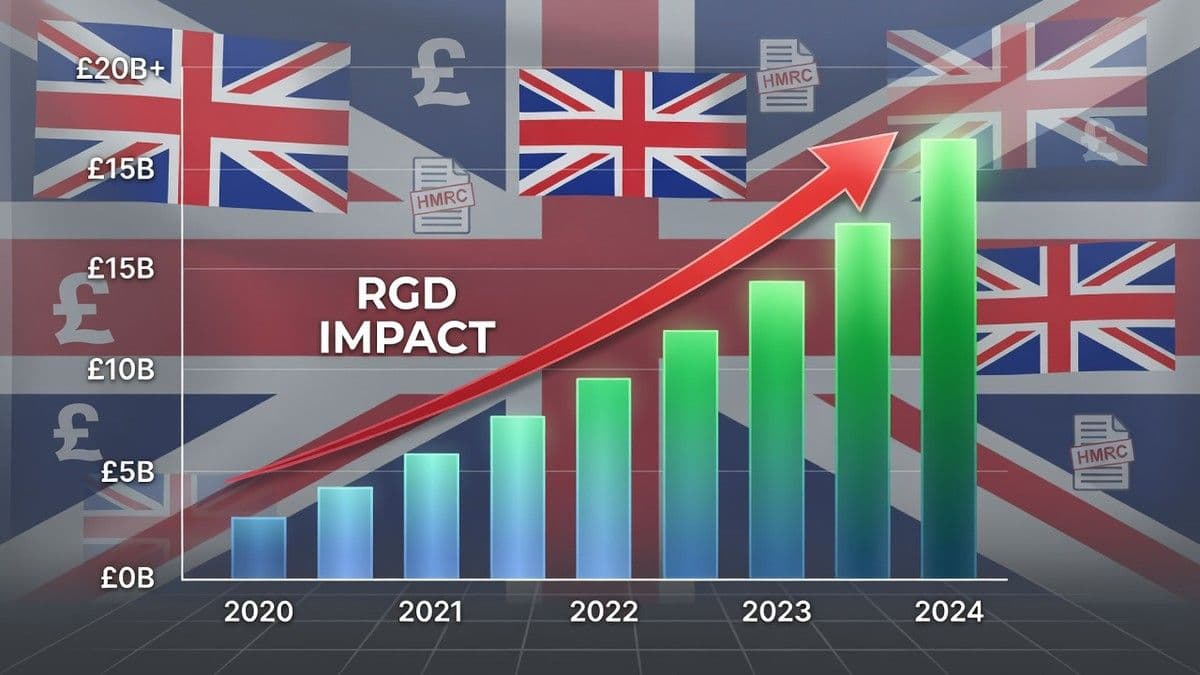
The increase in the UK's Remote Gaming Duty (RGD) is driving the expansion of offshore online gambling, according to H2 Gambling Capital. Their analysis highlights a considerable uptick in offshore activity. Offshore gross gaming yield (GGY), a measure of revenue after player winnings, is expected to rise significantly from £200 million in 2019 to £685 million by 2025.
Offshore Market Expansion Predicted
H2 Gambling Capital anticipates offshore turnover to grow from £5 billion in 2019 to £16.6 billion by 2025, with a doubling from 2023-2025. By 2031, offshore GGY could reach approximately £1.4 billion, reflecting a compound annual growth rate (CAGR) of 12.7% from 2025. Offshore turnover might expand to £36 billion in the same period.
The analysis indicates a decline in 'channelisation'—the proportion of gambling through UK-licensed operators—from 97% in 2019 to 92% in 2025, potentially dropping further to 85% by 2031. Onshore turnover share might decrease from 90% in 2025 to 78% by 2031.
Impact of Remote Gaming Duty Increase
The RGD rise from April 2026 is identified as a key factor influencing the shift offshore. This tax increase, described as a 'significant headwind' for onshore operators, could drive more consumers to offshore sites. In 2025, online casino GGY rose 14% to £5.70 billion, while online betting GGY fell 6% to £2.45 billion.
2026 iGaming GGY is forecast to decrease by 1% to £5.64 billion, with a more pronounced 5% decline in 2027, translating to a 6% nominal drop and an 11% real-term decline between 2026-2027.
Effects of the World Cup
The World Cup might buffer online betting in 2026, with GGY expected to rise 3% to £2.52 billion. However, as the event's impact wanes and RGD climbs to 25% in April 2027, GGY is projected to fall to £2.47 billion.
H2 predicts an overall reduction in growth of 15%-20% due to duty increases and other factors, with a potential real-term decline of 20%-25% across 2026-27.
Challenges for the UK Market
A TransUnion study found 12% of young adults (ages 25-34) have been victims of fraud via unlicensed betting sites. Despite offshore growth, onshore activity will likely account for the majority of UK GGY by 2031, with onshore generating around £8.2 billion of the total £9.6 billion.
"The only winners from these tax hikes will be criminal operators based overseas," stated Grainne Hurst, CEO of the Betting and Gaming Council.
Industry Response
Grainne Hurst expressed concerns over the unregulated market's growth. She warned that the UK might see job losses, diminished investments, and reduced tax revenue, as consumers gravitate toward unregulated operators without player protections.
Kathryn Evans from TransUnion highlighted the risks faced by young adults on unlicensed sites, underscoring the negative impacts of the offshore market expansion.
Tags
About the author

Eleanor Whitfield
Regulatory Affairs Correspondent
Eleanor Whitfield tracks gambling legislation, licensing decisions, and regulator enforcement across key markets — from the UKGC, MGA, and Germany's GGL to Spain's DGOJ and the state-by-state map in the Americas. The reporting answers three questions precisely: what changed, where, and who it affects, with jurisdictions, effective dates, and penalty figures named exactly as published. Compliance officers and operators read Eleanor Whitfield to know which rulebook moved before their next board meeting.
More from Eleanor Whitfield