Experts warn gambling advertising will rise after Finland market opens in July 2027
Panel at Paf event says advertising surge may increase harms and challenges monitoring
Key Takeaways
- Panelists warned advertising is likely to grow markedly when Finland's market opens in July 2027.
- KKV research director Riku Buri said gambling harms will increase after the market opens and noted insufficient use of traffic and payment restrictions.
- About half of online gambling before reform was directed to operators other than Veikkaus and most Peluuri contacts played non-Veikkaus products.
- Speakers flagged that individual adverts can meet legal requirements while the overall volume becomes intrusive, and raised concerns about minors seeing ads.
The opening of Finland's gambling market in July 2027 is likely to trigger a significant increase in gambling advertising, panelists said at Paf's Åktoberfest in Helsinki on 25 October 2026. Kilpailu- ja kuluttajavirasto's research director Riku Buri told the session that gambling harms will grow after the market opens and urged stronger measures to limit online traffic and payment flows.
What panelists said in Helsinki
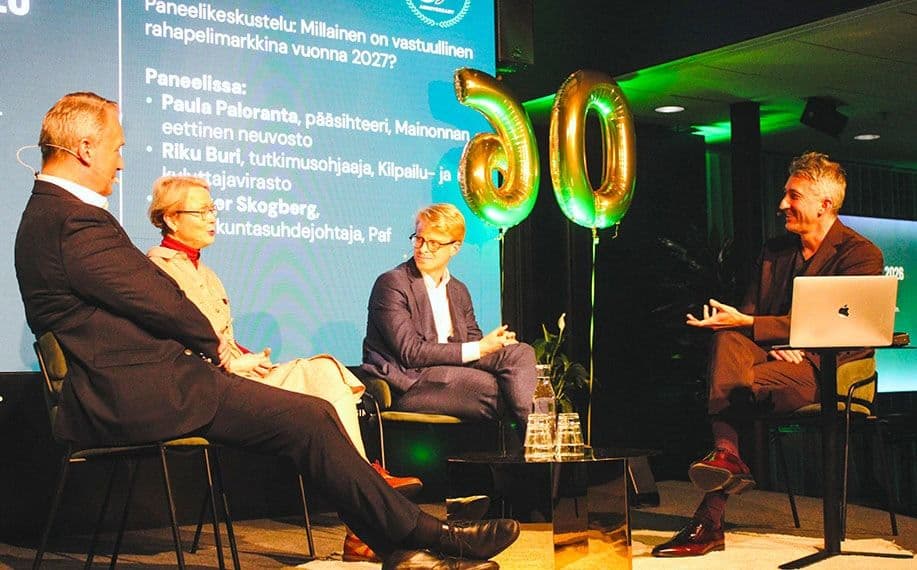
The discussion on responsible advertising, player protection and the goals of a licensing system brought together Paula Paloranta, secretary general of Mainonnan eettinen neuvosto; Riku Buri, research director at Kilpailu- ja kuluttajavirasto (KKV); and Sverker Skogberg, head of public affairs at Paf. Ivan Puopolo moderated the panel. Participants flagged that the scale of advertising could expand markedly once licences are issued from July 2027.
Buri said regulators did not sufficiently use tools such as restricting web traffic to unlicensed operators or blocking payment channels during preparation for the new system. He referenced Sweden's experience after its switch to a licensing model and said tighter regulation there had not led to reduced gambling harms.
"I expect gambling harms to increase after the market opens," Riku Buri said, highlighting concerns about insufficient use of traffic and payment restrictions.
Buri added that Finland's starting point is concerning because the share of players at risk is higher than in Sweden. He also noted that about half of online gambling before the licensing reform was directed to operators other than Veikkaus, and that the large majority of people who contacted Peluuri for help reported playing non-Veikkaus products.
Advertising scale versus legal compliance
Panelists emphasised that individual campaigns can comply with the law while the cumulative volume of advertising becomes intrusive for consumers. Skogberg pointed to Sweden's market opening as an example where advertising expanded substantially, particularly around sports broadcasts. He warned that legal assessments applied to individual companies may not provide a mechanism to address industry-wide saturation of advertising.
Paloranta said decisions by the Advertising Standards Council over the years provide precedents to judge when advertising crosses the line of good practice. She raised particular concern about protecting minors, noting that adverts not directly targeted at children can still reach them and may use cartoon or animated characters appealing to younger audiences.
Targeting and platform challenges
Buri stressed that audience targeting is a central responsibility issue. Social media poses special difficulties because platform algorithms influence who sees gambling content. Traditional channels such as TV, radio and outdoor advertising can be managed via timing and placement. Skogberg argued advertisers have tools to avoid reaching minors and other inappropriate audiences, and flagged that overly restrictive player experiences could push customers back to unlicensed sites.
"Too restrictive a playing experience can drive players back to unlicensed sites," said Sverker Skogberg, noting the trade-off between channeling players into the regulated market and preserving usable products.
Licensing system objectives and tensions
Panelists agreed the licensing system's primary goal is to channel play into a regulated environment where player-control tools and supervision are available. Buri emphasised that this objective should not eclipse harm prevention; the purpose of licensing is also to give non-Veikkaus players better access to tools for managing play. Skogberg urged monitoring the channeling rate from the outset to evaluate whether the system keeps players inside the regulated market without increasing harms.
The event took place during Paf's Åktoberfest in Helsinki and was reported by Rahapelisanomat. Photographs from the session were credited to Rahapelisanomat/Penina Peltonen.
Frequently Asked Questions
When will Finland's gambling market open and why does it matter for advertising?
Finland's gambling market is scheduled to open in July 2027. Panelists at Paf's Åktoberfest said licence issuance from that date will likely lead to a significant rise in gambling advertising across channels, increasing the need for monitoring and harm prevention.
Which regulators and organisations spoke at the Paf event?
Speakers included Paula Paloranta of Mainonnan eettinen neuvosto, Riku Buri of Kilpailu- ja kuluttajavirasto, and Sverker Skogberg of Paf, with Ivan Puopolo moderating. The event focused on advertising responsibility, player protection and licensing goals.
What specific measures did Riku Buri suggest were underused during system preparation?
Riku Buri said restricting online traffic to unlicensed operators and blocking payment channels were not used sufficiently when preparing the new licensing system. He argued these tools could help limit exposure to unregulated operators.
How did panelists describe the situation with players who seek help from Peluuri?
Panelists said the large majority of people contacting Peluuri for help reported playing games offered by operators other than Veikkaus, and that prior to reform about half of online gambling was directed to non-Veikkaus operators.
Tags
About the author

Eleanor Whitfield
Regulatory Affairs Correspondent
Eleanor Whitfield tracks gambling legislation, licensing decisions, and regulator enforcement across key markets — from the UKGC, MGA, and Germany's GGL to Spain's DGOJ and the state-by-state map in the Americas. The reporting answers three questions precisely: what changed, where, and who it affects, with jurisdictions, effective dates, and penalty figures named exactly as published. Compliance officers and operators read Eleanor Whitfield to know which rulebook moved before their next board meeting.
More from Eleanor Whitfield