Louisiana court freezes 10 prediction‑market apps after attorney general suit
Temporary injunction orders geofencing and bans unlicensed event contracts in Louisiana
Key Takeaways
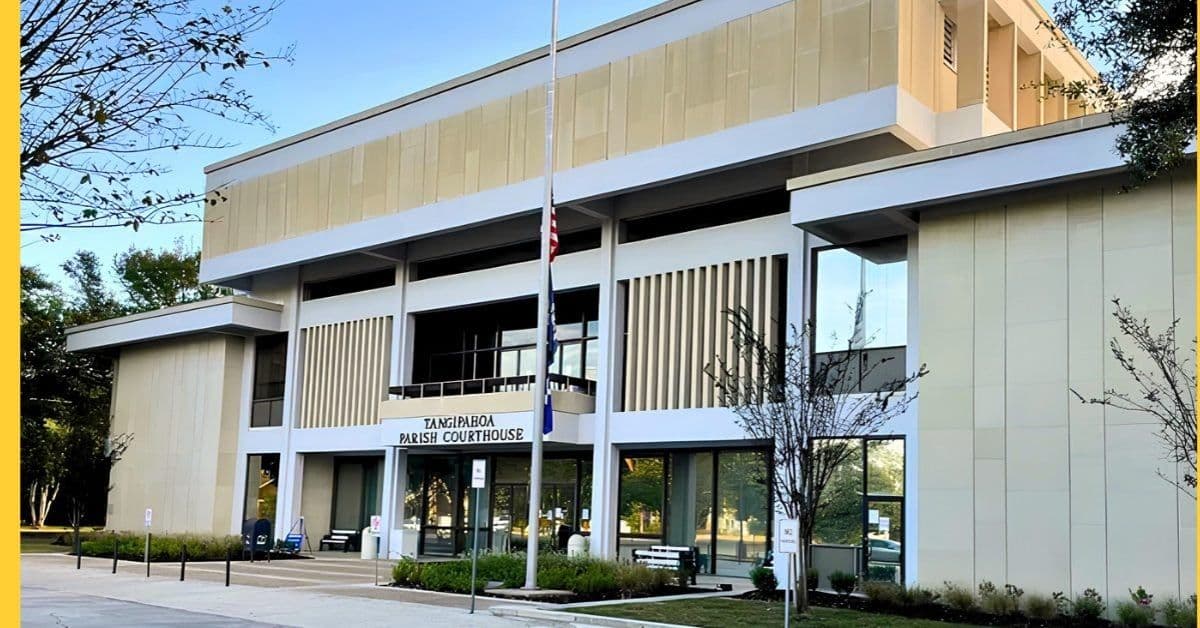
- On 12 November 2026 the 21st Judicial District Court in Tangipahoa Parish issued an ex parte temporary injunction barring ten operators from offering event contracts to persons in Louisiana.
- The State's petition, filed by Attorney General Liz Murrill and relying on HB 883 (effective 1 August 2026), sought site blocks, account freezes and treats violations as "irreparable harm."
- Defendants named include Kalshi, Polymarket, Robinhood, Crypto.com, Coinbase, Novig, Underdog, Gemini Titan, ForecastEx and ProphetX; the petition lists 31 entities in total.
- The order requires geofencing, prohibits claiming legality or licensure in Louisiana, cites the Louisiana Unfair Trade Practices Act and sets a preliminary‑injunction hearing for 30 November 2026.
A Louisiana court issued a temporary injunction on 12 November 2026 prohibiting ten prediction‑market operators from offering event contracts to any person in the state, hours after Attorney General Liz Murrill filed the suit. The 21st Judicial District Court in Tangipahoa Parish granted the ex parte restraining order — sought solely by the State before the platforms could appear or respond.
Immediate scope of the order
The temporary order, dated 12 November, names Kalshi, Polymarket, Robinhood, Crypto.com, Coinbase, Novig, Underdog, Gemini Titan, ForecastEx and ProphetX as defendants and prohibits them from "operating, offering, listing, accepting, settling, clearing, intermediating, market‑making in, or otherwise facilitating or offering any 'event contract' (also known as a wager) from, to, or on behalf of any person located in the state of Louisiana without valid license and authorization."
The order binds "principals, officers, agents, employees, counsel, and all persons in active concert or participation with them who receive actual knowledge of this Order by personal service or otherwise." The court defines "event contract" as "any sum of money or representation of value risked by a person on the occurrence associated with an event whose outcome is uncertain."
"In today's digital betting market, virtually anything can become a wager," the State's petition begins, filed "by and through its Attorney General Liz Murrill." The petition lists Kalshi markets on Senate control, the next Trump press secretary, the Oscar for Best Picture, the Federal Reserve interest rate, mention‑markets about Trump and college football conference winners.
Technical measures and specific restrictions
The ruling orders operators to apply geofencing to block access from Louisiana and bars them from representing that their contracts are "lawful, licensed, or authorized in Louisiana," a restriction the order ties to the Louisiana Unfair Trade Practices Act. The court indicates the action can reach a market maker that continues supplying liquidity to Louisiana users after notice.
The order also covers contracts related to sports, elections, awards and "all others considered sports betting under La. R.S. 27." Remedies sought in the State's petition include a temporary injunction, a preliminary injunction, civil penalties, restitution and disgorgement of profits.
Legal framework that enabled the State's rapid action
The speed of the State's action relied on HB 883, signed by Governor Jeff Landry and effective 1 August 2026, which permits Louisiana courts to order measures such as website takedowns and account freezes, and extends jurisdiction to payment processors and geolocation providers. The law further provides that a violation "shall conclusively be determined irreparable harm," removing the traditional requirement to prove harm to obtain emergency relief.
The court did not require a bond because the plaintiff is the State and waived the 10‑day cease‑and‑desist step set by statute, alleging the defendants "immediately received constructive notice of the Petition through media and other outlets."
Parallel litigation and platforms' arguments
Kalshi filed a declaratory suit against Murrill in the Western District of Louisiana on 23 October 2026; Polymarket US filed its own federal challenge on 27 October, invoking federal preemption and the Commerce Clause. On the same day the attorney general filed the state suit and the judge issued the state order, Kalshi asked U.S. District Judge Jerry Edwards Jr. for its own temporary restraining order, alleging "imminent" exposure to criminal, administrative and forfeiture penalties.
The platforms dispute characterising their contracts as wagers, arguing they are financial derivatives regulated by the Commodity Futures Trading Commission (CFTC). In the motion filed Thursday, Kalshi stated: "These event contracts are a type of derivative, and their trading is regulated by the federal government." In its October filing, Kalshi added that the anti‑computer gambling law exempts transactions "occurring on a stock or commodities exchange, brokerage house, or similar entity."
Status of the case and forthcoming deadlines
The State's civil petition seeks civil penalties, restitution and disgorgement, which could expose the industry to monetary liabilities for past transactions as well as future restrictions, according to gaming attorney Daniel Wallach.
Wallach also notes that Louisiana is the thirteenth state to commence civil action against prediction‑market operators, after Massachusetts, Nevada, Michigan, Washington, Wisconsin, Rhode Island, New Mexico, Kentucky, New York, Connecticut, Utah and Arkansas. The temporary order expires after 10 days unless the court extends it or the defendants consent to a longer period. The hearing on the preliminary injunction is set for Monday 30 November 2026; that hearing will decide whether the order stands once the platforms have a chance to be heard.
FanDuel, DraftKings and Fanatics are not listed as defendants; those operators hold sports‑betting licenses in Louisiana and, according to a notice from the Louisiana Gaming Control Board in December 2025, were warned that illegal gambling "may occur whether the contract is listed on an exchange regulated by the Commodity Futures Trading Commission ('CFTC') or elsewhere," putting license suitability at risk. FanDuel operates only its sportsbook in Louisiana and its prediction‑market product FanDuel Predicts is not listed; licensed operators told the State they would not offer prediction markets, The Advocate reported in March.
What will be tested at upcoming hearings
The 30 November hearing will assess whether the evidence presented by Louisiana suffices to keep the order after the defendants can respond. At the same time, the progress of Kalshi's and Polymarket US's federal suits will determine whether a federal court intervenes on regulatory preemption or Commerce Clause grounds. The order's coverage of sports contracts creates an opportunity to link to the sports rules and to compliance questions under federal oversight for readers following [sports](/sports) and [regulation](/regulation).
The case gains complexity from the breadth of the petition, which names 31 entities and reaches beyond exchanges to clearinghouses, futures commission merchants and parent companies, making the action one of the first to target nearly the entire prediction‑market ecosystem in a single suit.
Frequently Asked Questions
What exactly did the Louisiana court do on 12 November 2026?
The court issued an ex parte temporary restraining order that prohibits ten operators from offering, listing, accepting, settling, clearing or otherwise facilitating any event contract to persons in Louisiana without a valid license. The order specifically names Kalshi, Polymarket, Robinhood, Crypto.com, Coinbase, Novig, Underdog, Gemini Titan, ForecastEx and ProphetX.
On what basis did Louisiana bring the petition against prediction markets?
Attorney General Liz Murrill filed the petition relying on HB 883, effective 1 August 2026, which authorises measures like website takedowns and account freezes, extends jurisdiction to payment processors and geolocation providers, and deems violations to be conclusively irreparable harm for emergency relief.
How have Kalshi and Polymarket defended themselves?
Kalshi and Polymarket US contend their event contracts are financial derivatives regulated by the Commodity Futures Trading Commission (CFTC) and have filed federal lawsuits — Kalshi on 23 October and Polymarket on 27 October 2026 — arguing federal preemption and Commerce Clause protection.
Tags
About the author

Renata Quiroga
Betting Markets Correspondent
Renata Quiroga covers sports betting and prediction markets — sportsbook launches, odds technology, event contracts, and the regulatory calls that decide what can be bet on and where. The reports open with the product or the ruling, name operators and platforms precisely, and explain the mechanics without needless jargon. When a book enters a Latin American market or a prediction exchange lists a contested contract, Renata Quiroga reports what changes for the bettor.
More from Renata Quiroga