US Senate Passes DEATH BETS Act Targeting Prediction Markets
An amendment leaves disputes over sports contracts and state gambling laws unresolved.
Key Takeaways
- The US Senate passed the DEATH BETS Act by voice vote on Nov. 19, 2026.
- The bill would prohibit CFTC-registered entities from listing or clearing specified contracts involving violence, war or an individual's death.
- A Senate amendment says the legislation should not influence litigation over sports contracts and federal preemption of state laws.
- The bill requires House approval before it can be sent to President Donald Trump for signature.
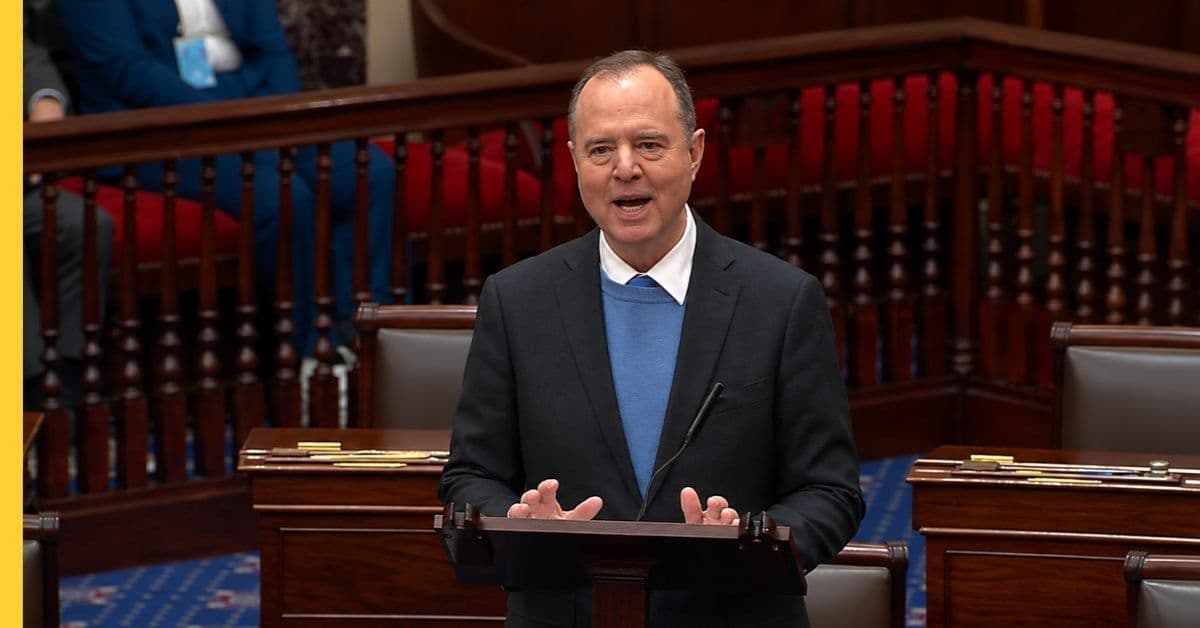
The United States Senate passed the DEATH BETS Act by voice vote at 6:47 p.m. ET on Thursday, Nov. 19, 2026, advancing a ban on federally regulated prediction market contracts involving war, terrorism, assassination and individual deaths. Senators Adam Schiff, a California Democrat, and John Curtis, a Utah Republican, sponsored the bipartisan bill.
It was the first standalone federal bill specifically regulating prediction market contracts to pass either chamber of Congress in 2026. The measure still needs House approval.
What would the DEATH BETS Act prohibit?
Official Senate proceedings show lawmakers approved S. 4035 with a Schiff-Curtis amendment after both sponsors spoke on the floor. Introduced in March, the bill would amend the Commodity Exchange Act to bar entities registered with the Commodity Futures Trading Commission (CFTC) from listing or clearing contracts involving terrorism, assassination, war or similar activities, as well as contracts tied to an individual's death.
Existing federal law permits the CFTC to prohibit certain terrorism, assassination and war contracts if the agency finds them contrary to the public interest. The bill would instead impose a statutory ban, removing the agency's discretion to permit contracts covered by it.
Schiff cited contracts involving the Artemis II space mission, political developments in Venezuela and Russia's war in Ukraine. He argued that people with access to sensitive information could profit from violence and geopolitical developments, and that the contracts could encourage harmful conduct. He also accused the CFTC of failing to enforce existing restrictions and supporting the prediction market industry in disputes with states.
“These markets are operating in a Wild West desperately in need of regulation and guardrails,” Schiff said. “Today, we have the opportunity to put into place a very simple rule. The first building block to create one of those guardrails, our bill prohibits prediction markets from offering contracts on war, military operations, and death.”
“Betting and profiting off of death, both in tragedy and in war, is immoral and ought to be unlawful,” Schiff said. “Indeed, many of us believe it already is.”
“In the absence of real leadership and enforcement at the CFTC, it’s time for Congress to step in and fix this problem,” Schiff said. “With our bill, Congress is making clear that these bets should be illegal once and for all.”
On the amendment, Schiff said: “We also want to make clear that the legislation has no effect whatsoever on pending litigation regarding whether sports contracts offered by prediction markets qualify as swaps or other derivatives under federal law, or on whether federal derivatives laws preempt state gaming and consumer protection laws regarding such sports contracts.”
“We are aware that there is active litigation across the country on swaps and preemption issues,” he continued. “Nothing in the DEATH BETS Act should have any effect on those lawsuits, and it would be improper to draw any inference from this bill that other federal statutes or regulations should be interpreted in a particular way, or that Congress has expressed any intent on how the issues in litigation should be decided.”
“Nor should the DEATH BETS Act be construed as providing the CFTC with authority to authorize or regulate sports contracts on prediction markets,” Schiff said. “The CFTC has no expertise with respect to gaming, the states and tribes have long served as the nation’s gaming regulators, and nothing Congress is doing today displaces that traditional state and tribal authority.”
Why sports contracts remain in dispute
The substitute amendment added a rule of construction intended to preserve the existing legal landscape for other event contracts. The Senate adopted it without objection before passing the amended bill. The sponsors said it should not be read as congressional approval of other prediction market products or as a resolution of litigation over swaps, federal preemption and state gaming and consumer protection laws.
The CFTC has asserted federal jurisdiction over sports event contracts, arguing that they are swaps governed by the Commodity Exchange Act and that federal law prevents states from regulating those transactions independently. It has proposed rules classifying event contracts as swaps, an approach also used in its legal arguments against state enforcement.
The floor debate followed Schiff's criticism of CFTC Chairman Michael Selig at Tuesday's Senate confirmation hearing. Schiff accused Selig of misleading lawmakers about his approach to sports prediction markets.
Curtis said the amendment left existing law on other event contracts unchanged. He also argued against using federal financial rules to bypass state and tribal gambling restrictions.
“We are offering a substitute amendment that adds a rule of construction to make clear that this legislation does not change existing law governing other event contracts, including those involving gambling, broadly,” Curtis said. “Our intent is clear. Congress has not, and will not, give a green light to those seeking to bypass restrictions on contracts against public interest.”
“Prediction markets are seeking to blur the line between legitimate financial markets and outright gambling,” Curtis said. “We’re seeing platforms offer opportunities to wager on everything from sporting events to war and human tragedy.”
“There should be no financial incentive to profit from terrorism, war, or from the death of another human being,” he added.
“These platforms must not be allowed to exploit federal financial regulations to circumvent state and tribal gambling laws,” Curtis said. “Calling something a financial contract does not change the fact that it’s gambling.”
Separate sports bill and Utah enforcement
Curtis joined the Senate in January 2025 after serving in the House. He and Schiff introduced the Prediction Markets Are Gambling Act in March with Senator Catherine Cortez Masto, a Nevada Democrat. It would prohibit CFTC-registered exchanges from listing contracts resembling sports betting or casino-style games. Unlike the DEATH BETS Act, it has not passed the Senate.
Utah prohibits gambling and has pursued enforcement against prediction market operators. In October, the CFTC and OG.com filed separate federal lawsuits challenging Utah's authority to restrict federally regulated event contracts. The state's enforcement campaign has also prompted DraftKings, FanDuel and Fanatics to restrict prediction market offerings there.
Curtis has previously argued that states, rather than federal derivatives regulators, should retain authority over sports betting and casino gaming.
What happens next in Congress?
The Senate unanimously agreed to discharge the DEATH BETS Act from the Senate Agriculture Committee and proceed directly to consideration. The House of Representatives must approve the measure before it can go to President Donald Trump for his signature. If the House changes it, both chambers must agree on identical language before it can become law.
Representative Mike Levin, a California Democrat, introduced a House companion bill, H.R. 7942, in March. It has not passed the House, and no House vote on the Senate legislation has been announced.
Frequently Asked Questions
How would the DEATH BETS Act change existing federal law?
It would replace agency discretion with a direct statutory prohibition on the contracts covered by the bill. Current law lets the CFTC prohibit certain terrorism, assassination and war contracts when it finds them contrary to the public interest.
Has Congress passed a separate bill banning sports prediction contracts?
The separate Prediction Markets Are Gambling Act has not passed the Senate. Adam Schiff, John Curtis and Catherine Cortez Masto introduced it in March to prohibit registered exchanges from listing contracts resembling sports betting or casino-style games.
What is happening with prediction markets in Utah?
Utah has pursued enforcement against prediction market operators under its gambling prohibition. The CFTC and OG.com filed separate federal lawsuits in October challenging the state's authority, while DraftKings, FanDuel and Fanatics have restricted offerings there.
Is there a House version of the DEATH BETS Act?
Representative Mike Levin introduced a companion bill, H.R. 7942, in March. It has not passed the House, and no vote on the Senate legislation has been announced.
Tags
About the author

Tessa Coleman
Betting Markets Correspondent
Tessa Coleman covers betting products and markets — sportsbook launches, odds and trading technology, and the fast-growing prediction-market space from regulated exchanges to event contracts. The stories lead with the product or the ruling, name the operators and platforms precisely, and translate trading jargon into what bettors can actually do. When a book reworks its pricing or a prediction market wins a license fight, Tessa Coleman explains the mechanics and the stakes.
More from Tessa Coleman