Italy’s Budget Law pins €700m of tax revenue on gambling for 2026–27
Budget approves €700m from gambling as part of €26bn–€27bn funding package for 2027–28
Key Takeaways
- The Budget Law forecasts €700m in gambling tax revenue across 2026 and 2027.
- Gambling, finance and energy taxes are earmarked to help fund €26bn in measures in 2027 and €27bn in 2028.
- The Budget contains no new Gratta e Vinci tender; the existing concession expires in September 2028 and a paid extension is under consideration.
- Online licensing changes introduced in November 2025 include a €7m annual licence fee and a requirement for separate licences per brand.
- Land-based gambling concessions have been extended until the end of 2028 while negotiations with regional authorities continue.
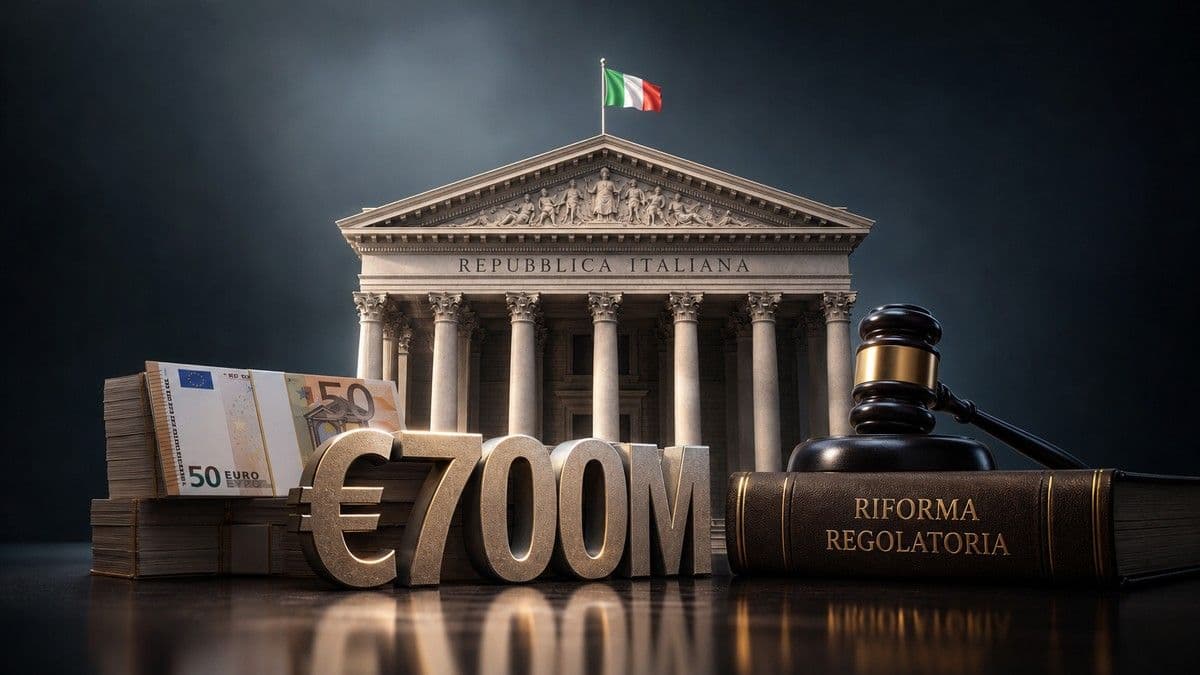
The Italian government expects the gambling sector to deliver €700m in tax revenue across 2026 and 2027 under the Budget Law approved by Prime Minister Giorgia Meloni’s administration. The draft budget, signed off by the Council of Ministers after presentation to the cabinet and the European Commission by Economy and Finance Minister Giancarlo Giorgetti, ties gambling, finance and energy levies to €26bn of measures in 2027 and €27bn in 2028.
How the Budget counts gambling revenue
The Ministry of Economy and Finance (MEF) lists gambling among the revenue lines projected to contribute to the government's fiscal package. The MEF’s forecast of €700m over 2026–2027 sits between earlier public estimates that ranged from €400m–€500m up to €1bn. The Budget Law frames gambling receipts alongside finance and energy taxes as part of resources to help fund the measures and tax reductions planned for 2027 and 2028.
Licensing and market reforms noted in the Budget
The Budget appears while Italy’s online market is completing its first year under a licensing framework introduced in November 2025. Key elements of that reform include a €7m annual licence fee and a requirement that operators hold separate licences for each individual brand rather than cover multiple brands under a single authorisation. These licensing changes remain in effect as the MEF implements the Budget forecasts. The piece links to the ongoing regulatory work on licensing in the country’s public files and regulation updates.
Land-based concessions and the Gratta e Vinci tender
No decision on a new Gratta e Vinci scratch-card concession is included in the approved Budget Law. Ministers continue to consider options, and the government is reportedly evaluating a paid extension of the existing concession, which is scheduled to expire in September 2028. Negotiations over a new federal framework for land-based gambling venues between the MEF and the Conference of Regional Councils remain unresolved after two years of talks.
In August, Meloni instructed the MEF to finalise negotiations with regional authorities. The Agenzia delle Dogane e dei Monopoli (ADM) was then directed to extend current land-based gambling concessions, which are now due to run until the end of 2028.
International context and comparative moves
Other European governments have also targeted gambling for revenue. UK chancellor John Healey announced a five-point increase to Machine Games Duty this week to help fund business-rate reductions for hospitality and leisure. The Netherlands saw a fall in gambling tax receipts in 2025 after its increase in the rate of gambling tax.
"The MEF expects the gambling industry to contribute €700m in tax revenues across 2026 and 2027," the Budget summary states. — Economy and Finance Ministry
What operators are watching
Operators are observing three concrete items in the Budget and surrounding policy work: the stated €700m revenue projection for 2026–2027; the persistence of the €7m annual licence fee and single-brand licence requirement introduced in November 2025; and the extension of land-based concessions through the end of 2028 while a federal framework is finalised. The Budget Law does not open a new Gratta e Vinci tender at this stage.
The government’s timing also reflects political considerations: the measures were approved by Meloni’s Brothers of Italy government ahead of the 2027 general election and were presented to European institutions as part of the standard budgetary process.
For ongoing coverage of regulatory changes and market impact, see related reporting in our news section.
Frequently Asked Questions
How much tax revenue does Italy expect from gambling in 2026–2027?
Italy’s Ministry of Economy and Finance forecasts €700m in gambling tax revenues across 2026 and 2027 under the approved Budget Law. That figure appears in the Budget documents signed off by Prime Minister Giorgia Meloni and presented by Economy and Finance Minister Giancarlo Giorgetti.
Does the Budget Law include a new tender for Gratta e Vinci scratch cards?
No, the approved Budget Law does not include a new Gratta e Vinci tender. The government is still considering options, including a possible paid extension of the existing concession that is scheduled to expire in September 2028.
What changed for online licences under the November 2025 reforms?
Rules introduced in November 2025 require operators to hold separate licences for each individual brand and set an annual licence fee of €7m. Those licensing provisions remain in force as the Budget forecasts gambling revenue.
What is the status of land-based gambling reform in Italy?
Negotiations between the MEF and the Conference of Regional Councils remain unresolved after two years. The Agenzia delle Dogane e dei Monopoli was instructed to extend existing land-based concessions until the end of 2028 while a federal framework is finalised.
Tags
About the author

Eleanor Whitfield
Regulatory Affairs Correspondent
Eleanor Whitfield tracks gambling legislation, licensing decisions, and regulator enforcement across key markets — from the UKGC, MGA, and Germany's GGL to Spain's DGOJ and the state-by-state map in the Americas. The reporting answers three questions precisely: what changed, where, and who it affects, with jurisdictions, effective dates, and penalty figures named exactly as published. Compliance officers and operators read Eleanor Whitfield to know which rulebook moved before their next board meeting.
More from Eleanor Whitfield